

This P-3)was constructed in 1966 and entered service with NASA in 1991 after a long career with the Navy. It can carry up to to 24 operators including aircrew. and an endurance range of 3800nm or 12 hours depending on weather, mission and payload.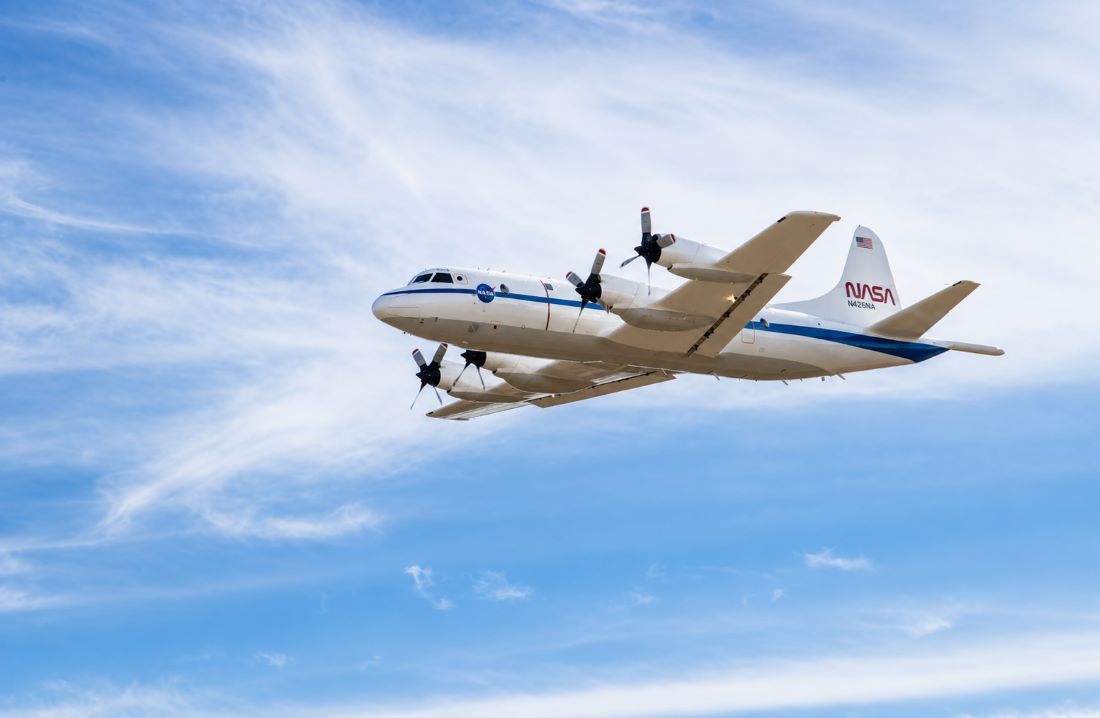
9MVIEWS
4.4KREPLIES
12.9KAPPRECIATES
2 min agoLAST POST
NASA acquired the S-3B Viking in 2004 from the U.S. Navy seen here flying over Cleveland.
Here's the timeline for N601NA:
 smokinjoe64 Former mount?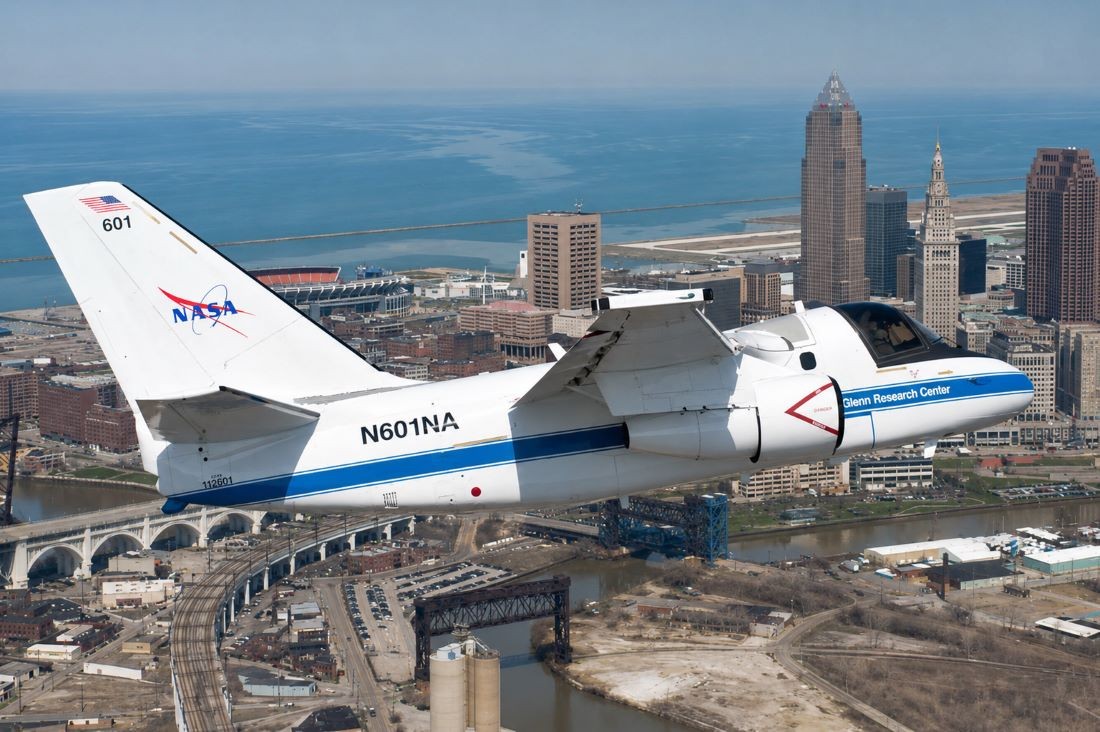
Here's the timeline for N601NA:
- 1978 – Built by Lockheed as the last S-3B Viking produced.
- August 13, 2004 – Transferred to NASA Glenn Research Center in Cleveland, Ohio. Initially it still retained its Navy Bureau Number (160607).
- 2006 – Completely converted from a military anti-submarine aircraft into a civilian research platform. Weapons systems were removed and replaced with research instrumentation, modern avionics, GPS, and satellite communications equipment.
- 2009 – Registered with the FAA as N601NA, the registration visible on your photo.
- 2004–2021 – Flew for about 16 years as NASA's primary S-3B research aircraft, supporting communications research, unmanned aircraft systems (UAS), atmospheric studies, and sensor testing.
- July 13, 2021 – Made its final flight from NASA Glenn to California for retirement.
smokinjoe64 Former mount? smokinjoe64 Fine print?
Lady Jane wroteBTW, illustrated is a US Navy Lieutenant, an O-3...not a Captain (O-3) as in some other Services.
Yup, I read ALL the fine print

Ahhhhh yes, that meme kinda sums pre & early 1990s NavAir...some say, "Good Ole Days" 😜
For instance, Tailhook`91: Fan-f'in-tastic 'Event'...til it wasn't

➡️  Lady Jane I can neither confirm or deny my presence 😇
Lady Jane I can neither confirm or deny my presence 😇Official along with rare, limited, 'unsanctioned', flight suit patches...latter popularized at NAS O-Clubs
smokinjoe64 Are you sure about your whereabouts??? Would you swear on the bible in front of a judge??? Would you look at me straight in the eyes and deny it??? 
Lady Jane wrote
 Lady Jane must concede hilarious, next level, creative banter 🤣
> Will definitely share meme with fellow Aviators 'allegedly there'
Although still "classified", can respond to said inquiries and fully assure you - - 💯% cleared by US NIS (Naval Investigate Services). Refer to earlier patch> As famously stated; "if the government trusts me, maybe you could." 🫡
At that time, officially known as "World Famous Screwbirds" [shown on tail]...yet uncertain why our 'innocuous rep' somehow became disputed 😇
Lest anyone doubt smokinjoe64's truthfulness, here's a photo of an S-3A of VS-33 'Screwbirds' being hoisted aboard a carrier in 1977. Note the screwbird insignia atop the vertical stabilizer.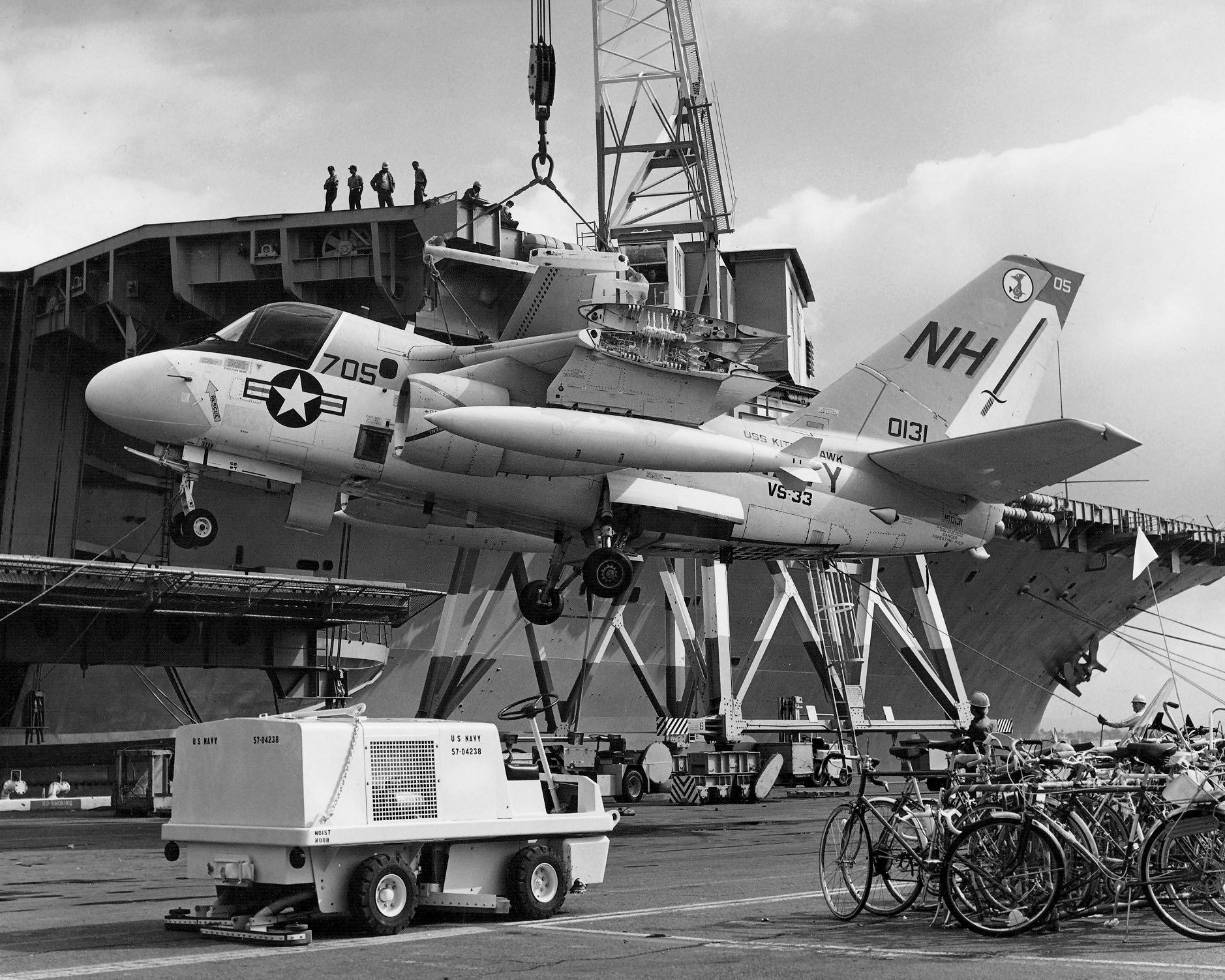
The story of the U.S. Air Force Boeing 747-based presidential transports.
The American president used Boeing 707-based VC-137 VVIP aircraft since the 1960s, but in 1985 the Air Force began the search for a larger aircraft for use as Air Force One. The Boeing 747 and the McDonnell Douglas DC-10 were considered and the 747 was selected. Two 747-200B aircraft, designated VC-25A, were completed and first flew in 1987. The fitting of communications and defensive systems delayed delivery until 1990. See the attached infographic for the layout of the VC-25A.
The VC-25s are operated and maintained by the Presidential Airlift Group of the 89th Airlift Wing at Andrews AFB, Maryland. As you might expect, no effort is spared to ensure that these aircraft are kept in perfect condition in all respects.
The earlier models of the 747 began to age out after 2000, and the VC-25As were no exception. The Air Force began exploring replacement not long after 2000 and again considered two candidates: The Airbus A380 and the Boeing 747-8i. Airbus soon sensed their disadvantage and withdrew in 2009, leaving the upgraded 747 as the victor. The USAF announced the selection in 2015 and authorized Boeing to begin preliminary design work. While the goal was three aircraft, the program was limited to two.
In an effort to reduce cost (for what is essentially a cost-no-object program!), two 747-8i aircraft that had been ordered but not delivered to a bankrupt airline were selected for modification to a new VC-25B standard. The cost for the aircraft in 2018 was USD 3.9 billion, making the VC-25B the most costly aircraft in the Air Force's inventory -- even more expensive than the stealth bomber.
Work began on the two VC-25Bs in 2020. The original estimated date of delivery was 2024 but the program has suffered many delays (sound familiar?) The present date for delivery is 2029.
The VC-25B will be 30 feet longer than the VC-25A and have a 19 foot greater wingspan. Max takeoff weight will increase from 833,000 to 987,000 pounds. The VC-25B's range increases by about a thousand miles.
While work continues on the VC-25Bs, there have been new developments. The U.S. accepted the gift of a 747-8i VVIP aircraft from Qatar in 2025. This aircraft does not have the extensive communications and defensive equipment of the VC-25As and VC-25Bs and is designated VC-25B Bridge. Although modifications are underway, it is unlikely to serve very long.
The Air Force also purchased two Lufthansa 747-8i transports for $400 million in 2025. Preliminary indications are that one will be used for pilot training and the other for spare parts.
https://en.wikipedia.org/wiki/Boeing_VC-25
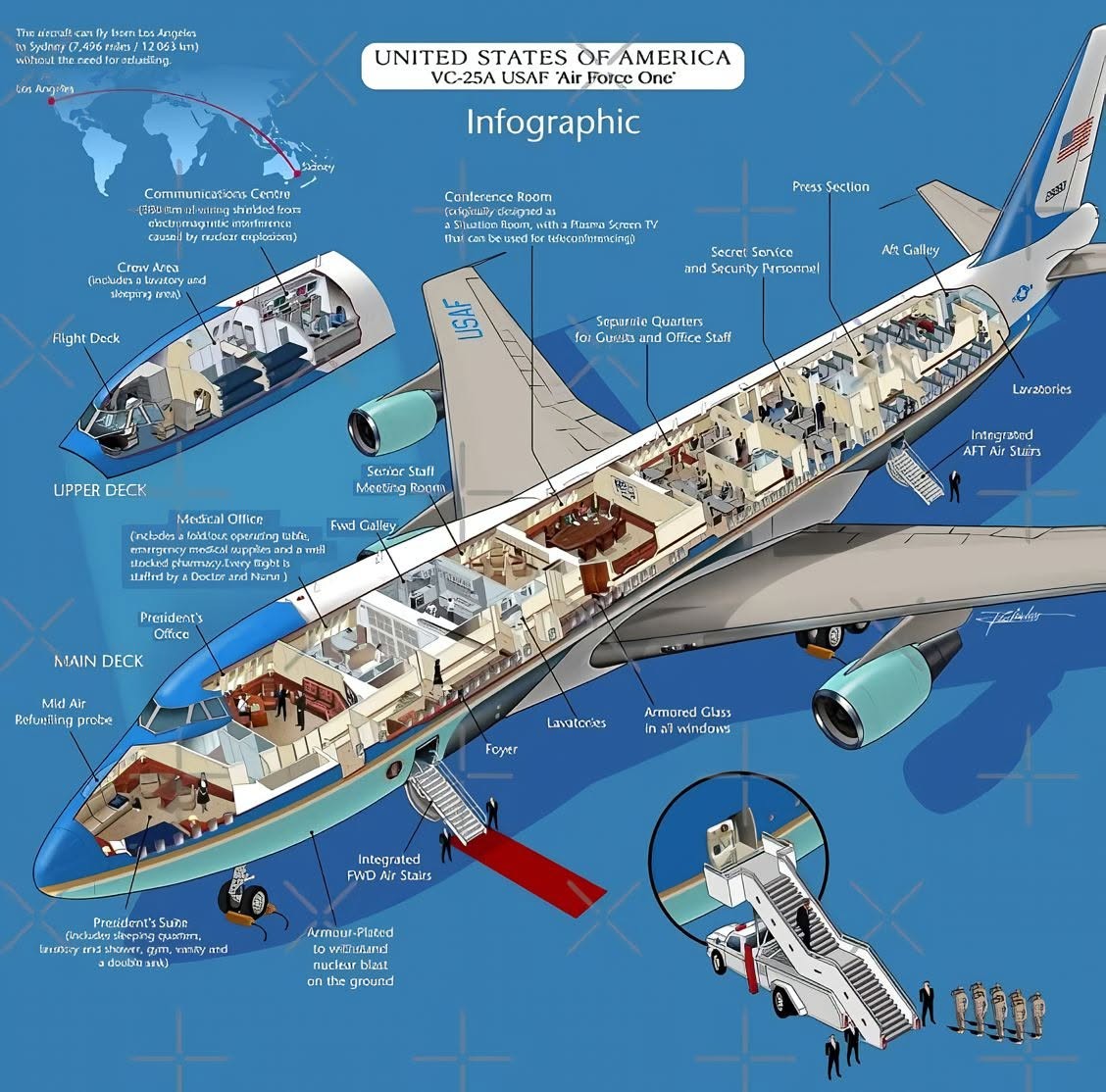
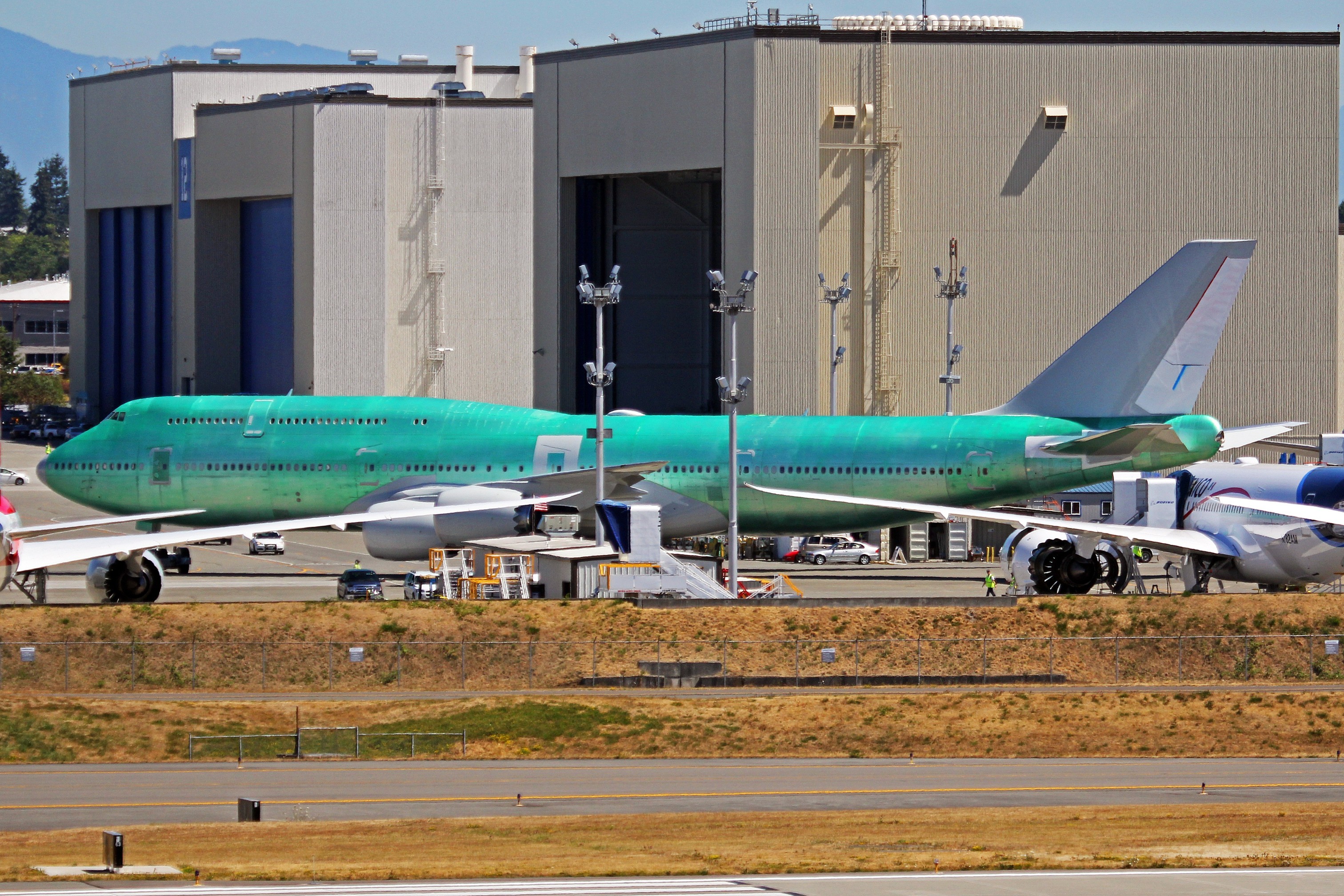
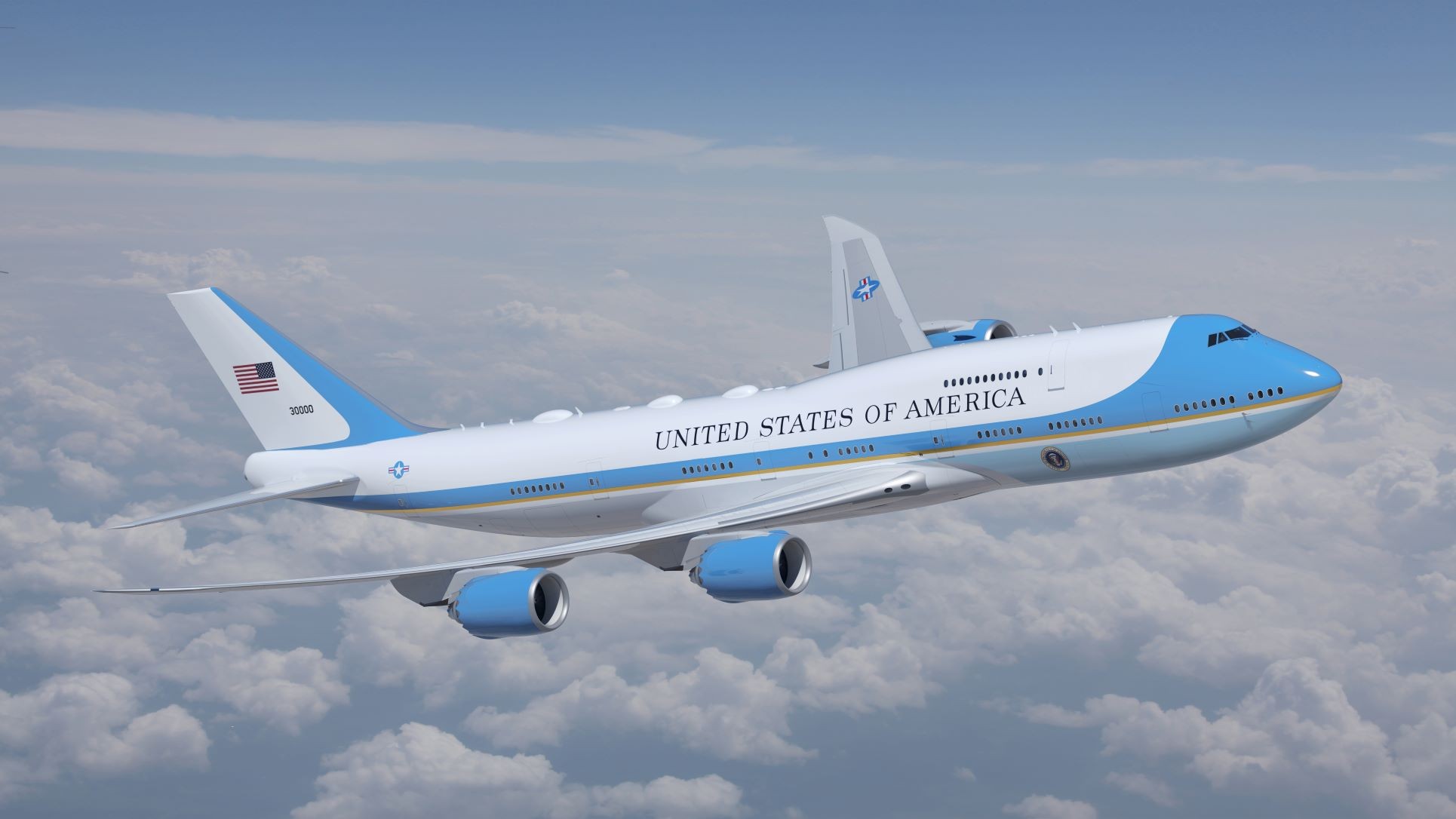
The American president used Boeing 707-based VC-137 VVIP aircraft since the 1960s, but in 1985 the Air Force began the search for a larger aircraft for use as Air Force One. The Boeing 747 and the McDonnell Douglas DC-10 were considered and the 747 was selected. Two 747-200B aircraft, designated VC-25A, were completed and first flew in 1987. The fitting of communications and defensive systems delayed delivery until 1990. See the attached infographic for the layout of the VC-25A.
The VC-25s are operated and maintained by the Presidential Airlift Group of the 89th Airlift Wing at Andrews AFB, Maryland. As you might expect, no effort is spared to ensure that these aircraft are kept in perfect condition in all respects.
The earlier models of the 747 began to age out after 2000, and the VC-25As were no exception. The Air Force began exploring replacement not long after 2000 and again considered two candidates: The Airbus A380 and the Boeing 747-8i. Airbus soon sensed their disadvantage and withdrew in 2009, leaving the upgraded 747 as the victor. The USAF announced the selection in 2015 and authorized Boeing to begin preliminary design work. While the goal was three aircraft, the program was limited to two.
In an effort to reduce cost (for what is essentially a cost-no-object program!), two 747-8i aircraft that had been ordered but not delivered to a bankrupt airline were selected for modification to a new VC-25B standard. The cost for the aircraft in 2018 was USD 3.9 billion, making the VC-25B the most costly aircraft in the Air Force's inventory -- even more expensive than the stealth bomber.
Work began on the two VC-25Bs in 2020. The original estimated date of delivery was 2024 but the program has suffered many delays (sound familiar?) The present date for delivery is 2029.
The VC-25B will be 30 feet longer than the VC-25A and have a 19 foot greater wingspan. Max takeoff weight will increase from 833,000 to 987,000 pounds. The VC-25B's range increases by about a thousand miles.
While work continues on the VC-25Bs, there have been new developments. The U.S. accepted the gift of a 747-8i VVIP aircraft from Qatar in 2025. This aircraft does not have the extensive communications and defensive equipment of the VC-25As and VC-25Bs and is designated VC-25B Bridge. Although modifications are underway, it is unlikely to serve very long.
The Air Force also purchased two Lufthansa 747-8i transports for $400 million in 2025. Preliminary indications are that one will be used for pilot training and the other for spare parts.
https://en.wikipedia.org/wiki/Boeing_VC-25
A little AF One trivia.
The Aircraft Commander is typically a Colonel (O-6). The First Pilot/First Officer and Relief Pilot/Bunkie are usually Majors (O-4) or Lt. Colonel's (O-5).
Traditionally, when the president steps down from his term, the Aircraft Commander (O-6) retires.
The call sign for any aircraft carrying the President is Air Force One. During the inauguration (when the outgoing president is flying home), the moment that the new president is sworn in, the call sign of the jet inflight changes from "Air Force One" to "SAM001" (Special Air Mission) as the president is no longer onboard.
R.
The Aircraft Commander is typically a Colonel (O-6). The First Pilot/First Officer and Relief Pilot/Bunkie are usually Majors (O-4) or Lt. Colonel's (O-5).
Traditionally, when the president steps down from his term, the Aircraft Commander (O-6) retires.
The call sign for any aircraft carrying the President is Air Force One. During the inauguration (when the outgoing president is flying home), the moment that the new president is sworn in, the call sign of the jet inflight changes from "Air Force One" to "SAM001" (Special Air Mission) as the president is no longer onboard.
R.
flybigjet wroteHmmmmm...yet there's an interesting 'twist' to the AF tale 🧐A little AF One trivia.
The Aircraft Commander is typically a Colonel (O-6). The First Pilot/First Officer and Relief Pilot/Bunkie are usually Majors (O-4) or Lt. Colonel's (O-5).
Traditionally, when the president steps down from his term, the Aircraft Commander (O-6) retires.
The call sign for any aircraft carrying the President is Air Force One. During the inauguration (when the outgoing president is flying home), the moment that the new president is sworn in, the call sign of the jet inflight changes from "Air Force One" to "SAM001" (Special Air Mission) as the president is no longer onboard.
R.
What's the Air Force version of the story when George W Bush flew as a right seater in a US Navy S-3 Viking for an arrested landing aboard USS Abraham "Stinkin" Lincoln [btw, my ole carrier]?
Did a Navy tactical jet then become "Air Force One"?
Negative...one and only time designated "Navy One"; piloted by Navy Commander [O-5] squadron XO, former acquaintance.
> IMHO, pretty damn stupid, narcissistic, and dangerous for an acting President of United States strapped into an ejection seat that along with an arrested carrier landing... to say the least

'Interaircraft' relations rarely end well 
The initial U-2 photo reconnaissance overflights of the USSR in June 1956 came as a shock to the Soviets. They had already experienced "high altitude" overflights by Canberras but the U-2 upped the ante considerably as they cruised over Warsaw Pact and Soviet territory with impunity taking photographs at altitudes about 10,000 feet higher than previous aircraft. The flights were conducted by CIA-owned U-2s and Soviet protests were met with denials that any U. S. military aircraft were involved.
The story of the U-2 overflights is well known, and I won't go into details here except to add that the flights ceased in May 1960 when a CIA U-2 was shot down by Soviet S-75 Dvina (SA-2 Guideline) missiles.
The wreckage of the downed U-2 gave the Soviets some insight into the engineering of such an aircraft and the Beriev design bureau was given the task of copying the American aircraft. The resulting Beriev S-13 was never completed.
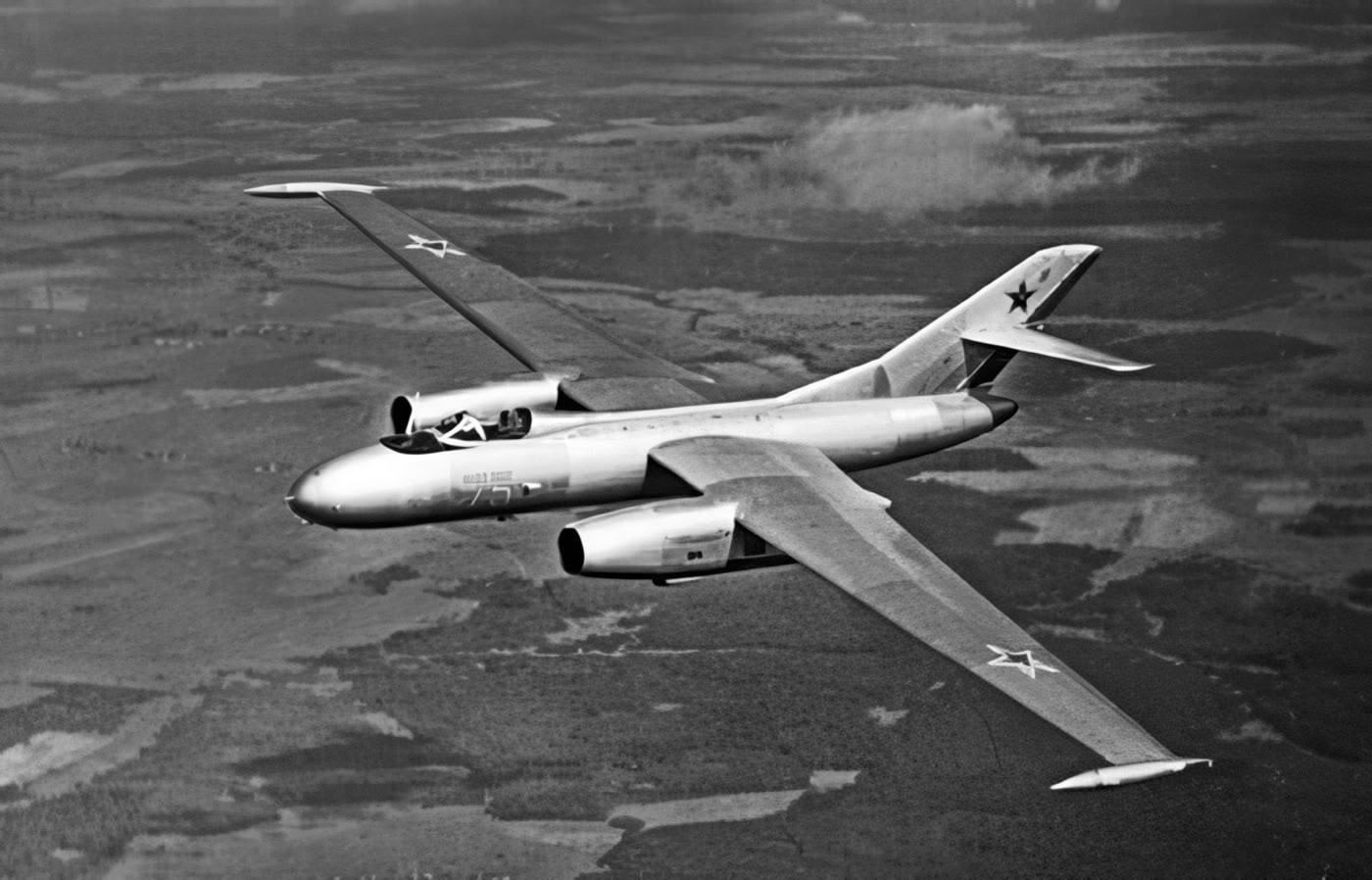
Yakovlev was tasked with modifying a Yak-25 with extended wings to give the aircraft high altitude capability -- somewhat like the Americans had done with the Canberra-based RB-57D and RB-57F. The result was the Yak-25RV (NATO Mandrake), which did not have quite the altitude capability of the U-2. The Yak-25RV was adopted in 1961 and 155 were built. Many were used in unmanned mode.
One vital mission for a high-altitude aircraft was destroying the American camera-carrying balloons that used prevailing wind patterns to overfly much of the USSR snapping photos. The Myasishchev design bureau was tasked with developing a high-altitude balloon interceptor. The result was a prototype Article 34, which was completed in 1978 -- well after the balloon program had ceased. The Article 34 was armed with two 23mm cannon firing upward to the rear of the cockpit and could also carry two air-to-air-missiles. The program ended in disaster when during taxi tests, the aircraft hit a snowbank and was destroyed.
Myasishchev did not give up. They refined the design and the resulting M-17 Stratosphera (NATO Mystic A) flew in 1982. At least two of these were built. The twin cannon were retained but I believe the AAM capability was deleted. By the time the M-17 appeared, the balloon program was defunct; the U.S. now used satellites for photo recon.
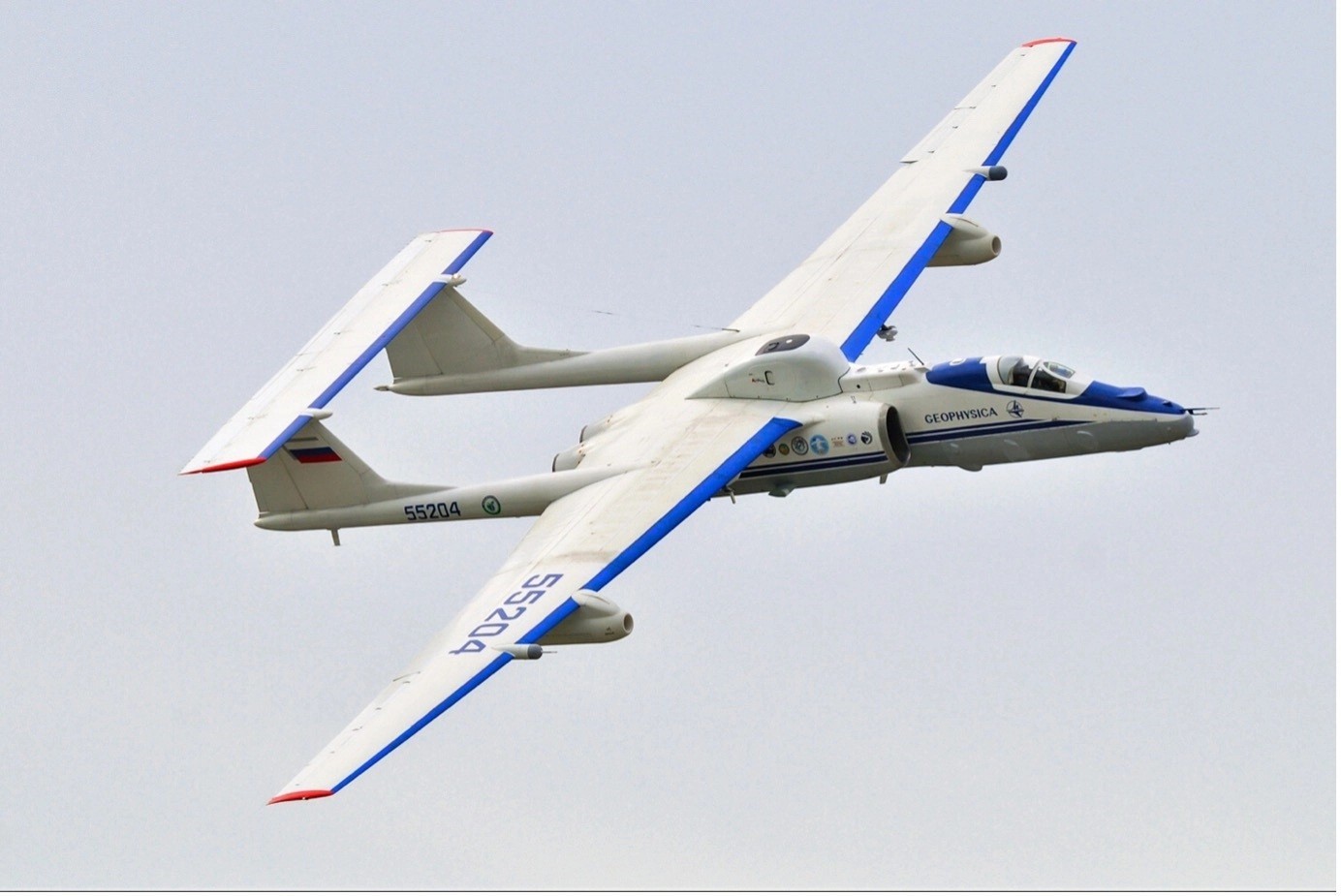
Myasishchev continued to develop the concept and the M-55 Geophysica was the final design. The M-55 had twin engines and first flew in 1988. Although such an aircraft had potential for high-altitude photo recon, it was used mainly for scientific research purposes. 5 aircraft were built. Of note, Russia may be trying to restore one M-55 to flying status for use in the war with Ukraine. I suspect that such an aircraft, if flying at 70,000 feet over Ukraine or Russia, will prove to be vulnerable to air defense missiles.
All these Soviet efforts topped out at about 70,000-foot altitude. It's worth noting that the modern U-2S can get close to 80,000 feet these days.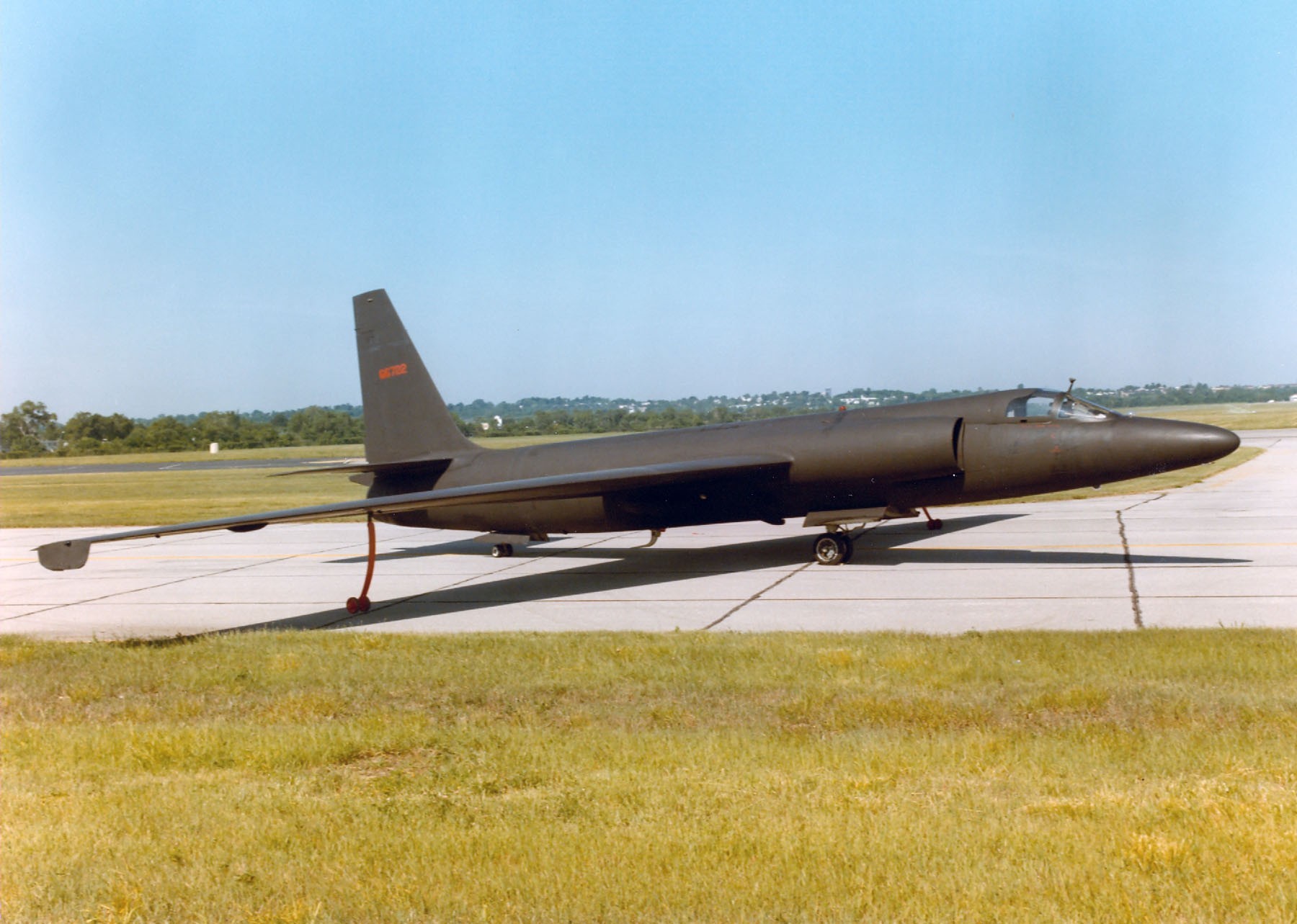
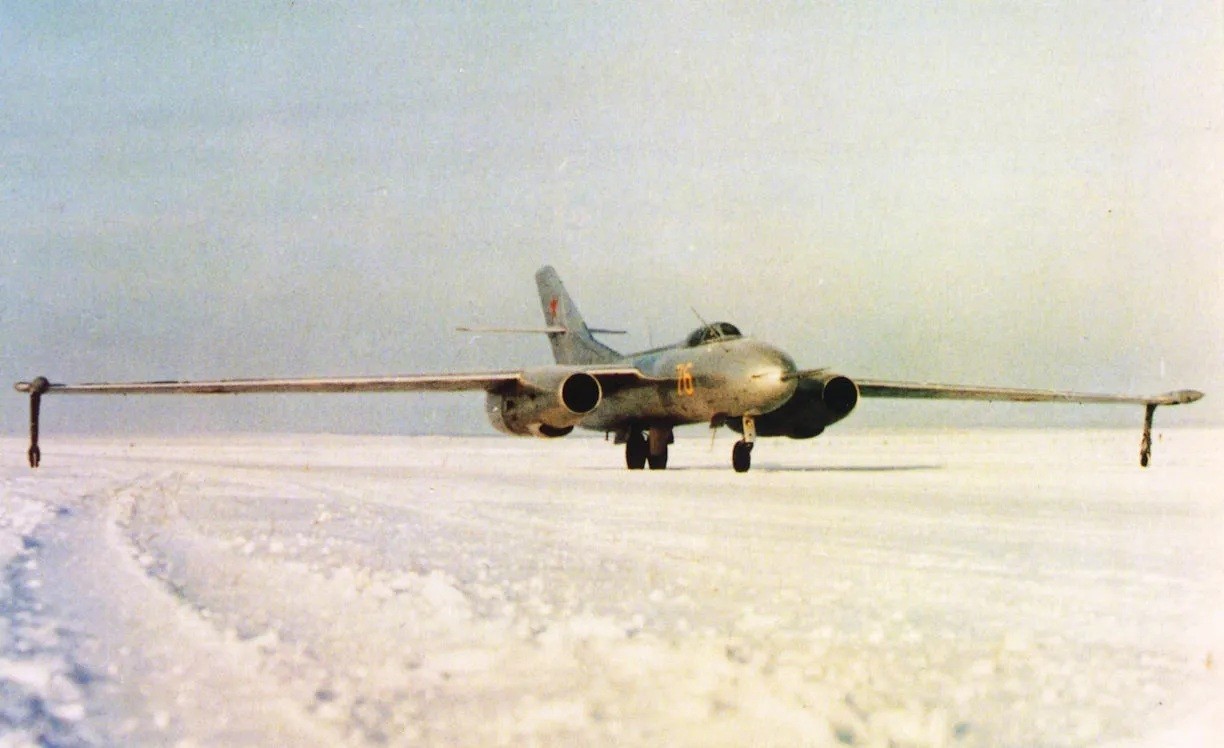


The story of the U-2 overflights is well known, and I won't go into details here except to add that the flights ceased in May 1960 when a CIA U-2 was shot down by Soviet S-75 Dvina (SA-2 Guideline) missiles.
The wreckage of the downed U-2 gave the Soviets some insight into the engineering of such an aircraft and the Beriev design bureau was given the task of copying the American aircraft. The resulting Beriev S-13 was never completed.
Yakovlev was tasked with modifying a Yak-25 with extended wings to give the aircraft high altitude capability -- somewhat like the Americans had done with the Canberra-based RB-57D and RB-57F. The result was the Yak-25RV (NATO Mandrake), which did not have quite the altitude capability of the U-2. The Yak-25RV was adopted in 1961 and 155 were built. Many were used in unmanned mode.
One vital mission for a high-altitude aircraft was destroying the American camera-carrying balloons that used prevailing wind patterns to overfly much of the USSR snapping photos. The Myasishchev design bureau was tasked with developing a high-altitude balloon interceptor. The result was a prototype Article 34, which was completed in 1978 -- well after the balloon program had ceased. The Article 34 was armed with two 23mm cannon firing upward to the rear of the cockpit and could also carry two air-to-air-missiles. The program ended in disaster when during taxi tests, the aircraft hit a snowbank and was destroyed.
Myasishchev did not give up. They refined the design and the resulting M-17 Stratosphera (NATO Mystic A) flew in 1982. At least two of these were built. The twin cannon were retained but I believe the AAM capability was deleted. By the time the M-17 appeared, the balloon program was defunct; the U.S. now used satellites for photo recon.
Myasishchev continued to develop the concept and the M-55 Geophysica was the final design. The M-55 had twin engines and first flew in 1988. Although such an aircraft had potential for high-altitude photo recon, it was used mainly for scientific research purposes. 5 aircraft were built. Of note, Russia may be trying to restore one M-55 to flying status for use in the war with Ukraine. I suspect that such an aircraft, if flying at 70,000 feet over Ukraine or Russia, will prove to be vulnerable to air defense missiles.
All these Soviet efforts topped out at about 70,000-foot altitude. It's worth noting that the modern U-2S can get close to 80,000 feet these days.
The MD Helicopters MD 564 is a high-performance utility helicopter featuring a 6-blade main rotor, 4-blade tail rotor, and a 675-shp Rolls-Royce 250-C47E/3 engine with dual-channel FADEC. It delivers a 400+ nm range, 4-hour endurance, 175 mph and a $4 million price tag with service entry slated for late 2027 or early 2028.
564 means: 500 series, 6 blades main and 4 tail in this case. Clever.
564 means: 500 series, 6 blades main and 4 tail in this case. Clever.
The Hughes Industries Cayuse OH-6 was the grand Daddy of the MD series.
Reportedly, 964 out of the 1,422 OH-6As produced for the U.S. Army were destroyed in the Vietnam theatre, the majority of these losses being a result of hostile action, typically ground fire. It was eventually replaced by the Kiowa (Jet Ranger) but was nowhere as nimble.
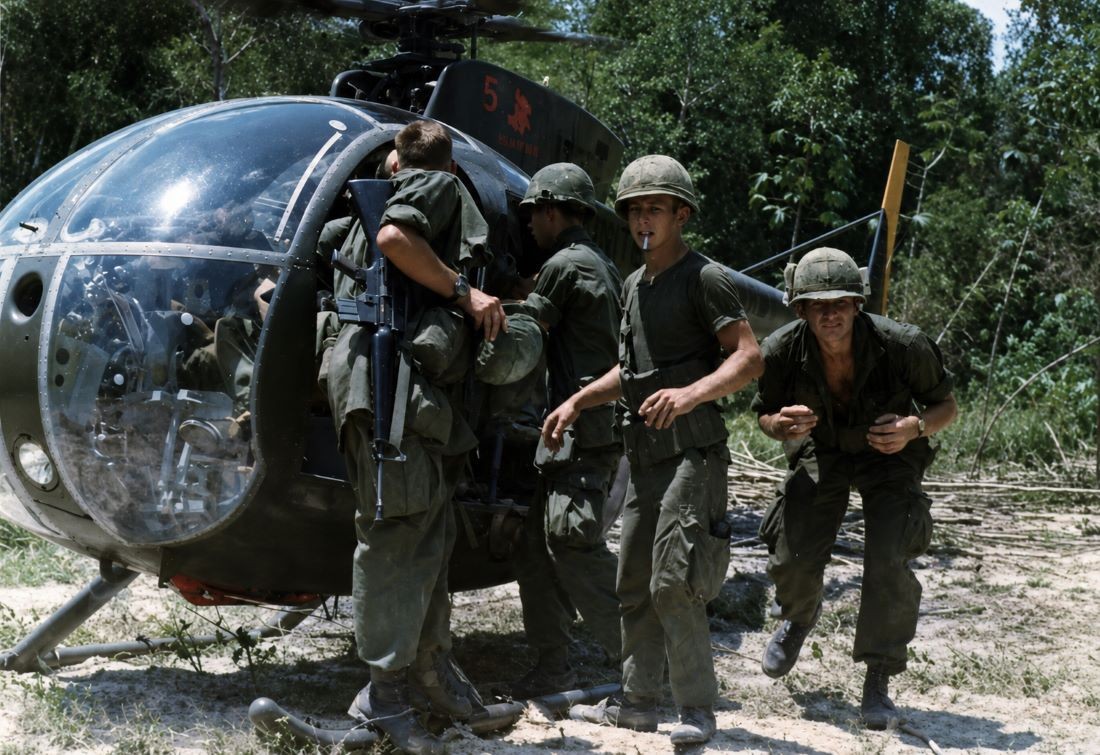
Reportedly, 964 out of the 1,422 OH-6As produced for the U.S. Army were destroyed in the Vietnam theatre, the majority of these losses being a result of hostile action, typically ground fire. It was eventually replaced by the Kiowa (Jet Ranger) but was nowhere as nimble.
Speaking of air force one, landed at Boston Logan and this was outside my window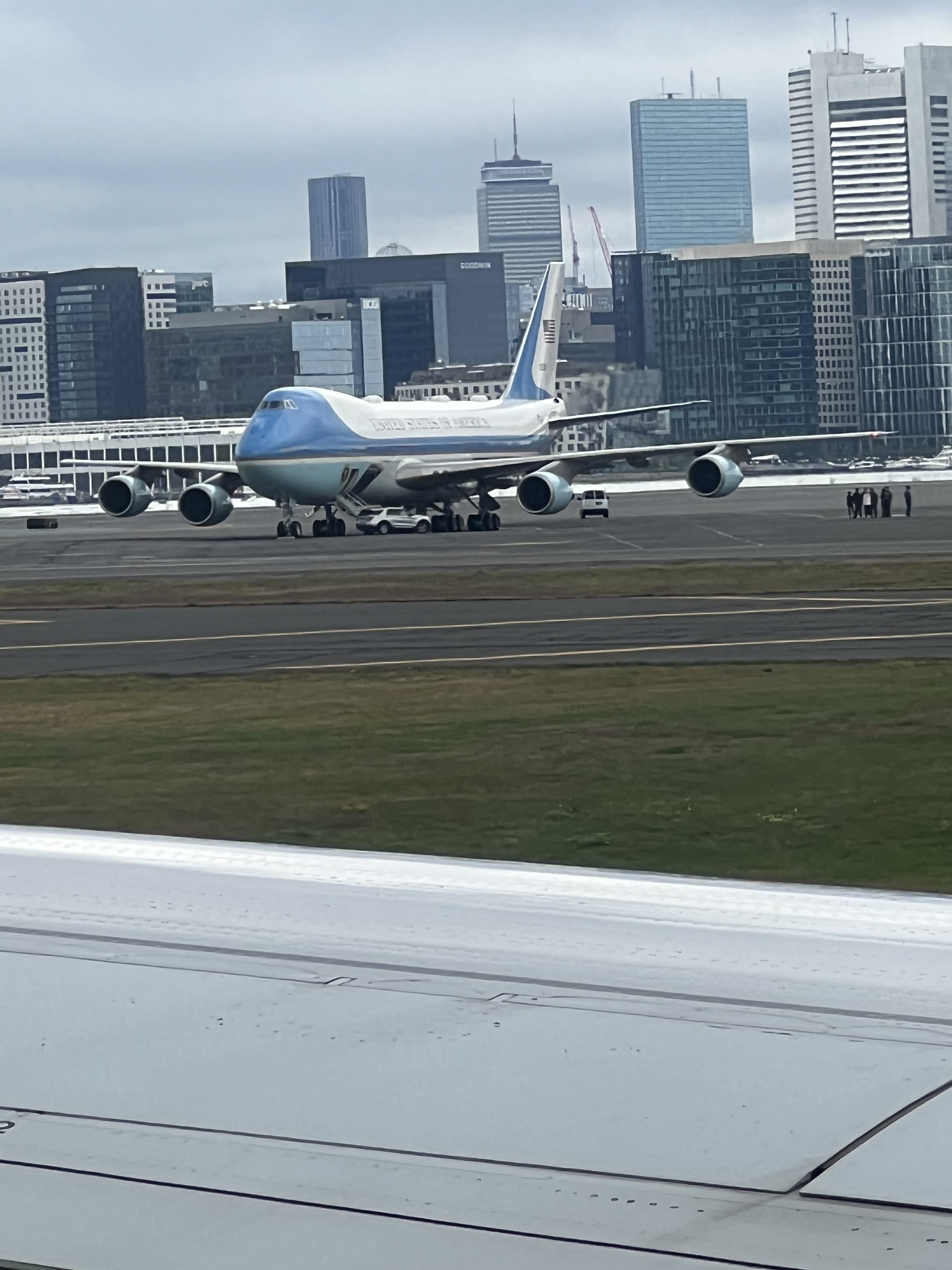
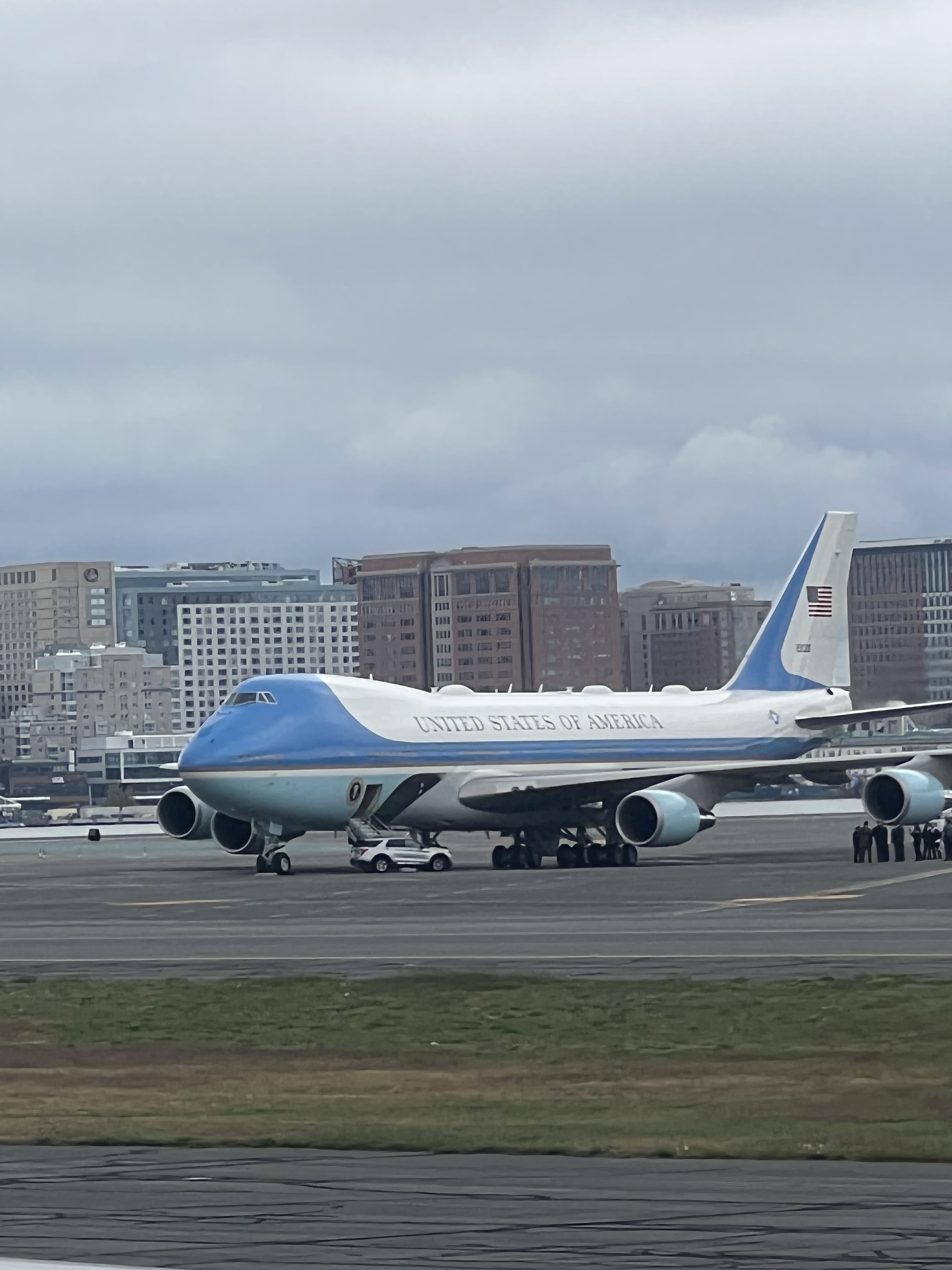
jeff351 wroteMy eyes are admittedly bad, but that looks like SAM 29000. Its last flight using the AF1 call sign was back in June, ferrying the President home from the G7 Summit in France. It has been officially retired from Presidential duty, but I gather is still being used for VIP transport for a while longer.Speaking of air force one, landed at Boston Logan and this was outside my window
I just checked the public White House schedule, and it reports that the President is/was in Washington, DC all day today.....
Lady Jane wroteThe H-6 lives on in greatly improved SpecOps guise with the 160th Special Operations Aviation Regiment. The current versions are the MH-6M and AH-6M with 6 rotor blades, etc. These are known as "Little Birds".The Hughes Industries Cayuse OH-6 was the grand Daddy of the MD series.
Reportedly, 964 out of the 1,422 OH-6As produced for the U.S. Army were destroyed in the Vietnam theatre, the majority of these losses being a result of hostile action, typically ground fire. It was eventually replaced by the Kiowa (Jet Ranger) but was nowhere as nimble.
Llarry wroteThe "Little Bird" or "Killer Egg" monikers were already in use way back then.The H-6 lives on in greatly improved SpecOps guise with the 160th Special Operations Aviation Regiment. The current versions are the MH-6M and AH-6M with 6 rotor blades, etc. These are known as "Little Birds".
The H-6 and subsequent versions did have a six blade main rotor and a "scissor" four blade tail reducing acoustic noise and suppress high-frequency vibrations by using uneven blade spacing instead of a standard 90-degree cross. It also used an Allison sourced engine and kept the egg shape canopy.
vreihen16 wroteThat was from sep 12,2002 so theres a good chance that the president at the time had just tumbled down the stairs before we landedMy eyes are admittedly bad, but that looks like SAM 29000. Its last flight using the AF1 call sign was back in June, ferrying the President home from the G7 Summit in France. It has been officially retired from Presidential duty, but I gather is still being used for VIP transport for a while longer.
I just checked the public White House schedule, and it reports that the President is/was in Washington, DC all day today.....
According to the magazine Aviation Week & Space Technology, considered an authoritative source of information on aviation, there are big changes coming when the U.S. Navy's force of 16 Boeing 707-based E-6B Mercury aircraft are replaced by the forthcoming E-130J Phoenix II. As a reminder, the E-6Bs are a vital component in the control of U.S. strategic forces such as Navy ballistic missile submarines and Air Force ICBMs, but are aging.
The Navy originally bought E-6As to control the submarines but subsequently modified the aircraft to control ICBMs as well. With the new-generation E-130J the missions will once again be split -- the Air Force will develop their own airborne control of the ICBM force and the E-130J will control the strategic submarines only.
The other news is that the E-130J fleet will be expanded: Replacing the 16 E-6Bs with 25 E-130Js -- as well as 5 developmental aircraft.
The article (behind a paywall) states that a C-130J transport currently runs $110 million each, but the fully equipped E-130J is estimated to cost $361 million for each aircraft.
The first airframe has already been produced by Lockheed Martin. Now the modification process begins. The E-130J is expected to be flying by 2028.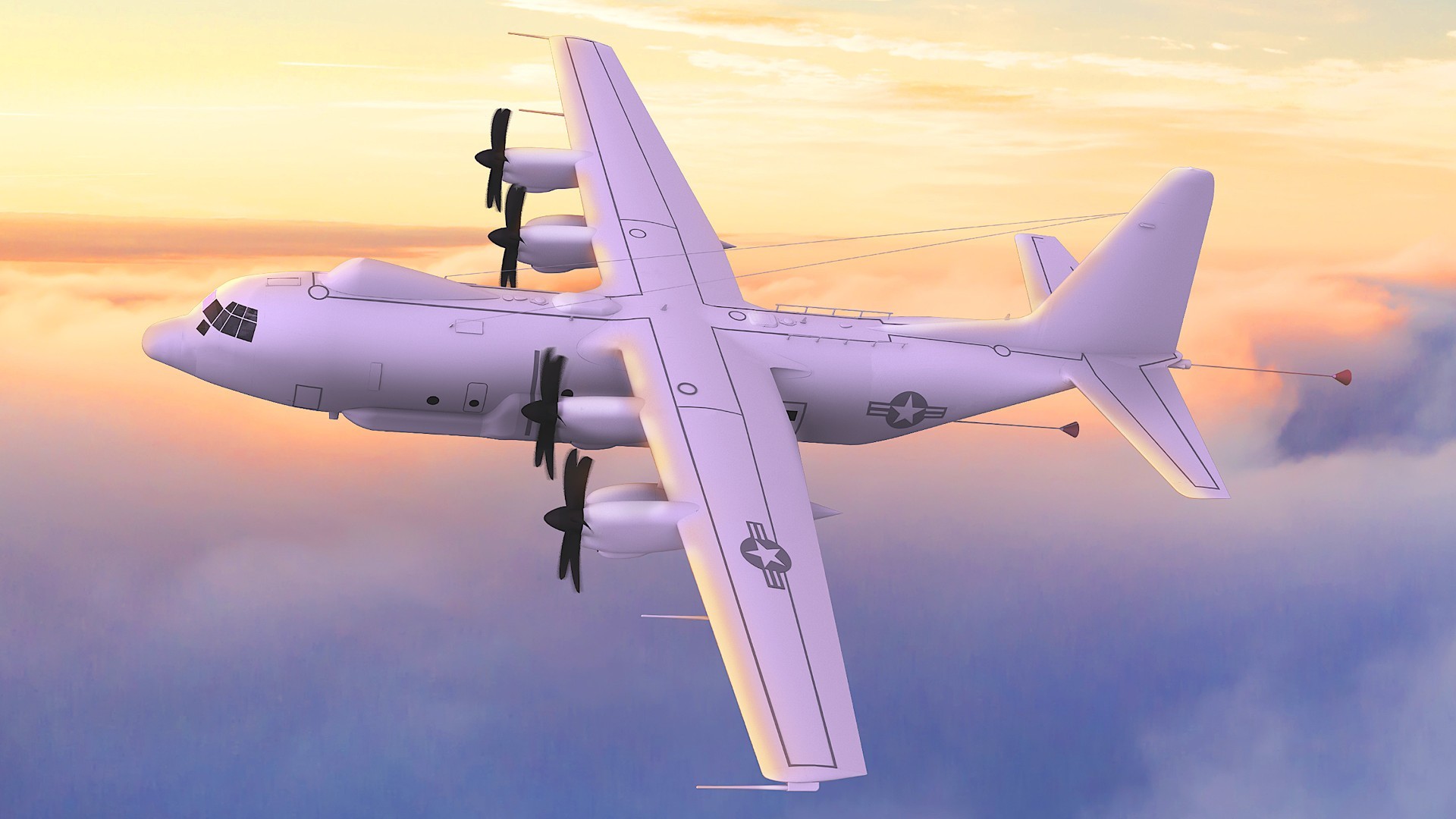
The Navy originally bought E-6As to control the submarines but subsequently modified the aircraft to control ICBMs as well. With the new-generation E-130J the missions will once again be split -- the Air Force will develop their own airborne control of the ICBM force and the E-130J will control the strategic submarines only.
The other news is that the E-130J fleet will be expanded: Replacing the 16 E-6Bs with 25 E-130Js -- as well as 5 developmental aircraft.
The article (behind a paywall) states that a C-130J transport currently runs $110 million each, but the fully equipped E-130J is estimated to cost $361 million for each aircraft.
The first airframe has already been produced by Lockheed Martin. Now the modification process begins. The E-130J is expected to be flying by 2028.
I find this new video fascinating. My father flew the Canadair built CF104-G in Germany after transitioning from the Canadair MK-V Sabre. He always said that he loved the plane but hated what is was made to do.
