

UncleWede wroteI wonder if it was Mather by Sacramento. When I was kid there in the 80s I believe they had B-52s on alert there.My uncle was in the AF, and was part of the SAC out of northern Ca somewhere. I remember a s a yout, visiting him, and he took us to see one of the bombers, let me walk inside the bay. It still blows my mind to think of that space full of nuke-u-ler weapons.
9.1MVIEWS
4.4KREPLIES
13KAPPRECIATES
8 hr agoLAST POST
minn19 wroteB-52s were also up at Beale north of Sacramento from 1959-1976.I wonder if it was Mather by Sacramento. When I was kid there in the 80s I believe they had B-52s on alert there.
My favorite current commercial planes-
Airbus A350 / Boeing 787 - Both are first majorly CFRP component aircraft with lower pressurized cabin altitude that's very comfortable.
777 - The greatest twin jet to ever grace the skies.
From the smaller aircraft, I think the Airbus A320 takes the cake over the 737 in overall comfort and just plain tech in the way the systems / cabin are designed.
And from the past of course the Concorde... from Military aircraft, have to throw in the F22 Raptor and the C5 Galaxy.
Airbus A350 / Boeing 787 - Both are first majorly CFRP component aircraft with lower pressurized cabin altitude that's very comfortable.
777 - The greatest twin jet to ever grace the skies.
From the smaller aircraft, I think the Airbus A320 takes the cake over the 737 in overall comfort and just plain tech in the way the systems / cabin are designed.
And from the past of course the Concorde... from Military aircraft, have to throw in the F22 Raptor and the C5 Galaxy.
dradernh wroteThe NC National Guard has C17s stationed at CLT, I see them flying all the time, looks real imposing compared to the typical narrow body planes flying around here most of the type.minn19 wroteB-52s were also up at Beale north of Sacramento from 1959-1976.I wonder if it was Mather by Sacramento. When I was kid there in the 80s I believe they had B-52s on alert there.
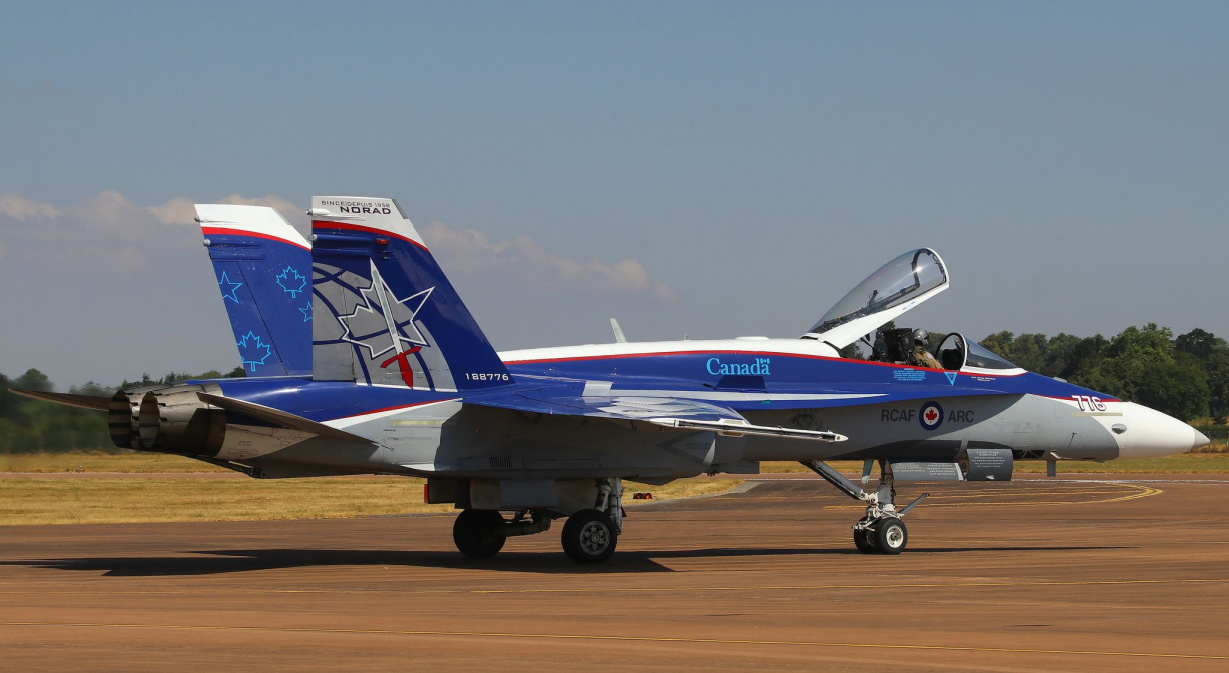
Hornet in festive livery celebrating our partnership with NORAD.
Llarry wroteWe had 13 teams convoy from Ft. Sill to Tinker AFB. There were 13 C-141A's waiting for us. We didn't fly in formation, but all 13 C-141's flew to Vietnam on the same day. We all departed Tinker AFB within minutes of each other.Speaking of four-ship -141 formations, I seem to remember that one or more -141 units had a Special Operations connection. Not hard-core dedicated mission like the -130s, but something...
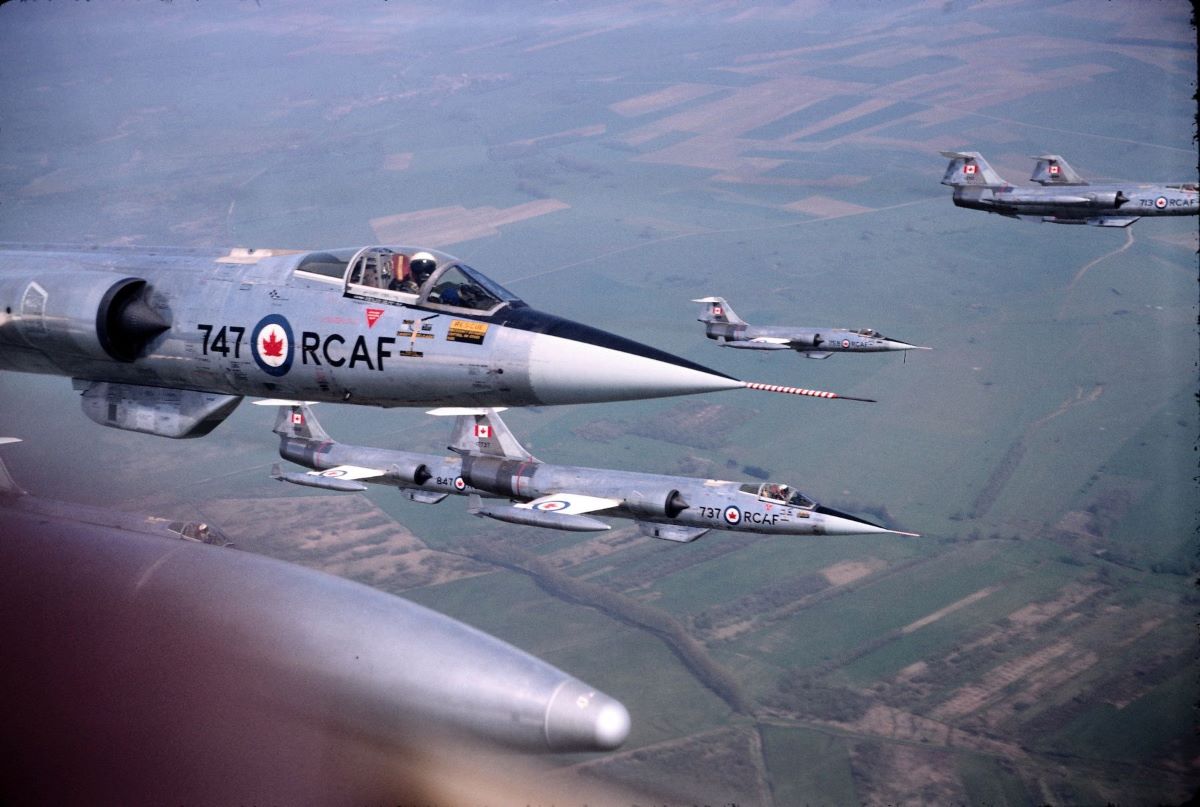
Speaking of formation...
ASAP wroteThe only Airbus that I've flown on is the A319, on a small budget airline. The first flight was uneventful, even though we took off in a surprise Tropical Storm. The return flight was smooth, but that particular A319 earned its Scarebus nickname as it creaked like a 1980's plastic car interior on the taxiways. When the takeoff roll started, the cabin sounded like an old pirate ship and I was seriously crossing my fingers hoping that the thing didn't fall apart before it left the ground! The whole thing felt like it was put together from spare parts, and even the cabin LED lighting had 2-3 different color temperatures mixed in like someone was scrounging in a remote bone yard for any part that fit. Anyway, I looked up the tail number after we had landed, and discovered that it was a seasonal lease from a South American airline.From the smaller aircraft, I think the Airbus A320 takes the cake over the 737 in overall comfort and just plain tech in the way the systems / cabin are designed.
2008M36MT wroteI see several C17s flying here almost every weekend, as Governor Hochul's flying club (the NY ANG) logs their seat time flying in circles. They used to fly the C5 Galaxy until just a few years ago, and we used to get treated to *experiencing* them flying over as they arrived/departed the nearby airport. When they fly right over your head on final approach, you just have to stare in amazement at how something that large can move so slow and not fall out of the sky.....The NC National Guard has C17s stationed at CLT, I see them flying all the time, looks real imposing compared to the typical narrow body planes flying around here most of the type.
vreihen16 wroteI saw C5s doing touch-and-goes at Travis south of Sacramento back in the mid-80s and had the same reaction. It was especially pronounced if you looked away and then looked back; then it was impossible not have the feeling for just a moment that it was certainly going to drop out of the sky.They used to fly the C5 Galaxy until just a few years ago, and we used to get treated to *experiencing* them flying over as they arrived/departed the nearby airport. When they fly right over your head on final approach, you just have to stare in amazement at how something that large can move so slow and not fall out of the sky.....
dradernh wroteThat's because it had a HUGE amount of flaps/slats out on final.I saw C5s doing touch-and-goes at Travis south of Sacramento back in the mid-80s and had the same reaction. It was especially pronounced if you looked away and then looked back; then it was impossible not have the feeling for just a moment that it was certainly going to drop out of the sky.
The "wag" you used for cross-checking the final approach airspeed was gross-weight plus 75.
i.e. if you weighed 500,000 lbs, you'd add 50 plus 75 to get an approach speed of about 125 knots.
If you were *really* lightweight (say the jet, no cargo and "only" 20,000 lbs of gas), you'r approach speed could be as low as 115 knots. By comparison, a Cessena's approach speed is about 60-70 knots and a heavyweight 737's approach speed with wind correction can be 150-170 knots.
R.
P51 Mustsng. Check.
A10 Warthog. Check. (It's not ugly)
But, the Lockheed Constellation wins for passenger airliner.
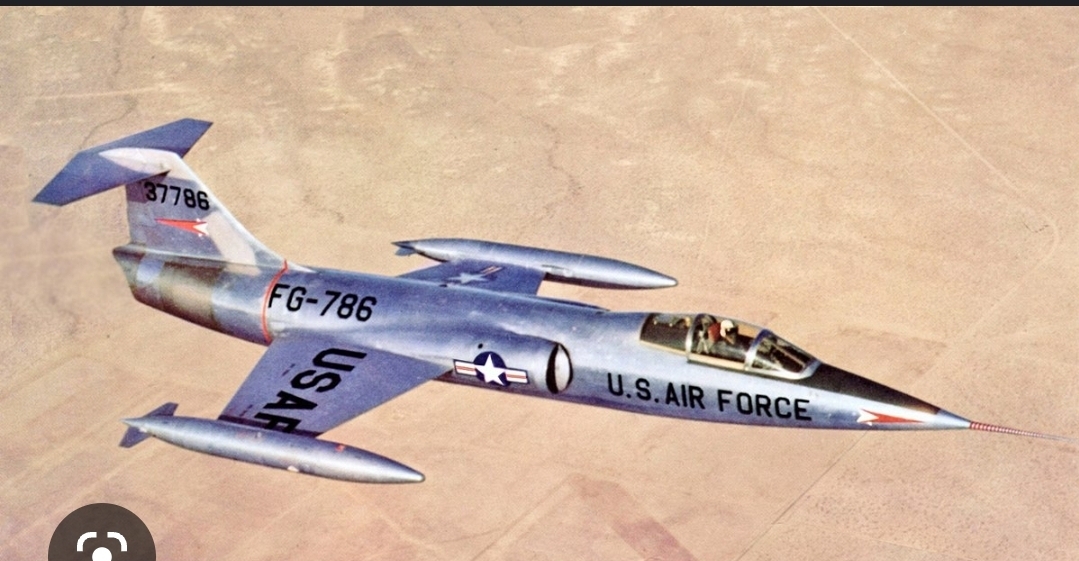
The F104 Starfighter has got to be up there. Saw a couple high speed passes at an airshow........still get chills.
A10 Warthog. Check. (It's not ugly)
But, the Lockheed Constellation wins for passenger airliner.
The F104 Starfighter has got to be up there. Saw a couple high speed passes at an airshow........still get chills.
snowbimmer wroteThere's a -104 at the air museum in McMinnville, Oregon, and I had to check the leading edge of the wing to see if it was razor-sharp (The F104 Starfighter has got to be up there. Saw a couple high speed passes at an airshow........still get chills.
 ) like the old story went -- "we have to put covers on the leading edge so the ground crew doesn't cut themselves."
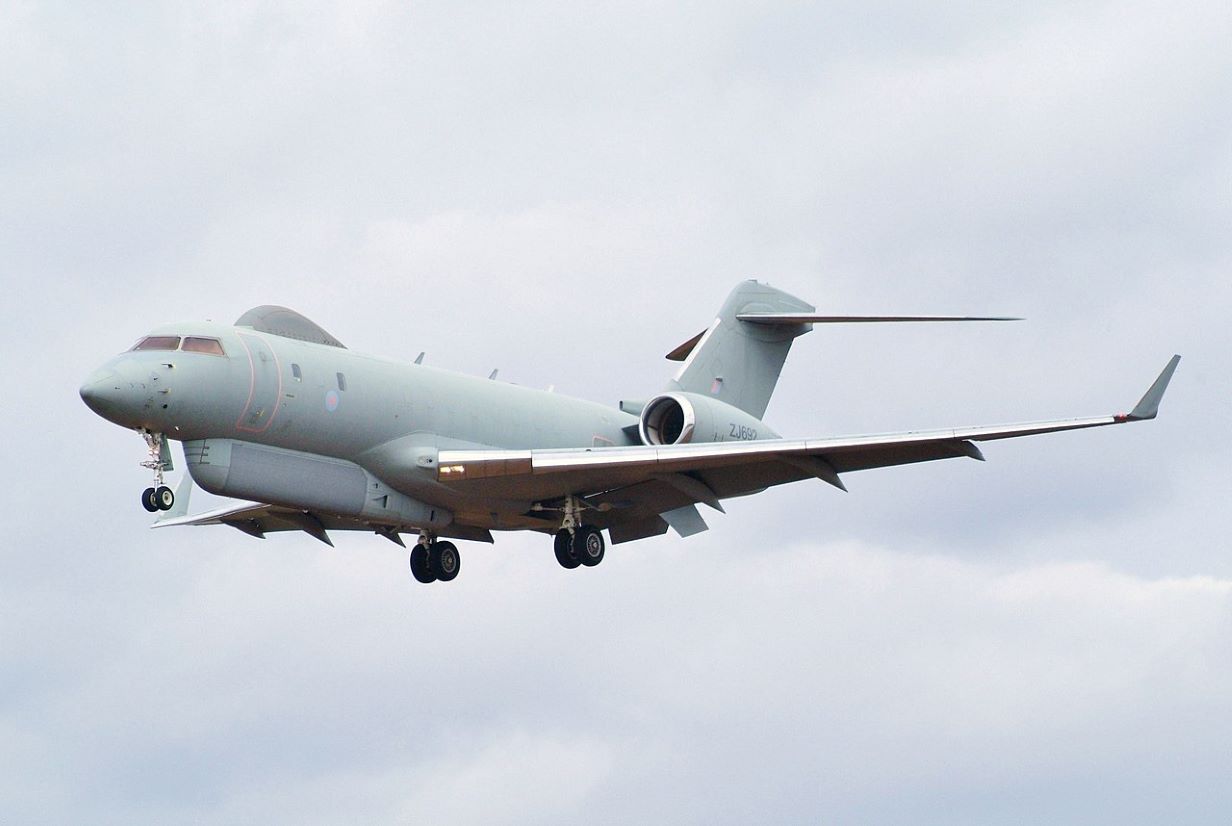
CP-140 Aurora/Acturus depending on the mission. Soon to be retired and possibly replaced by a Raytheon Sentinel based on the Bombardier Global Express currently in use by the RAF.

Lady Jane wroteAre your forces called really RAF and no longer RCAF? I hadn't paid any attention to this in the past, but now as you mention it...?CP-140 Aurora/Acturus depending on the mission. Soon to be retired and possibly replaced by a Raytheon Sentinel based on the Bombardier Global Express currently in use by the RAF.
Dang3r wroteThe Canadian Air Force is RCAF. The British is RAF. I don't see how you got confused.Are your forces called really RAF and no longer RCAF? I hadn't paid any attention to this in the past, but now as you mention it...?

The Canadair CL-41 a.k.a CT-114 Tutor. The advance trainer who started service in 1960 and retired in 2000 was replaced by the CT-156 Harvard II (Pilatus PC9).
Only the Snowbirds are flying them now, albeit a slightly modified and more powerful version.
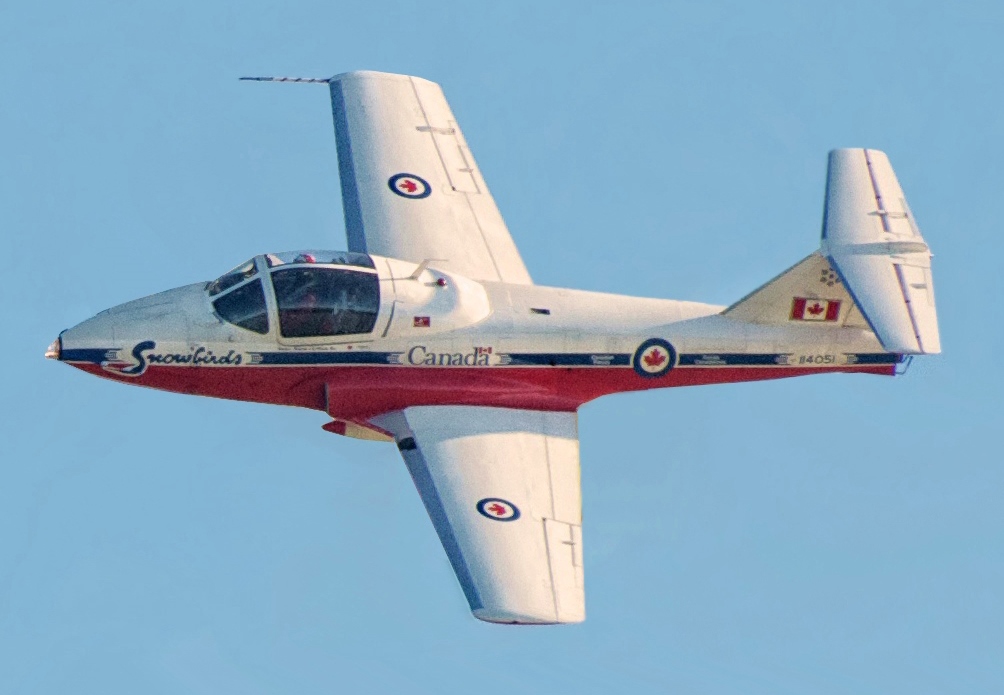
Only the Snowbirds are flying them now, albeit a slightly modified and more powerful version.
The CT-156 Harvard II; a training version of the Pilatus PC9 from Switzerland.
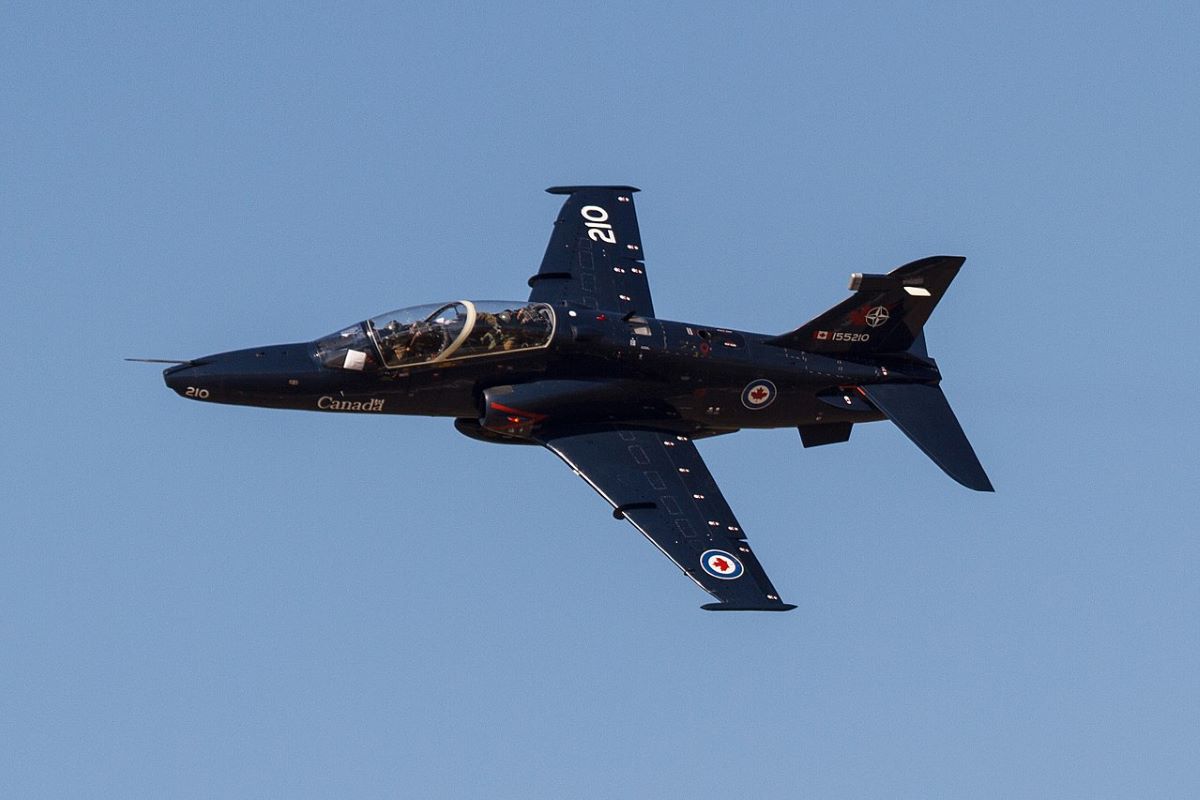
After training, pilots would go on to other types except fighters. That role would be filed by the CT-155 Hawk from BEA Systems.

After training, pilots would go on to other types except fighters. That role would be filed by the CT-155 Hawk from BEA Systems.
The CT-155 Hawk from BEA Systems for those aspiring to fly the Hornet and whatever will replace them. Unknow for sure at this time.
Not a big prop plane fan but the C-130 Hercules…bc Murica.
kscarrol wrotePositive Ghostrider 👍
In the mid-1960s, the Central Intelligence Agency procured three Lockheed P-3A Orion patrol planes with plans to provide them to the ROCAF in Taiwan. The 'Black Bats' of the ROCAF 34th Squadron flew missions over mainland China for years from the early '50s, using surplus U.S. aircraft such as B-17s, C-47s, etc. In some cases, with the assistance of the U.S., missions were staged from South Korea and Southeast Asia. In the early 1960s, the 34th got a major upgrade when they were given Lockheed P-2 Neptune aircraft and they subsequently flew many extremely hazardous night missions at low level over the People's Republic of China. The P-2s dropped agents into China, dropped sensor packages developed by the CIA, distributed anti-Communist leaflets, mapped out the locations of Chinese radars (and later SAM sites), etc. Their missions were flown at low level to avoid or minimize detection by radar and they skirted around known sites with searchlights or antiaircraft guns. Quite a few missions ended in disaster with the aircraft shot down and the crews dead or captured. Frequently Chinese fighters would be attempting to shoot them down, although the Chinese air force capabilities at night were poor.
The supply of ROCAF P-2s dwindled as shootdowns reduced their numbers and in about 1965 or so, the CIA arranged with the Navy to acquire three P-3As for conversion into P-2 replacements for the 34th squadron. One aircraft stayed in the U.S. for use in testing equipment etc and two airplanes flew to Taiwan. The CIA was perfectly aware of the dangers faced by the 34th and initially planned to use the P-3As for offshore recon and training missions. But the political climate was changing and the U.S. ultimately prohibited the P-3As from conducting overland night missions as originally envisioned. After just a year or so, the P-3As were withdrawn and flown back to the U.S. The whole program was highly classified; on a number of occasions the aircraft were flown from Taiwan to U.S. Navy facilities in the Far East for maintenance; when that was done, it was arranged for the aircraft to arrive and depart in hours of darkness and they were pulled into hangars where they would be not observed udring the maintenance periods. However, on one occasion, a flight was delayed and a sailor nearby snapped a photo.
Fast forward a couple of years and the Navy had these ex-Taiwanese modified P-3As and decided to make signals intelligence (SIGINT) collection aircraft out of them. Just like the CIA, one was kept as a development aircraft for systems and two were destined for operational missions. They were designated as EP-3B and nicknamed 'Batrack' aircraft.
At the time, the standard Navy SIGINT platform was the aged Lockheed EC-121 Constellation; the two EP-3Bs had much better performance and could fly at greater altitudes, thus improving the range of the "look" of sensors and receivers. The war in Vietnam caused the assignment of both operational EP-3Bs to Fleet Air Recon Squadron ONE (VQ-1) and the aircraft flew missions out of Danang, Vietnam.
But as U.S. involvement in the war wound down, it was decided to reposition the VQ-1 aircraft to the Philippines.
The crews of the EP-3Bs were pretty large compared to the original patrol planes: In addition to the expected pilots, flight engineer and communications tech, there were are large number of Electronic Intelligence (ELINT) specialist and a number of communications intelligence (COMINT) techs, primarily Vietnamese linguists. The crew totalled about 30.
In the spring of 1973 the writing was on the wall and the U.S. involvement in the war was winding down rapidly. It was decided to temporarily assign a couple of Chinese linguists to the unit in the Philippines to see what might be heard. The Naval Security Group units in Taiwan and Okinawa were each tasked with providing one Chinese linguist for a period of about 90 days. I was in Okinawa at the time and was tapped to go fly in the Phillipines for a while.
All my 20 or so missions in the EP-3B were flown in the same aircraft -- side number PR 32. On one mission when we returned the other aircraft, PR 31, was present on the base but soon departed.
The missions were pretty boring from an intelligence collection standpoint; as I told the OIC once, it seemed like every person in Vietnam had a radio and they just chattered away like crazy all the time; if there were any Chinese out there, how could they get a word in edgewise? Anyway, I qualified for my Naval Aircrewman wings, which was cool -- the more you have on your chest, the better, huh? and got a few months of tax-free income and a ribbon or something.
Here's a picture of EP-3B Bureau number 149669 (PR 32) in the summer of '73. And a somewhat fuzzy picture of one of the 34th squadron P-3As from the 1960s.
Post-script: The two operational EP-3Bs were joined by ten more advanced EP-3Es in the 1970-80s. Over the years the aircraft were upgraded with advanced systems. One of them -- on a mission about where I flew decades before -- was struck by a harrassing Chinese fighter in 2001 and ended up making an emergency landing in China. Over the years, the original tired airframes were replaced with conversions of newer P-3C Orion patrol planes and are still flying today.

The supply of ROCAF P-2s dwindled as shootdowns reduced their numbers and in about 1965 or so, the CIA arranged with the Navy to acquire three P-3As for conversion into P-2 replacements for the 34th squadron. One aircraft stayed in the U.S. for use in testing equipment etc and two airplanes flew to Taiwan. The CIA was perfectly aware of the dangers faced by the 34th and initially planned to use the P-3As for offshore recon and training missions. But the political climate was changing and the U.S. ultimately prohibited the P-3As from conducting overland night missions as originally envisioned. After just a year or so, the P-3As were withdrawn and flown back to the U.S. The whole program was highly classified; on a number of occasions the aircraft were flown from Taiwan to U.S. Navy facilities in the Far East for maintenance; when that was done, it was arranged for the aircraft to arrive and depart in hours of darkness and they were pulled into hangars where they would be not observed udring the maintenance periods. However, on one occasion, a flight was delayed and a sailor nearby snapped a photo.
Fast forward a couple of years and the Navy had these ex-Taiwanese modified P-3As and decided to make signals intelligence (SIGINT) collection aircraft out of them. Just like the CIA, one was kept as a development aircraft for systems and two were destined for operational missions. They were designated as EP-3B and nicknamed 'Batrack' aircraft.
At the time, the standard Navy SIGINT platform was the aged Lockheed EC-121 Constellation; the two EP-3Bs had much better performance and could fly at greater altitudes, thus improving the range of the "look" of sensors and receivers. The war in Vietnam caused the assignment of both operational EP-3Bs to Fleet Air Recon Squadron ONE (VQ-1) and the aircraft flew missions out of Danang, Vietnam.
But as U.S. involvement in the war wound down, it was decided to reposition the VQ-1 aircraft to the Philippines.
The crews of the EP-3Bs were pretty large compared to the original patrol planes: In addition to the expected pilots, flight engineer and communications tech, there were are large number of Electronic Intelligence (ELINT) specialist and a number of communications intelligence (COMINT) techs, primarily Vietnamese linguists. The crew totalled about 30.
In the spring of 1973 the writing was on the wall and the U.S. involvement in the war was winding down rapidly. It was decided to temporarily assign a couple of Chinese linguists to the unit in the Philippines to see what might be heard. The Naval Security Group units in Taiwan and Okinawa were each tasked with providing one Chinese linguist for a period of about 90 days. I was in Okinawa at the time and was tapped to go fly in the Phillipines for a while.
All my 20 or so missions in the EP-3B were flown in the same aircraft -- side number PR 32. On one mission when we returned the other aircraft, PR 31, was present on the base but soon departed.
The missions were pretty boring from an intelligence collection standpoint; as I told the OIC once, it seemed like every person in Vietnam had a radio and they just chattered away like crazy all the time; if there were any Chinese out there, how could they get a word in edgewise? Anyway, I qualified for my Naval Aircrewman wings, which was cool -- the more you have on your chest, the better, huh? and got a few months of tax-free income and a ribbon or something.
Here's a picture of EP-3B Bureau number 149669 (PR 32) in the summer of '73. And a somewhat fuzzy picture of one of the 34th squadron P-3As from the 1960s.
Post-script: The two operational EP-3Bs were joined by ten more advanced EP-3Es in the 1970-80s. Over the years the aircraft were upgraded with advanced systems. One of them -- on a mission about where I flew decades before -- was struck by a harrassing Chinese fighter in 2001 and ended up making an emergency landing in China. Over the years, the original tired airframes were replaced with conversions of newer P-3C Orion patrol planes and are still flying today.
