

I just don't understand how people are going 75,000-100,000 or more miles and not having any issues. It just seems to me if clearance was the issue there would be a lot more failures
2.2MVIEWS
3.3KREPLIES
274APPRECIATES
03-31-2024LAST POST
sunsweet wroteI will give it my best shot. The local guy I have in mind is a great candidate because his engine will soon go under the knife and get re-sized journals and larger displacement. So it would be really nice to have this data before and after journal size changes.Just like I said I want to see oil pressure data on a live engine. I hope regular guy put wheels on that project.
I'd agree with you up to the point of 10000 miles. I don't think that's a long enough cycle to see the difference. I think it needs to be about 30-40k miles to see conclusive evidence. Not sure you know this, but you need to disassemble the entire motor to get the crank out on the S65; it doesn't just drop out the bottom like other motors.That is only speculation until the verification work is done to prove it and you have nothing in the way of proving that link at this point. From an engineering standpoint the following applies to any field of engineering. You cannot draw conclusions without going full circle. Here is the process :
1) You think the clearance is linked to the engine failures (rationaly unproven hypothesis)
2) Apply one way to fix the suspected source of the problem. For example Find an engine showing the premises of bearing failures and replace them with bearings with looser clearances. I know there are no bearings currently available on the market so take the crankshaft out and grind the journals to increase clearances and put new shells.
3) use that car for 10,000 more miles, including some track driving. open the engine again and check the state of wear of the bearings shells
4) If the shells shows sign of premature wear again, you've got nothing, zilch your initial hypothesis is most likely wrong.
5) If the bearings show reduced but still unusual wear, you have not figured the whole picture yet. It is not purely about clearance. There are other elements at play with the issue but you found a partial workaround.
6) If the bearings show NO sign of premature wear only then have you verified the cause of issue.
The most important takeaway I got from the Ferrari comparison is the Ferrari's conformance to the journal/bearing clearance ratio school of design. They didn't just follow it, they were even more conservative, and they still used thin oil. The theory here is BMW's failure to follow that guideline coupled with the thick oil requirement leads to the bearing failures that all conform to the symptoms (and photos) found in the Clevite white paper. So even if it's just an unproven theory, the small clearance is an issue that should be addressed during the first engine rebuild.Until then you've got nothing but suspicion. It might be a very educated guess coming from experience but it still is just that. You cannot call the specified clearance "the issue".
If it was not for following that process most manifacturers would waste their time applying false cures, introducing further variables into a production issue and eventually never finding the true explanation and the failure mechanism at work.
sunsweet wroteI have this data, you are not going to find op data on the can-bus with normal tools. I will not post the data here though, never fear it has 37-40psi at idle and 85psi at 8500 full hot with 0-40 oil.It would be interesting to collect oil pressure data on a running engine test for the S65. Is there an OEM oil pressure sensor in there and could the data be accessible from the MSS60 Engine control system via OBD ? If not is there a way to install a custom sensor ?
regular guy wroteJust be prepared to spend some good money if you want it to be accurate and have logging also. Your run of the mil gauges are not very good at having a linear swept face on the dial.This is the same info I opted not to quote from BMW literature yesterday because it sounded too marketing driven to me.
I haven't yet found one through OBD or DCAN. I'm still checking with some contacts to see if one exists and how to access it. I've been looking for this for a while...but nothing so far.
I've got some local cars and toying with the idea of instrumenting data-logging oil pressure gauges.

BobS wroteNot really, as regular guy has shown many rods in the engine are not too bad on clearance, there might only be one that is really tight. Tight like .0007 will burn it up immediately. Being that it has .0011 it is getting just enough oil to survive. To me it is not really surprising that some run for quite a while.I just don't understand how people are going 75,000-100,000 or more miles and not having any issues. It just seems to me if clearance was the issue there would be a lot more failures
It will be a few days till I get the info for all the bearing shells put together
but here is a funny one.
We were gathered around at work today looking at the 702/703 bearings and right off the bat one of the guys started to laugh, I asked what he though and he said a few years ago when he was working for a competing team they tried the "lead-free" bearings and they lost "blew-up" almost every engine they were installed in, and remember our engines are north of 100k each so blowing one up is not a fun idea.
sunsweet wroteI have a engineering degree but one is not needed in this case. I will say we have the best engine builders in the country working at our place. We have 10 guys and I had all 10 of them write on a piece of paper without saying anything to each other about what there opinion is after they all looked at the pics of the bearings out of all these different engines. All 10 of they said lack of oil and or clearance is too tight.That is only speculation until the verification work is done to prove it and you have nothing in the way of proving that link at this point. From an engineering standpoint the following applies to any field of engineering. You cannot draw conclusions without going full circle. Here is the process :
1) You think the clearance is linked to the engine failures (rationaly unproven hypothesis)
2) Apply one way to fix the suspected source of the problem. For example Find an engine showing the premises of bearing failures and replace them with bearings with looser clearances. I know there are no bearings currently available on the market so take the crankshaft out and grind the journals to increase clearances and put new shells.
3) use that car for 10,000 more miles, including some track driving. open the engine again and check the state of wear of the bearings shells
4) If the shells shows sign of premature wear again, you've got nothing, zilch your initial hypothesis is most likely wrong.
5) If the bearings show reduced but still unusual wear, you have not figured the whole picture yet. It is not purely about clearance. There are other elements at play with the issue but you found a partial workaround.
6) If the bearings show NO sign of premature wear only then have you verified the cause of issue.
Until then you've got nothing but suspicion. It might be a very educated guess coming from experience but it still is just that. You cannot call the specified clearance "the issue".
If it was not for following that process most manifacturers would waste their time applying false cures, introducing further variables into a production issue and eventually never finding the true explanation and the failure mechanism at work.
So, along with BMLVR there are many that would never even put it together if they knew it was that tight to start with. We are not tooting our own horn, but the guys talking about clearance know what they are talking about. If we didn't know we would be out of a job.
kawasaki00 wroteHere's what I was thinking...tell me what you think. I have a set of PLX gauges that do data logging; but they can't correlate with RPM. But I think I have a decent way to get it all correlated.Just be prepared to spend some good money if you want it to be accurate and have logging also. Your run of the mil gauges are not very good at having a linear swept face on the dial.
The PLX gauge has a linear voltage output. I'm not sure how linear it is, but if it's decently linear, then it will work. I can hook the PLX voltage output to a vBox analog input box. The vBox analog box connects via private CAN bus to my Video vBox. The Video vBox has a direct engine CAN bus connection, and I know how to get tons of engine data, including RPM...but not oil pressure. So the idea is to use the 10Hz data logging of the Video vBox with it's own analog input, connected to the PLX analog voltage output. It will log oil pressure, gear ratio, oil temp, water temp, RPM at 10Hz that way.
regular guy wroteThat will work, I have one of those vboxes also that I have used for other projects. You need to find some one that has a pressure calibrator. You need to apply 20psi and take a voltage reading and do this for every 10psi. After entering the correlating pressure /voltage table it will make its own slope or lots of times just like a o2 sensor it has a S curve to it.Here's what I was thinking...tell me what you think. I have a set of PLX gauges that do data logging; but they can't correlate with RPM. But I think I have a decent way to get it all correlated.
The PLX gauge has a linear voltage output. I'm not sure how linear it is, but if it's decently linear, then it will work. I can hook the PLX voltage output to a vBox analog input box. The vBox analog box connects via private CAN bus to my Video vBox. The Video vBox has a direct engine CAN bus connection, and I know how to get tons of engine data, including RPM...but not oil pressure. So the idea is to use the 10Hz data logging of the Video vBox with it's own analog input, connected to the PLX analog voltage output. It will log oil pressure, gear ratio, oil temp, water temp, RPM at 10Hz that way.
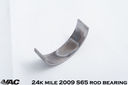
S65, 24000 Miles, Naturally Aspirated, 2009 More Photos
Category: 06-Med-Heavy
Description: No other details given.
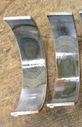
S65, 72000 Miles, Supercharged, 2008 More Photos
Category: 06-Med-Heavy
Description: Owner opted for rod bearing replacement at 72000 Miles during Supercharger Upgrade.
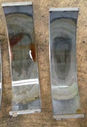
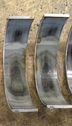
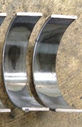
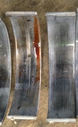
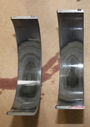
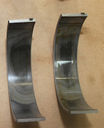
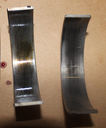
S65, 90000 Miles, Supercharged, 2008 More Photos
Category: 06-Moderate
Description: Owner opted for rod bearing replacement at 90000 Miles during Supercharger Upgrade. 1000 Miles later, oil line burst and motor suffered severe, but non-fatal damage.
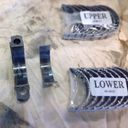
Category: 06-Med-Heavy
Description: No other details given.
S65, 72000 Miles, Supercharged, 2008 More Photos
Category: 06-Med-Heavy
Description: Owner opted for rod bearing replacement at 72000 Miles during Supercharger Upgrade.
S65, 90000 Miles, Supercharged, 2008 More Photos
Category: 06-Moderate
Description: Owner opted for rod bearing replacement at 90000 Miles during Supercharger Upgrade. 1000 Miles later, oil line burst and motor suffered severe, but non-fatal damage.
BobS wroteIt seems they are getting the maximum life out of their bearings. I really want to buy one of these cars, but it feels like the e46 VANOS issues all over again :/I just don't understand how people are going 75,000-100,000 or more miles and not having any issues. It just seems to me if clearance was the issue there would be a lot more failures
So does anyone have a reasonable explanation as to why this 'issue' is virtually unheard of in the UK?
We have different fuel ratings but that's the only difference as far as I know.
It also seems odd when you type
'is the s65 (M3 engine) one of the best from BMW?' Into google.
We have different fuel ratings but that's the only difference as far as I know.
It also seems odd when you type
'is the s65 (M3 engine) one of the best from BMW?' Into google.
Yellow Snow wroteI am not fully up on the s65 in the UK but I know the s85 has the same problems as we do. There are a few guys on the m5 board that have set up shop just to be able to change rod bearings for a service. There was a guy on the board that posted pictures of a entire stack of blown up engines with holes in the oil pan.So does anyone have a reasonable explanation as to why this 'issue' is virtually unheard of in the UK?
We have different fuel ratings but that's the only difference as far as I know.
It also seems odd when you type
'is the s65 (M3 engine) one of the best from BMW?' Into google.
Yellow Snow wroteYou really are grasping now aren't you?!So does anyone have a reasonable explanation as to why this 'issue' is virtually unheard of in the UK?
We have different fuel ratings but that's the only difference as far as I know.
It also seems odd when you type
'is the s65 (M3 engine) one of the best from BMW?' Into google.
I am quite sure the reason why not as many issues are cropping up i the UK is because there are way fewer M3's on the road than the US!
What could possibly be different in the UK to change this issue? Be honest when you answer!
Jamie
BMRLVR wroteI thought the object of this exercise was to find out if there is an issue, and if so, what can be done about it, not making sarcastic comments.You really are grasping now aren't you?!
I am quite sure the reason why not as many issues are cropping up i the UK is because there are way fewer M3's on the road than the US!
What could possibly be different in the UK to change this issue? Be honest when you answer!
Jamie

Now I realise that you work at a place that assembles 'big ole diesels', but the S65 ain't no earthmover.
PG and Kawasaki amongst others have a far more open minded and polite approach to finding out what's going on without the egotistical comments.
There are many reasons why this might be happening and being blinkered about clearance isn't going to solve it. You may well be correct in which case I will take my hat off to you, but without exploring other avenues we might as well go home.
In answer to the question, there are over 6,000 S65s in the UK and I haven't heard of any with rod bearing problems. That's not to say there aren't any, but it's a small percentage if there are.
Spoke to my connection at BMW USA today to try and help out with this Wiki.
I have a set of the top and bottom bearing shells being delivered. I will have a full set of this bearing set this month.
Part #'s:
11 24 7 838 090 Rod Bearing Red
11 24 7 838 091 Rod Bearing Blue
I have a set of the top and bottom bearing shells being delivered. I will have a full set of this bearing set this month.
Part #'s:
11 24 7 838 090 Rod Bearing Red
11 24 7 838 091 Rod Bearing Blue
What are the specs on the audi 4.2l v8 vary similar motor
Malek@MRF wroteThese are the oversized bearings. I discussed these bearings over in the EAS thread. Apparently I forgot to add the info to this one. I already took measurements of the bearing thickness and installed bore diameter. I'll see about adding that info to this thread later tonight. Thanks for reminding me about this.Spoke to my connection at BMW USA today to try and help out with this Wiki.
I have a set of the top and bottom bearing shells being delivered. I will have a full set of this bearing set this month.
Part #'s:
11 24 7 838 090 Rod Bearing Red
11 24 7 838 091 Rod Bearing Blue
http://www.m3post.com/forums/showpost.php?p=14665094&postcount=18
I'll clean this up tonight.
There have apparently been three different S65 crankshafts, and two sets of connecting rods. Maybe somebody with better BMW connections (hint, hint, Tom@EAS) can fill in the blanks. You will be surprised, I even found +.001 bearings and they are currently available!
BTW, this wasn't easy to track down. Had to look in catalogs out of country, etc. Called local dealer and confirmed they are all valid part numbers, and +size bearings are still available using these part numbers.
Crankshafts:
11 21 7 838 641 Crankshaft, Ended (no date given), no weight given
11 21 7 841 658 Crankshaft, Ended (October 2008), 20.400 kg
11 21 0 443 639 Crankshaft, Current production, 23.840 kg
Main Bearings:
11 21 7 841 488 Main Bearing Top, Yellow, Ended (October 2008)
11 21 7 841 609 Main Bearing Top, Yellow, Replaced 488 bearing
11 21 7 841 489 Main Bearing Top, Green, Ended (October 2008)
11 21 7 841 610 Main Bearing Top, Green, Replaced 489 bearing
11 21 7 841 490 Main Bearing Top, Violet, Ended (October 2008)
11 21 7 841 611 Main Bearing Top, Violet, Replaced 490 bearing
11 21 7 841 483 Main Bearing Bottom, Yellow, Ended (October 2008)
11 21 7 841 605 Main Bearing Bottom, Yellow, Replaced 483 bearing
11 21 7 841 484 Main Bearing Bottom, Green, Ended (October 2008)
11 21 7 841 606 Main Bearing Bottom, Green, Replaced 484 bearing
11 21 7 841 485 Main Bearing Bottom, Violet, Ended (October 2008)
11 21 7 841 607 Main Bearing Bottom, Violet, Replaced 485 bearing
Rod Bearings:
11 24 7 838 089 Rod Bearing Blue, 53.000 mm, +0.000 mm, Ended (no date given, but hints at July '08)
11 24 7 841 703 Rod Bearing Blue, 53.000 mm, +0.000 mm, Replacement for 089 bearing.
11 24 7 838 091 Rod Bearing Blue, 52.750 mm, +0.250 mm, Currently available
11 24 7 838 088 Rod Bearing Red, 53.000 mm, +0.000 mm, Ended (no date given, but hints at July '08)
11 24 7 841 702 Rod Bearing Red, 53.000 mm, +0.000 mm, Replacement for 088 bearing.
11 24 7 838 090 Rod Bearing Red, 52.750 mm, +0.250 mm, Currently available
I have verbal confirmation that some bearings replaced at another SoCal shop have 088/089 stamped on the back. So this would be pretty strong evidence along with information posted by Tom & B767capt that the rod bearings have indeed been superseded since production began. Most likely they were superseded in October 2008 when the crankshaft and main bearings were superseded. I will take pictures when I see these bearings in person.
BTW, this wasn't easy to track down. Had to look in catalogs out of country, etc. Called local dealer and confirmed they are all valid part numbers, and +size bearings are still available using these part numbers.
Crankshafts:
11 21 7 838 641 Crankshaft, Ended (no date given), no weight given
11 21 7 841 658 Crankshaft, Ended (October 2008), 20.400 kg
11 21 0 443 639 Crankshaft, Current production, 23.840 kg
Main Bearings:
11 21 7 841 488 Main Bearing Top, Yellow, Ended (October 2008)
11 21 7 841 609 Main Bearing Top, Yellow, Replaced 488 bearing
11 21 7 841 489 Main Bearing Top, Green, Ended (October 2008)
11 21 7 841 610 Main Bearing Top, Green, Replaced 489 bearing
11 21 7 841 490 Main Bearing Top, Violet, Ended (October 2008)
11 21 7 841 611 Main Bearing Top, Violet, Replaced 490 bearing
11 21 7 841 483 Main Bearing Bottom, Yellow, Ended (October 2008)
11 21 7 841 605 Main Bearing Bottom, Yellow, Replaced 483 bearing
11 21 7 841 484 Main Bearing Bottom, Green, Ended (October 2008)
11 21 7 841 606 Main Bearing Bottom, Green, Replaced 484 bearing
11 21 7 841 485 Main Bearing Bottom, Violet, Ended (October 2008)
11 21 7 841 607 Main Bearing Bottom, Violet, Replaced 485 bearing
Rod Bearings:
11 24 7 838 089 Rod Bearing Blue, 53.000 mm, +0.000 mm, Ended (no date given, but hints at July '08)
11 24 7 841 703 Rod Bearing Blue, 53.000 mm, +0.000 mm, Replacement for 089 bearing.
11 24 7 838 091 Rod Bearing Blue, 52.750 mm, +0.250 mm, Currently available
11 24 7 838 088 Rod Bearing Red, 53.000 mm, +0.000 mm, Ended (no date given, but hints at July '08)
11 24 7 841 702 Rod Bearing Red, 53.000 mm, +0.000 mm, Replacement for 088 bearing.
11 24 7 838 090 Rod Bearing Red, 52.750 mm, +0.250 mm, Currently available
I have verbal confirmation that some bearings replaced at another SoCal shop have 088/089 stamped on the back. So this would be pretty strong evidence along with information posted by Tom & B767capt that the rod bearings have indeed been superseded since production began. Most likely they were superseded in October 2008 when the crankshaft and main bearings were superseded. I will take pictures when I see these bearings in person.
Since I posted this, I ordered and received samples of each of these rod bearings including the oversized bearings. Yesterday, I measured and photographed all of the rod bearings.
Rod Bearings:
11 24 7 838 089 Blue, 53.000 mm, +0.000 mm, 0.07890" Thick, Ended
11 24 7 841 703 Blue, 53.000 mm, +0.000 mm, 0.07890" Thick, Replacement for 089 bearing
11 24 7 838 091 Blue, 52.750 mm, +0.250 mm, 0.08370" Thick, Currently available
11 24 7 838 088 Red, 53.000 mm, +0.000 mm, 0.07875" Thick, Ended
11 24 7 841 702 Red, 53.000 mm, +0.000 mm, 0.07875" Thick, Replacement for 088 bearing
11 24 7 838 090 Red, 52.750 mm, +0.250 mm, 0.08370" Thick, Currently available
Here's a photo of the old and new bearings side-by-side with part numbers shown. As seen in the photo, the bearing surfaces are quite different.
kawasaki00 wroteKawasaki, I recently read that if the engine oil is black then it's a result of the engine overheating and the oil loses its viscosity. I recently changed the oil after 4k km and nine months, and the oil was black as and not translucent. I also read that synthetic oil is lot more resistant in high performance engine and should handle heat well. But if TWS 10w-60 is turning black after just 4k km, is there an issue with mating with S65?That will work, I have one of those vboxes also that I have used for other projects. You need to find some one that has a pressure calibrator. You need to apply 20psi and take a voltage reading and do this for every 10psi. After entering the correlating pressure /voltage table it will make its own slope or lots of times just like a o2 sensor it has a S curve to it.
I thought of throwing it out here amongst everything else that's going on.
I have sent the oil for analysis and should have it sometime today.
regular guy wroteThank you. I must have missed your post in that thread.These are the oversized bearings. I discussed these bearings over in the EAS thread. Apparently I forgot to add the info to this one. I already took measurements of the bearing thickness and installed bore diameter. I'll see about adding that info to this thread later tonight. Thanks for reminding me about this.
http://www.m3post.com/forums/showpost.php?p=14665094&postcount=18
I'll clean this up tonight.
There have apparently been three different S65 crankshafts, and two sets of connecting rods. Maybe somebody with better BMW connections (hint, hint, Tom@EAS) can fill in the blanks. You will be surprised, I even found +.001 bearings and they are currently available!
BTW, this wasn't easy to track down. Had to look in catalogs out of country, etc. Called local dealer and confirmed they are all valid part numbers, and +size bearings are still available using these part numbers.
Crankshafts:
11 21 7 838 641 Crankshaft, Ended (no date given), no weight given
11 21 7 841 658 Crankshaft, Ended (October 2008), 20.400 kg
11 21 0 443 639 Crankshaft, Current production, 23.840 kg
Main Bearings:
11 21 7 841 488 Main Bearing Top, Yellow, Ended (October 2008)
11 21 7 841 609 Main Bearing Top, Yellow, Replaced 488 bearing
11 21 7 841 489 Main Bearing Top, Green, Ended (October 2008)
11 21 7 841 610 Main Bearing Top, Green, Replaced 489 bearing
11 21 7 841 490 Main Bearing Top, Violet, Ended (October 2008)
11 21 7 841 611 Main Bearing Top, Violet, Replaced 490 bearing
11 21 7 841 483 Main Bearing Bottom, Yellow, Ended (October 2008)
11 21 7 841 605 Main Bearing Bottom, Yellow, Replaced 483 bearing
11 21 7 841 484 Main Bearing Bottom, Green, Ended (October 2008)
11 21 7 841 606 Main Bearing Bottom, Green, Replaced 484 bearing
11 21 7 841 485 Main Bearing Bottom, Violet, Ended (October 2008)
11 21 7 841 607 Main Bearing Bottom, Violet, Replaced 485 bearing
Rod Bearings:
11 24 7 838 089 Rod Bearing Blue, 53.000 mm, +0.000 mm, Ended (no date given, but hints at July '08)
11 24 7 841 703 Rod Bearing Blue, 53.000 mm, +0.000 mm, Replacement for 089 bearing.
11 24 7 838 091 Rod Bearing Blue, 52.750 mm, +0.250 mm, Currently available
11 24 7 838 088 Rod Bearing Red, 53.000 mm, +0.000 mm, Ended (no date given, but hints at July '08)
11 24 7 841 702 Rod Bearing Red, 53.000 mm, +0.000 mm, Replacement for 088 bearing.
11 24 7 838 090 Rod Bearing Red, 52.750 mm, +0.250 mm, Currently available
I have verbal confirmation that some bearings replaced at another SoCal shop have 088/089 stamped on the back. So this would be pretty strong evidence along with information posted by Tom & B767capt that the rod bearings have indeed been superseded since production began. Most likely they were superseded in October 2008 when the crankshaft and main bearings were superseded. I will take pictures when I see these bearings in person.
Since I posted this, I ordered and received samples of each of these rod bearings including the oversized bearings. Yesterday, I measured and photographed all of the rod bearings.
Rod Bearings:
11 24 7 838 089 Blue, 53.000 mm, +0.000 mm, 0.07890" Thick, Ended
11 24 7 841 703 Blue, 53.000 mm, +0.000 mm, 0.07890" Thick, Replacement for 089 bearing
11 24 7 838 091 Blue, 52.750 mm, +0.250 mm, 0.08370" Thick, Currently available
11 24 7 838 088 Red, 53.000 mm, +0.000 mm, 0.07875" Thick, Ended
11 24 7 841 702 Red, 53.000 mm, +0.000 mm, 0.07875" Thick, Replacement for 088 bearing
11 24 7 838 090 Red, 52.750 mm, +0.250 mm, 0.08370" Thick, Currently available
Here's a photo of the old and new bearings side-by-side with part numbers shown. As seen in the photo, the bearing surfaces are quite different.
Did you find any chance to assemble the "over-sized" 90 & 91 bearing into a factory rod assembly, torque the bolts and measure the clearance?
As for your other post about oil pressure, the car will be going to the track October 11th with 0W-40 Mobil 1. I can take the BMW ICOM with me and see if I can pull oil pressure reliably.
Here is some data that I pulled out. This is directly from BMW.


So with the journal clearance issues, we basically have to do a rebuild at some point?
Someone brave should drop a flat plane crank in just to hear what it'll sound like.
.
Someone brave should drop a flat plane crank in just to hear what it'll sound like.
.
aussiem3 wroteI have noticed this before also. The last time I changed the tws I only had 3k miles on it and it came out very black and smelled really bad. Couple thoughts I have are it is the high Ester package in the oil that breaks down pretty quick and turns black or maybe there is more to the rod side clearance thing and it really is baking the oil inside the rod bearings. The evidence is all over the place that they are cavitating. I am still looking into it.Kawasaki, I recently read that if the engine oil is black then it's a result of the engine overheating and the oil loses its viscosity. I recently changed the oil after 4k km and nine months, and the oil was black as and not translucent. I also read that synthetic oil is lot more resistant in high performance engine and should handle heat well. But if TWS 10w-60 is turning black after just 4k km, is there an issue with mating with S65?
I thought of throwing it out here amongst everything else that's going on.
I have sent the oil for analysis and should have it sometime today.
Here is a little teaser pic of a rod bearing I have been working on...I have multiple bearings that I am hardness testing and doing some processes that we do to our race bearings.
kawasaki00 wroteI have noticed this before also. The last time I changed the tws I only had 3k miles on it and it came out very black and smelled really bad. Couple thoughts I have are it is the high Ester package in the oil that breaks down pretty quick and turns black or maybe there is more to the rod side clearance thing and it really is baking the oil inside the rod bearings. The evidence is all over the place that they are cavitating. I am still looking into it.
Here is a little teaser pic of a rod bearing I have been working on...I have multiple bearings that I am hardness testing and doing some processes that we do to our race bearings.

Here is the report from my oil analysis.
http://www.m3post.com/forums/showpost.php?p=14750084&postcount=115
Interesting stuff guys. Thanks! Keep it coming.
Rod Bearings:
11 24 7 838 089 Blue, 53.000 mm, +0.000 mm, 0.07890" Thick, Ended
11 24 7 841 703 Blue, 53.000 mm, +0.000 mm, 0.07890" Thick, Replacement for 089 bearing
11 24 7 838 091 Blue, 52.750 mm, +0.250 mm, 0.08370" Thick, Currently available
11 24 7 838 088 Red, 53.000 mm, +0.000 mm, 0.07875" Thick, Ended
11 24 7 841 702 Red, 53.000 mm, +0.000 mm, 0.07875" Thick, Replacement for 088 bearing
11 24 7 838 090 Red, 52.750 mm, +0.250 mm, 0.08370" Thick, Currently available
Do these above changes in bearing thickness mean that late model engines will likely experience less possible failures?
11 24 7 838 089 Blue, 53.000 mm, +0.000 mm, 0.07890" Thick, Ended
11 24 7 841 703 Blue, 53.000 mm, +0.000 mm, 0.07890" Thick, Replacement for 089 bearing
11 24 7 838 091 Blue, 52.750 mm, +0.250 mm, 0.08370" Thick, Currently available
11 24 7 838 088 Red, 53.000 mm, +0.000 mm, 0.07875" Thick, Ended
11 24 7 841 702 Red, 53.000 mm, +0.000 mm, 0.07875" Thick, Replacement for 088 bearing
11 24 7 838 090 Red, 52.750 mm, +0.250 mm, 0.08370" Thick, Currently available
Do these above changes in bearing thickness mean that late model engines will likely experience less possible failures?
