225.2KVIEWS
457REPLIES
58APPRECIATES
08-03-2021LAST POST
Hello, I hope everyone is enjoying their holidays and the new year is upon us.

I will keep this straight to the point as much as possible. Here we have an engine I have torn down for a client. The engines history is as follows:

  • 2013 BMW M3 Coupe
  • 39,500 miles on engine + chassis
  • 38,000 miles SUPERCHARGED via ESS VT2-625
  • 33,500 miles with VAC Coated Rod Bearings + ARP Connecting Rod bolts
  • Engine Oil Specification 10W-60 every 5000 Miles. At 10,000 miles, the engine was only filled with Liqui Moly 10W-60, not Castrol TWS and every oil service thereafter every 5000 miles.
The engine was fully broken down, organized and fully checked. No flaws could be found. To my surprise was the condition of the rod bearings, and the crankshaft. It is widely known that the VAC Coated OEM bearings REDUCE bearing clearance due to the coating adding thickness to the bearing shell. For those who are wondering, the bearings are not coated by VAC, they are done by Calico with their CT-1 coating process.


Calico's description:


"CT-1 Dry Film Lubricant coating is applied as a spray process. Different surface preparation methods appropriate for the substrates will be used prior to the coating process. Coating thickness is varied to suit the application. Typical coating thickness for engine bearings is 0.00025" to 0.00030" inch (6 to 7.5 microns)."


What was found was not indicative of what we commonly know, or expected, what was found was shocking. Why shocking? The OEM bearings when they were done, were already exhibiting rapid, accelerated wear.


Image #1: One of the OEM bearings that show very abnormal wear at 6000 miles.
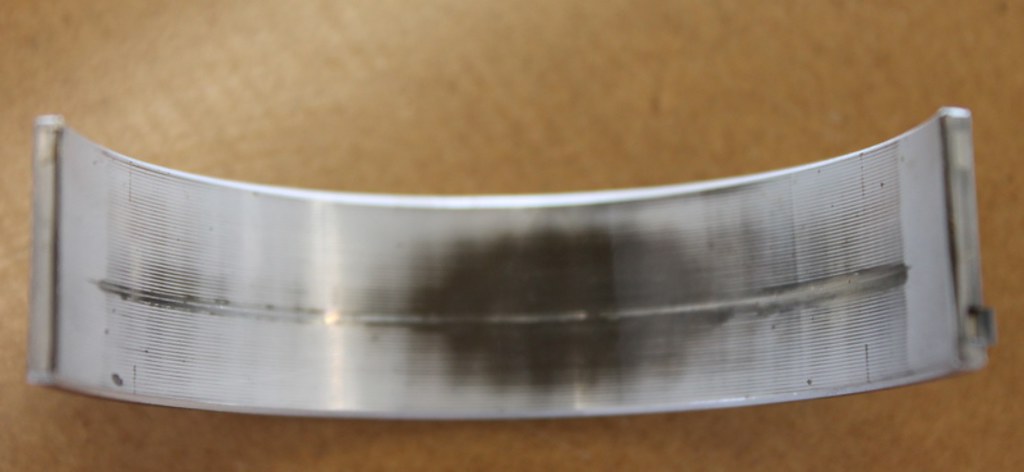


Image hosted on: farm8.staticflickr.com

Remaining images: Show bearing wear for all shows, organized from Rod 1-8. Also shown, the condition of the crankshaft. As shown, the bearings have no wear.
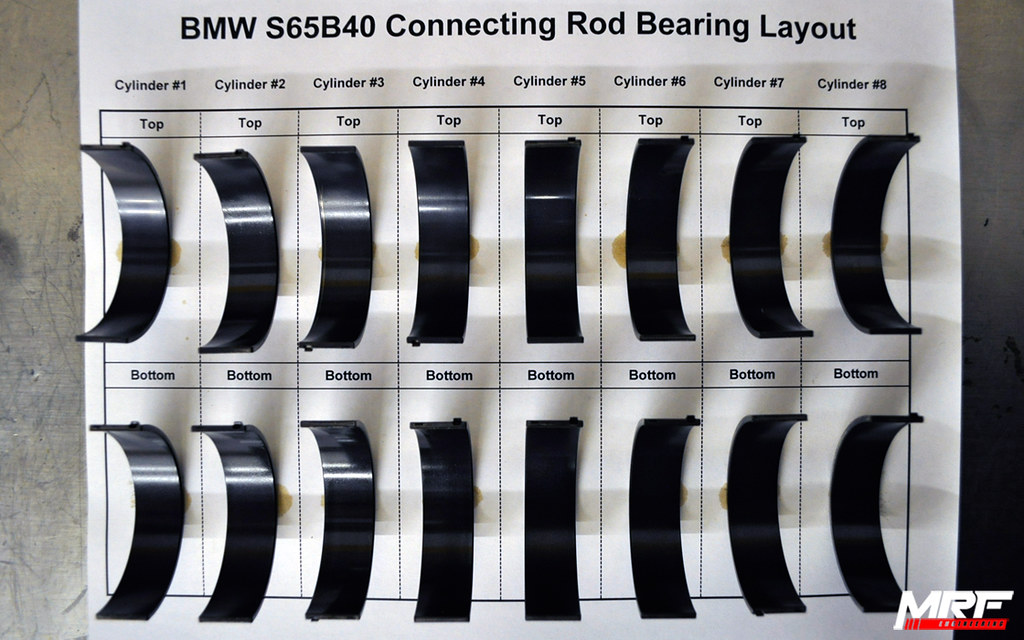
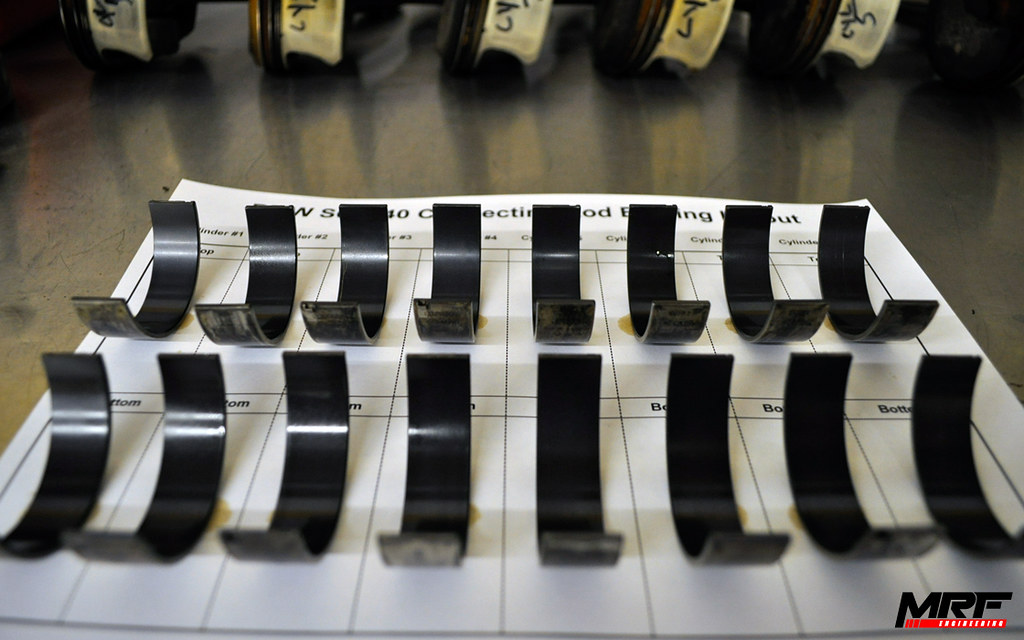
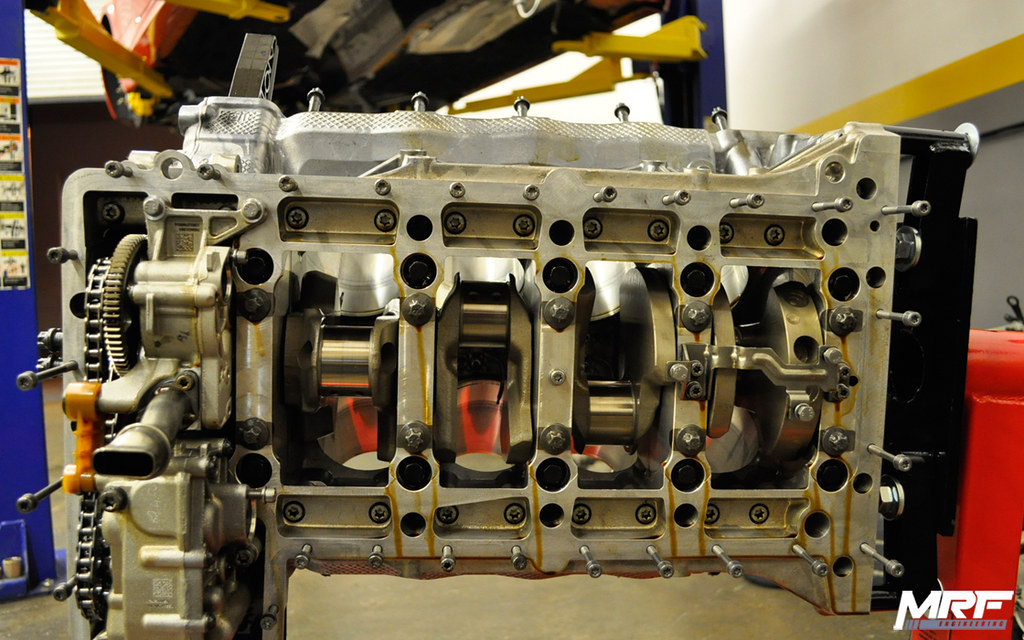
Image hosted on: farm8.staticflickr.com


Image hosted on: farm9.staticflickr.com


Image hosted on: farm8.staticflickr.com

I have brought up this topic in the past, and have spoken about it to BMRLVR, Kawasaki00 about the possibility that these engine failures could be subject to assembly error, fastener defect or outright an engineering oversight on what the torque on the OEM stretch bolts should be. It is possible for a bearing cap to be over-torqued and tighten bearing clearances, enough to induce failure from the engine being assembled too tight.

Just throwing a curve ball into the mix... Valuable input and thoughts are welcome!

Happy Holidays,

Malek@MRF
Post referenced by essjon in Pictures of Replaced Rod Bearings 02-13-2019
Post referenced by Rajmun340 in Rod Bearings Fail @ 136k = Replacement Engine Advice? 11-21-2019
Malek@MRF wrote
Hello, I hope everyone is enjoying their holidays and the new year is upon us.

I will keep this straight to the point as much as possible. Here we have an engine I have torn down for a client. The engines history is as follows:

  • 2013 BMW M3 Coupe
  • 39,500 miles on engine + chassis
  • 38,000 miles SUPERCHARGED via ESS VT2-625
  • 33,500 miles with VAC Coated Rod Bearings + ARP Connecting Rod bolts
  • Engine Oil Specification 10W-60 every 5000 Miles. At 10,000 miles, the engine was only filled with Liqui Moly 10W-60, not Castrol TWS and every oil service thereafter every 5000 miles.
The engine was fully broken down, organized and fully checked. No flaws could be found. To my surprise was the condition of the rod bearings, and the crankshaft. It is widely known that the VAC Coated OEM bearings REDUCE bearing clearance due to the coating adding thickness to the bearing shell. For those who are wondering, the bearings are not coated by VAC, they are done by Calico with their CT-1 coating process.


Calico's description:


"CT-1 Dry Film Lubricant coating is applied as a spray process. Different surface preparation methods appropriate for the substrates will be used prior to the coating process. Coating thickness is varied to suit the application. Typical coating thickness for engine bearings is 0.00025" to 0.00030" inch (6 to 7.5 microns)."


What was found was not indicative of what we commonly know, or expected, what was found was shocking. Why shocking? The OEM bearings when they were done, were already exhibiting rapid, accelerated wear.


Image #1: One of the OEM bearings that show very abnormal wear at 6000 miles.


Image hosted on: farm8.staticflickr.com

Remaining images: Show bearing wear for all shows, organized from Rod 1-8. Also shown, the condition of the crankshaft. As shown, the bearings have no wear.


Image hosted on: farm8.staticflickr.com


Image hosted on: farm9.staticflickr.com


Image hosted on: farm8.staticflickr.com

I have brought up this topic in the past, and have spoken about it to BMRLVR, Kawasaki00 about the possibility that these engine failures could be subject to assembly error, fastener defect or outright an engineering oversight on what the torque on the OEM stretch bolts should be. It is possible for a bearing cap to be over-torqued and tighten bearing clearances, enough to induce failure from the engine being assembled too tight.

Just throwing a curve ball into the mix... Valuable input and thoughts are welcome!

Happy Holidays,

Malek@MRF
😳
So a 39k supercharged motor with no bearing wear. Interesting!
JEllis wrote
So a 39k supercharged motor with no bearing wear. Interesting!
Yes. Plus with bearings with LESS clearance than the factory bearings.
Malek@MRF wrote
Yes. Plus with bearings with LESS clearance than the factory bearings.
So are ARP bolts "stretch bolts" or non-stretch. I think I read they were non-stretch.
JEllis wrote
So are ARP bolts "stretch bolts" or non-stretch. I think I read they were non-stretch.
Non-stretch. OEM bolts are TTY (Torque to Yield) stretch.

I have 2 S65B40's sitting on stands here. The engine with the VAC+ARP hardware with heads removed easily turns over by hand. The engine with all stock hardware and bearings turns over with more difficulty by hand (heads removed). Both engines are just assembled with crank, rods and pistons. I know this is not a scientific way of measuring or coming to any sort of conclusion, it is simply an observation.

Both engines are at 39,xxx miles.
Interesting, so any conclusions that can be made off of this? Wasn't someone just posting recently about abnormal wear from the VAC coated bearings due to less clearance (as you mentioned in your original post)?
Good news on the ARP bolts here. Thanks for getting this posted; I have been waiting for something like this with respect to some actual mileage on a replacement set.
So why was the engine taken apart to begin with?
Well cool, I think is also one of the first, if not the first, aftermarket bearings we have seen after significant use.
Harrop use the same bearings in there car and they have taken them out twice to check them and look the same as those I think those bearings make a good difference also I've been told liqui moly oil is mean to have less friction then other oils
LOL now everyone will rave about Liqui Moly.
s85e90 wrote
LOL now everyone will rave about Liqui Moly.
I was thinking the bolts, plus a less-than-rushed installation of the bearings themselves.

But you are correct, the oil brand/type will travel through m3post like wildfire.
s85e90 wrote
LOL now everyone will rave about Liqui Moly.
Harrop use tws and bearings look the same they posted photos on there facebook
Rupes wrote
Interesting, so any conclusions that can be made off of this? Wasn't someone just posting recently about abnormal wear from the VAC coated bearings due to less clearance (as you mentioned in your original post)?
Malek's point is not so much that VAC bearings are the solution, but that the OEM rod bolts might be the problem, at least insofar as they have a propensity to be incorrectly torqued (either under- or over-torqued) and/or lose there tensile strength over time, resulting in an under-torqued bolt. So if the car that chewed through the VAC bearings used BMW spec torque-to-yield bolts, this would actually support, rather than contradict, Malek's observation.
leigh wrote
Harrop use the same bearings in there car and they have taken them out twice to check them and look the same as those I think those bearings make a good difference also I've been told liqui moly oil is mean to have less friction then other oils
Again, the question is not so much whether Harrop is using VAC bearings, but whether they are using VAC bearings and correct torque settings on the bolts. If so, this would again support Malek's theory that the bolts, not the bearings, are the difference maker.

[Edited to clarify that Malek was not necessarily theorizing the OEM bolts are over-torqued, as under-torqued bolts could also be problematic.]
Hujan wrote
Malek's point is not so much that VAC bearings are the solution, but that the OEM rod bolts might be the problem, at least insofar as they have a propensity to be over-torqued. So if the car that chewed through the VAC bearings used BMW spec torque-to-yield bolts, this would actually support, rather than contradict, Malek's observation.


Again, the question is not so much whether Harrop is using VAC bearings, but whether they are using VAC bearings and correct torque settings on the bolts. If so, this would again support Malek's theory that the bolts, not the bearings, are the difference maker.
:word: The critical piece of statistic here is that prior to the VAC Bearings (with tighter expected clearance) the bearings were being chewed up, or at the very least, wearing prematurely. After the switch to bearings with a tighter clearance one would expect to find even more wear but yet we see no wear at all. So what gives? One possible explanation is over torqued bolts from the factory.


What is particularly significant is the difference in bearing wear between the two sets of bearings. If the bearings had shown no wear previously, one could theorize that this was a fluke motor with adequate bearing clearance ect... But due to the fact we have data from the first bearing removal, we know that this car had insufficient bearing clearance initially but sufficient clearance after installing VAC bearings even though the VAC bearings should, by every measurement, decrease bearing clearance.
This is getting really interesting. If the bolts were too tight it would mean that the big end of the rod was being deformed so as to pinch the crank journals, right? So would you not then have wear symptoms on opposing sides of the bearings?
Wow, interesting post. Thanks for taking the time to do it all.

Wasn't there an issue with side clearance as well that contributed to lack of lubrication? Is it possible it can be a combination of issues? Also if there is a side clearance issue lacking lubrication to the bearings, the coating on this bearing could make up for that lack...cancelling it out? - Possibility?

I wonder if there is a relation of blown engines/rod bearing failure and production rates. :confused2
OP, interesting info, but you said your client asked you to take this engine apart?
I assume he didnt ask you to do it to make this report. What was the reason?
Mfanatik wrote
Wow, interesting post. Thanks for taking the time to do it all.

Wasn't there an issue with side clearance as well that contributed to lack of lubrication? Is it possible it can be a combination of issues? Also if there is a side clearance issue lacking lubrication to the bearings, the coating on this bearing could make up for that lack...cancelling it out? - Possibility?

I wonder if there is a relation of blown engines/rod bearing failure and production rates. :confused2
All speculation.
Subscribed
Speculations .. theories are good. There are far too many variables like someone else posted ... bolts, torque, Castrol vs LM, oil change interval, OEM vs VAC. Where do you start?

"seesaw"