

I wanted to share what I think is a new world record 1/4 mile trap speed for E92 M3. I checked the various performance databases and it seems that the current world record is held by Drew (DLSJ5) at 135 MPH. The new trap speed, if confirmed as the new world record, would shatter that old record by an additional 5 MPH to 140.11 MPH.
Here's some of the details.
Some of you may remember Sergei from Russia a while back. He contacted a few engine builders before deciding to use Bert@BE Bearings to build the engine and manage the project for him. Since a lot of the bits and pieces for the project came through my shop, Auto Talent in Los Angeles, we were heavily involved with the project as well. So I think we get some bragging rights here as well.
Engine:
Built by Van Dyne Engineering in Huntington Beach CA
Specifications: 4.5L, 9.5:1 compression ratio. The engine used a custom made crank using extra strong 4340VM material, custom rods by Carrillo to Bert's specs on side clearance and extra strength at the parting lines, custom design pistons by Bert and made by Mahle.
Rod bearings were brand new BE Bearings at the time. Main bearings WPC treated. Heads bolted with head studs, bed plate bolted with main studs.
Cylinder head was ported and polished then fully rebuilt by Van Dyne Engineering. HD valve springs provided by Auto Talent.
Before shipping the engine to Russia, Bert picked up the engine from Van Dyne and brought it to Dinan to break-in and test on their engine dyno. The engine was run naturally aspirated for a few hours to make sure it was healthy and the rings properly seated. After the initial break in, a few power runs were made on the NA engine on stock headers and I think it was stock exhaust. The engine made 465 crank horsepower. That's a very interesting number because it means the engine was probably going to be running really strong. The engine was only 12.5% larger than stock, and it produced exactly 12.5% more horsepower than stock even though it was 9.5:1 compression ratio instead of 12:1. So the engine was running real healthy right from the very start and even the Dinan guys said it was running as strong as some of the race engine S65's they've seen on the dyno.
I know Bert has photos of the engine build and videos of it on the engine dyno. If there's a lot of interest, I'll see if I can get him to make them public somewhere.
Bert wrote all the specs for the crank, rods, and pistons. Writing piston specs and doing all the math to design pistons isn't easy. Ask me, I just had to deal with it again a couple of weeks ago. That's where Bert comes in real handy.
Supercharger:
Started life as ESS VT2. ESS worked with Bert and provided many upgraded pieces for this project. ESS provided a custom modified manifold with extra BOV mount. ESS provided the much larger capacity Vortech V2Ti supercharger which still mounts to their VT2 hardware brackets. ESS also provided upgrades to the pulley system, and newer high capacity injectors for the fuel system.
Van Dyne Engineering provided custom machining to provide oil to the supercharger, and return lines back to the oil pan from the supercharger. This is a requirement of the V2Ti supercharger. Van Dyne modified the supercharger outlet for Hobbs switch needed for upgraded fuel system. Van Dyne also designed and fabricated custom mounting hardware for the ESS manifold to ensure it could not come dislodged from the throttle bodies due to high boost.
My shop, Auto Talent, provided the hardware for oil sending to the supercharger, and custom paint for the ESS custom manifold.
Fuel System:
Designed and built by Drew (DLSJ5). Anybody who's tried to cross the 600 WHP barrier on the car has either blown an engine trying, or found out they needed a custom high capacity fuel system. Lots of shops (ours included) are now using Drew's custom fuel system design.
Results:
Estimated crank horsepower:
The engine output is an estimated 1080 crank horsepower. This was calculated using some proprietary BMW software tools that can read the torque at the crank. From there, it's easy to calculate horsepower. I remember Bert telling me this story about it because I think Bert didn't even believe this number. So he asked Van Dyne if that number made sense, and here's what they said. "The engine runs 465 chp on 1-atmosphere pressure. The boost on this engine in Russia is 1.2 bar, so that's 2.2 atmospheres. So take that 465 chp, and multiply by 2.2 and you get 1025 chp. Add to that big tube headers, and catless free-flow exhaust, and yes 1080 chp is a pretty realistic and very reasonable."
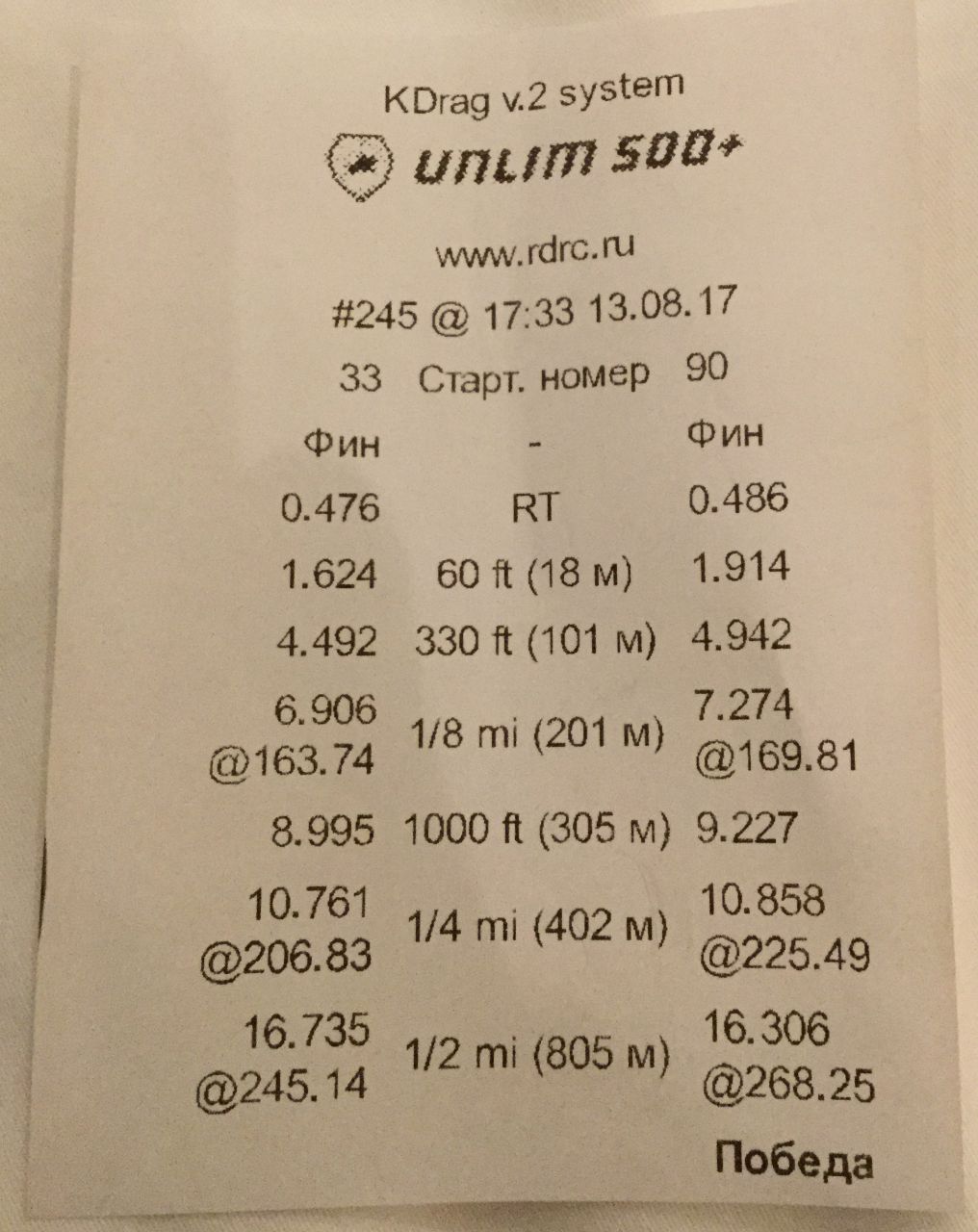
Drag Strip Results:
60-Ft: 1.914 seconds
330-Ft: 4.942 seconds
1/8-Mile: 7.274 @ 105.51 MPH
1000-Ft: 9.227 seconds:
1/4-Mile: 10.858 @ 140.11 MPH
1/2-Mile: 16.306 @ 166.68 MPH
Drag result details:
Here's a video, but it's not the 1/4 mile results. This was a video Sergei sent Bert of a 0-200 MPH run he ran in the Mexican desert of Russia.
0-200 MPH in approximately 18.75 seconds.
Here's some of the details.
Some of you may remember Sergei from Russia a while back. He contacted a few engine builders before deciding to use Bert@BE Bearings to build the engine and manage the project for him. Since a lot of the bits and pieces for the project came through my shop, Auto Talent in Los Angeles, we were heavily involved with the project as well. So I think we get some bragging rights here as well.
Engine:
Built by Van Dyne Engineering in Huntington Beach CA
Specifications: 4.5L, 9.5:1 compression ratio. The engine used a custom made crank using extra strong 4340VM material, custom rods by Carrillo to Bert's specs on side clearance and extra strength at the parting lines, custom design pistons by Bert and made by Mahle.
Rod bearings were brand new BE Bearings at the time. Main bearings WPC treated. Heads bolted with head studs, bed plate bolted with main studs.
Cylinder head was ported and polished then fully rebuilt by Van Dyne Engineering. HD valve springs provided by Auto Talent.
Before shipping the engine to Russia, Bert picked up the engine from Van Dyne and brought it to Dinan to break-in and test on their engine dyno. The engine was run naturally aspirated for a few hours to make sure it was healthy and the rings properly seated. After the initial break in, a few power runs were made on the NA engine on stock headers and I think it was stock exhaust. The engine made 465 crank horsepower. That's a very interesting number because it means the engine was probably going to be running really strong. The engine was only 12.5% larger than stock, and it produced exactly 12.5% more horsepower than stock even though it was 9.5:1 compression ratio instead of 12:1. So the engine was running real healthy right from the very start and even the Dinan guys said it was running as strong as some of the race engine S65's they've seen on the dyno.
I know Bert has photos of the engine build and videos of it on the engine dyno. If there's a lot of interest, I'll see if I can get him to make them public somewhere.
Bert wrote all the specs for the crank, rods, and pistons. Writing piston specs and doing all the math to design pistons isn't easy. Ask me, I just had to deal with it again a couple of weeks ago. That's where Bert comes in real handy.
Supercharger:
Started life as ESS VT2. ESS worked with Bert and provided many upgraded pieces for this project. ESS provided a custom modified manifold with extra BOV mount. ESS provided the much larger capacity Vortech V2Ti supercharger which still mounts to their VT2 hardware brackets. ESS also provided upgrades to the pulley system, and newer high capacity injectors for the fuel system.
Van Dyne Engineering provided custom machining to provide oil to the supercharger, and return lines back to the oil pan from the supercharger. This is a requirement of the V2Ti supercharger. Van Dyne modified the supercharger outlet for Hobbs switch needed for upgraded fuel system. Van Dyne also designed and fabricated custom mounting hardware for the ESS manifold to ensure it could not come dislodged from the throttle bodies due to high boost.
My shop, Auto Talent, provided the hardware for oil sending to the supercharger, and custom paint for the ESS custom manifold.
Fuel System:
Designed and built by Drew (DLSJ5). Anybody who's tried to cross the 600 WHP barrier on the car has either blown an engine trying, or found out they needed a custom high capacity fuel system. Lots of shops (ours included) are now using Drew's custom fuel system design.
Results:
Estimated crank horsepower:
The engine output is an estimated 1080 crank horsepower. This was calculated using some proprietary BMW software tools that can read the torque at the crank. From there, it's easy to calculate horsepower. I remember Bert telling me this story about it because I think Bert didn't even believe this number. So he asked Van Dyne if that number made sense, and here's what they said. "The engine runs 465 chp on 1-atmosphere pressure. The boost on this engine in Russia is 1.2 bar, so that's 2.2 atmospheres. So take that 465 chp, and multiply by 2.2 and you get 1025 chp. Add to that big tube headers, and catless free-flow exhaust, and yes 1080 chp is a pretty realistic and very reasonable."
Drag Strip Results:
60-Ft: 1.914 seconds
330-Ft: 4.942 seconds
1/8-Mile: 7.274 @ 105.51 MPH
1000-Ft: 9.227 seconds:
1/4-Mile: 10.858 @ 140.11 MPH
1/2-Mile: 16.306 @ 166.68 MPH
Drag result details:
- Factory ECU, not standalone
- Dodson DCT clutches
- Full weight interior (not stripped)
- Full gas tank
- 100 RON Gasoline (~96 octane US)
- 25 liter ice tank
- 10Kg Co2
- 30+ deg-C ambient temperature (86+ deg-F)
- Hoosiers Drag Radials 315/30/18
- Started from 800 RPM
- Track not drag prepped (no glue on asphalt)
Here's a video, but it's not the 1/4 mile results. This was a video Sergei sent Bert of a 0-200 MPH run he ran in the Mexican desert of Russia.
0-200 MPH in approximately 18.75 seconds.


