We do a lot of rod bearing jobs here at Mporium and answer a lot of questions on the subject. I wanted to make an informational post to highlight up close views of what the bearing wear looks like under magnification. With most rod bearings coming out looking "not too bad for an S65", this may help clear up some misconceptions and clarify how bad the visible wear really is. Maybe later I will take measurements of the worn bearings compared to new bearings to see how the oil wedge may be disrupted from the abnormal wear. This post isn't very scientific and is only based on my professional experience and ponderings.
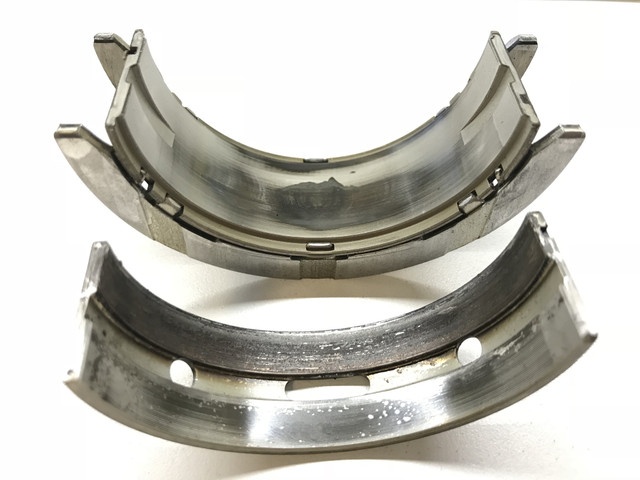
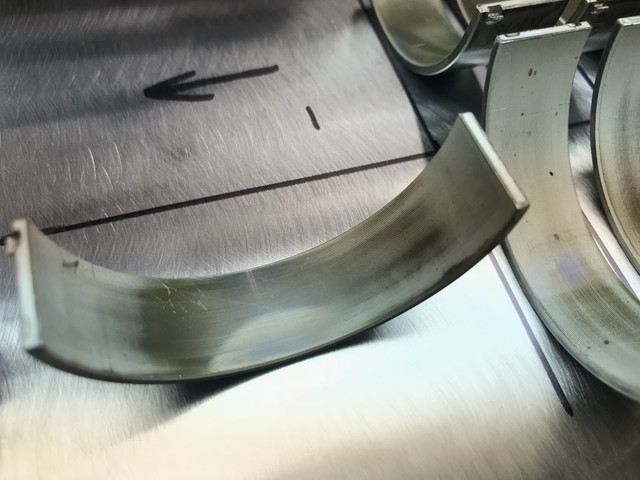
Here are the bearings as removed from a 2011 M3 with 69k miles that I just did yesterday (OEM 702/703). As you can see these are typical of the poorly wearing S65 bearings, but a very poor example of how rod bearings are supposed to lookby industry standards.
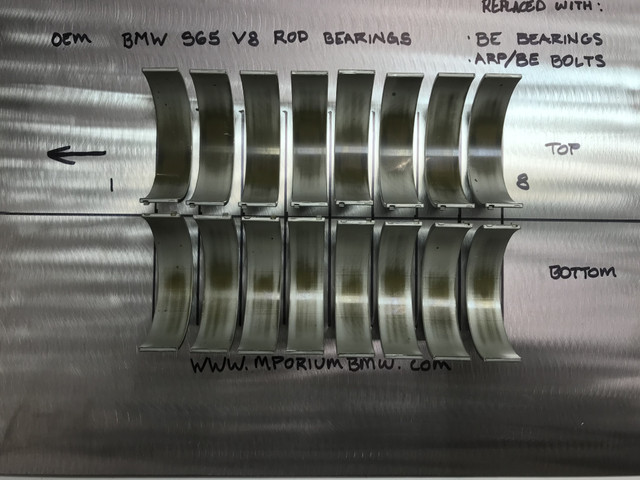
We will be looking more closely at this bearing, the #7 upper bearing. It has some interesting debris embedded into the babbit layer.
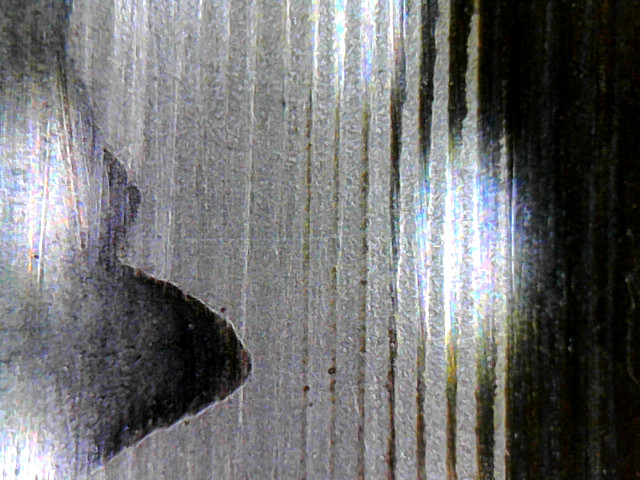
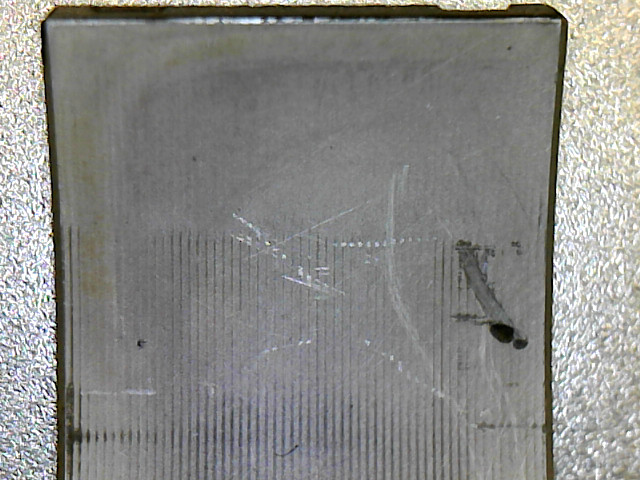
Here is the embedded debris, and the close up. Due to the discoloration I would speculate that it is some steel flashing left over from assembly. Also of note, this shot helps you visualize the "micro-grooving" of the OEM style babbit which aids in oil retention and to flush out debris. See how it has been worn almost flat, with only the groove valleys still visible.
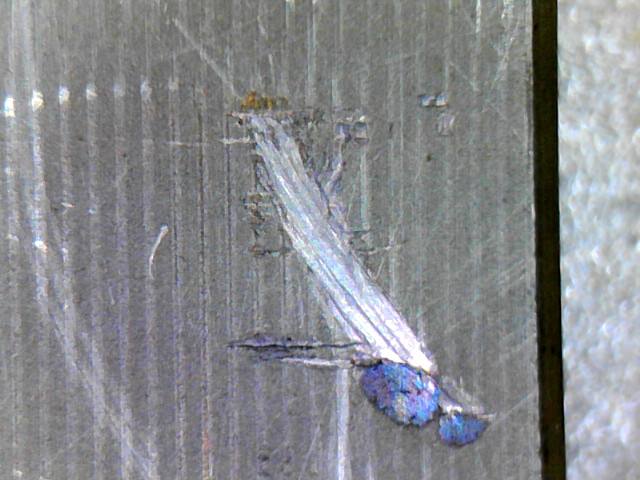
Here is the parting edge of the matching lower shell. It shows the resulting wear from a slight crush, as well as some delamination of the babbit layer at the corners.
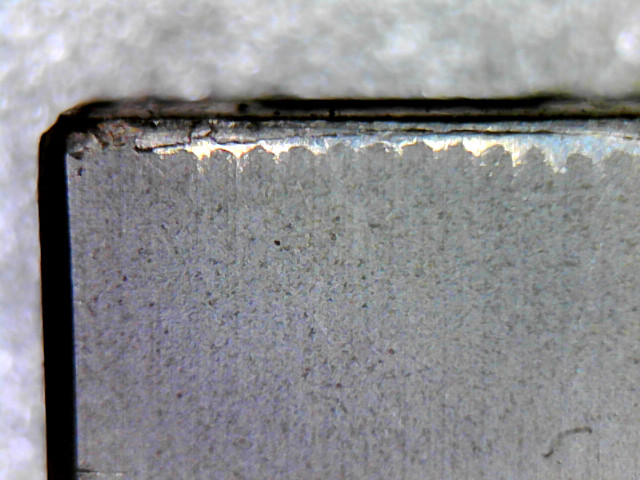
On the back of the bearings we see the cross-hatching which is a physical imprint from the honing process of the rods. This is quite functional in that it is the main mechanical method of securing the bearing shells from rotation (a spun bearing). Contrary to popular belief the shell's locator or 'pin' is not what prevents the shells from rotating in the rod bore. Too much (or too little) honing of the rods (and the resulting bore diameter) will affect crush and final bore size/consistency.
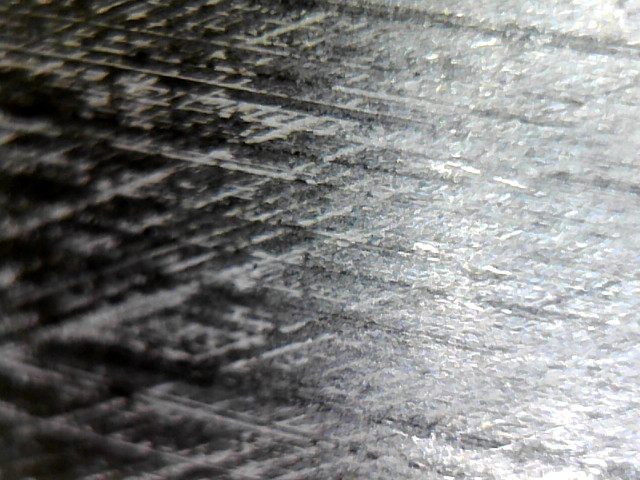
Lastly, and perhaps most alarming, we will look at the most highly worn area of the top shell, where the first layer of the babbit has been completely worn away down to the binding layer. .
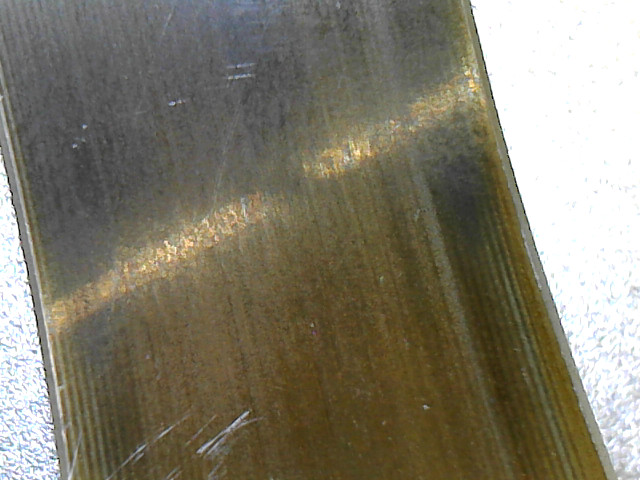
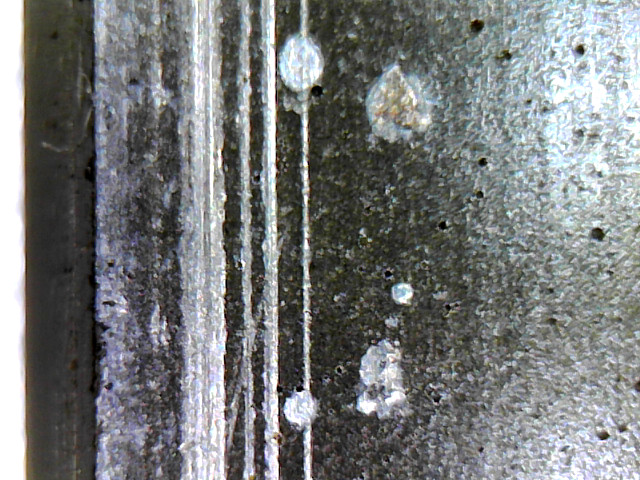
Up close, we can see that this layer has become so thin that is has some perforations in it from the layer starting to break down. It will continue to craze and break apart until delaminating altogether which is when your rod will start to knock, or the journal will seize altogether. Since we can't track these bearings for abnormal wear in oil analyses, nobody can know how close their journals are to this state without removal. This is why we replace these as preventative maintenance. Under extreme magnification, we start to see how poor these bearings really look..
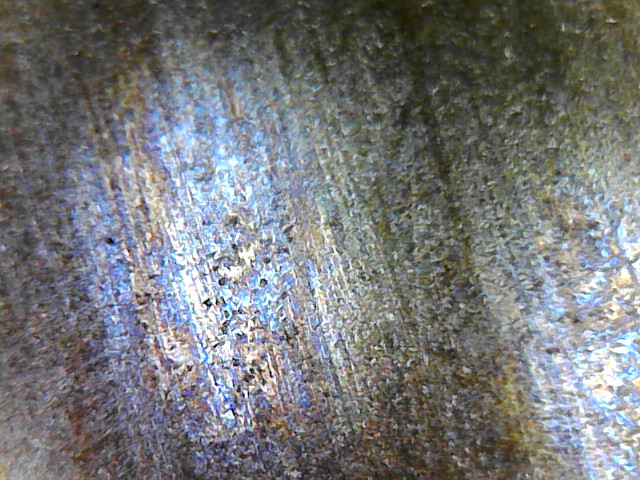
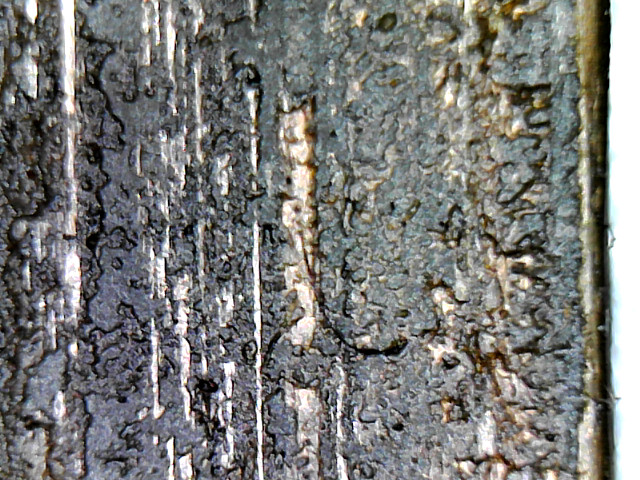
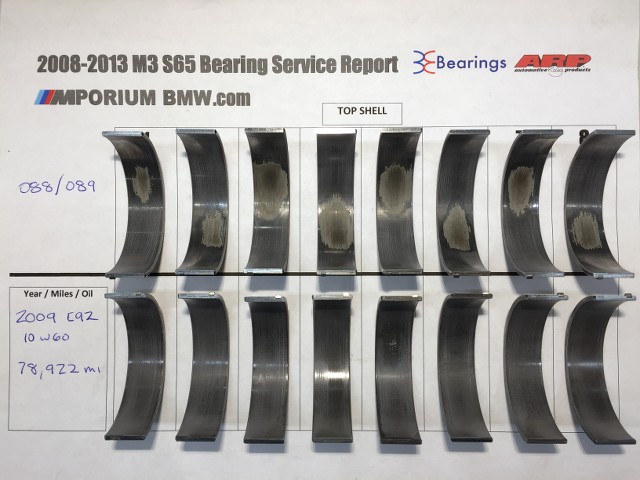
To compare wear to an older style lead/copper OEM 088/089 bearing with similar miles (78K), here is an upper shell showing typical S65 wear, that we will get close to in the next photo.. It's easy to see the lead literally flaking from the babbit.

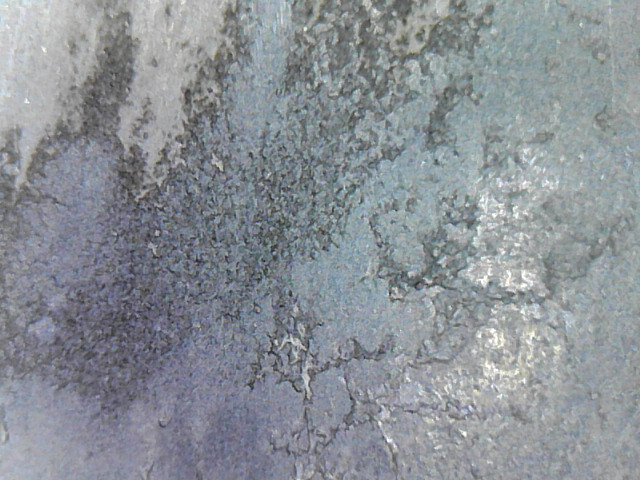
Being a softer metal, its edges do not "feather" as smoothly as the later style bearings of harder composition. These particles that flake off are what we look for in oil analyses. The elevated lead content is what tells owners that there is poor wear. Abnormally high levels are alarming, and when the lead and its binding layer is worn through to the copper underneath, the red flags are raised and alarm sirens should sound. It's time to replace the bearings. This is also why replacement with lead/copper type bearings such as BE is preferable to replacement with new 702/703 OEM or even WPC treated OEM bearings with no uniquely traceable metals.

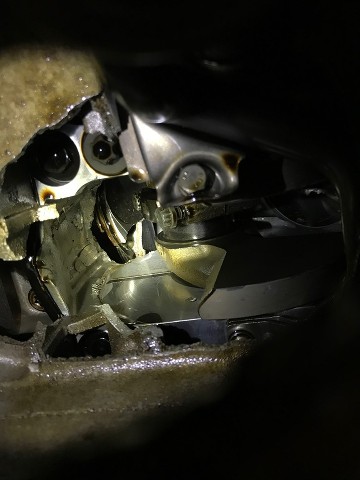
Lastly, we see what can happen when rod bearings are not replaced preventatively. Total carnage.

Here are the bearings as removed from a 2011 M3 with 69k miles that I just did yesterday (OEM 702/703). As you can see these are typical of the poorly wearing S65 bearings, but a very poor example of how rod bearings are supposed to lookby industry standards.
We will be looking more closely at this bearing, the #7 upper bearing. It has some interesting debris embedded into the babbit layer.
Here is the embedded debris, and the close up. Due to the discoloration I would speculate that it is some steel flashing left over from assembly. Also of note, this shot helps you visualize the "micro-grooving" of the OEM style babbit which aids in oil retention and to flush out debris. See how it has been worn almost flat, with only the groove valleys still visible.
Here is the parting edge of the matching lower shell. It shows the resulting wear from a slight crush, as well as some delamination of the babbit layer at the corners.
On the back of the bearings we see the cross-hatching which is a physical imprint from the honing process of the rods. This is quite functional in that it is the main mechanical method of securing the bearing shells from rotation (a spun bearing). Contrary to popular belief the shell's locator or 'pin' is not what prevents the shells from rotating in the rod bore. Too much (or too little) honing of the rods (and the resulting bore diameter) will affect crush and final bore size/consistency.
Lastly, and perhaps most alarming, we will look at the most highly worn area of the top shell, where the first layer of the babbit has been completely worn away down to the binding layer. .
Up close, we can see that this layer has become so thin that is has some perforations in it from the layer starting to break down. It will continue to craze and break apart until delaminating altogether which is when your rod will start to knock, or the journal will seize altogether. Since we can't track these bearings for abnormal wear in oil analyses, nobody can know how close their journals are to this state without removal. This is why we replace these as preventative maintenance. Under extreme magnification, we start to see how poor these bearings really look..
To compare wear to an older style lead/copper OEM 088/089 bearing with similar miles (78K), here is an upper shell showing typical S65 wear, that we will get close to in the next photo.. It's easy to see the lead literally flaking from the babbit.
Being a softer metal, its edges do not "feather" as smoothly as the later style bearings of harder composition. These particles that flake off are what we look for in oil analyses. The elevated lead content is what tells owners that there is poor wear. Abnormally high levels are alarming, and when the lead and its binding layer is worn through to the copper underneath, the red flags are raised and alarm sirens should sound. It's time to replace the bearings. This is also why replacement with lead/copper type bearings such as BE is preferable to replacement with new 702/703 OEM or even WPC treated OEM bearings with no uniquely traceable metals.
Lastly, we see what can happen when rod bearings are not replaced preventatively. Total carnage.