

TheRussski wroteNo its not. Thanks for asking. Another 65.700 E9X's still drives fine without problem. RB's fails on even ford expeditions and other vehicles so there is of course chance but less than you could imagine.Living in denial huh? Our Failed rod bearings registry thread with close to 200 members just on here who had their engine blow due to rod bearings is not enough for you?
80KVIEWS
134REPLIES
183APPRECIATES
03-17-2024LAST POST
TrAcK TRaP wroteWe don’t know how many of those 65.700 failed prematurely. Check out bearing change example thread where most bearings come out with LOTS of wear and many of them are on their final layer....you can’t argue with proven picture evidenceNo its not. Thanks for asking. Another 65.700 E9X's still drives fine without problem. RB's fails on even ford expeditions and other vehicles so there is of course chance but less than you could imagine.
TheRussski wroteWhich they say same thing for 50K, 60K, 80K, 100K, 130K miles vehicle. Between first and last number there is another 80K miles or 6-8 years of driving. Check other post here that guy just purchased a car w/170K miles. If you ask me RB,s of course has a wear on that car just like we say same thing for 50K miles car and most of you guys thinks it will fail very soon.We don’t know how many of those 65.700 failed prematurely. Check out bearing change example thread where most bearings come out with LOTS of wear and many of them are on their final layer....you can’t argue with proven picture evidence
IamFODI wroteAnother set failed once, it was torn down and incorrect install was the root causeAt this point, it'd be more accurate to call this a failure with BE bearings, not a failure of them.
I feel like this can't be the first, but that's just my suspicion. Nothing this widely used and this sensitive gets installed this many times without a single failure, even if it's not the fault of the part itself. Certainly seems to be one of the first to be made widely known, though.
Placing my bet: the cause of this failure is either install error or some other thing that would have happened with any rod bearings.
OP can get a new engine if he follows BE's warranty procedure
TheRussski wroteWe don’t know how many of those 65.700 failed prematurely. Check out bearing change example thread where most bearings come out with LOTS of wear and many of them are on their final layer....you can’t argue with proven picture evidence
TrAcK TRaP wroteIf there's a lesson from the bearing condition thread, it's not that most S65s will grenade from rod bearing failure. It's that rod bearings are enough of a problem in this engine that owners should be mindful of it.Which they say same thing for 50K, 60K, 80K, 100K, 130K miles vehicle. Between first and last number there is another 80K miles or 6-8 years of driving. Check other post here that guy just purchased a car w/170K miles. If you ask me RB,s of course has a wear on that car just like we say same thing for 50K miles car and most of you guys thinks it will fail very soon.
I actually agree that the probability of an actual failure per se -- i.e. spinning a bearing, chewing the crank, etc. -- doesn't seem too high. Taking that "close to 200 members" number at face value (I haven't counted and don't care to), the real number would have to be >3x that to equal 1% of all E9x M3s sold.
I also get the impression that most people overestimate the failure rate because they conflate excess wear with failure.
However, given the time and expense involved in rebuilding one of these engines, it still make sense to assume your rod bearings will wear excessively, and that you should change them preventatively to reduce the risk of a failure.
So really, you're both right.
Whaddya say we get back to speculating wildly about what's wrong with OP's engine?
Who installed the bearings ?
IamFODI wroteThis is an important takeaway. Just because they wear doesn't mean that they'll fail. People have pulled new bearings with 5-10k on them and they're already wearing. Isn't the main issue actually the notch on the lip of the bearing wearing down, causing it to spin? Hard to imagine that any level of incorrect installation would cause such a catastrophic failure as demonstrated here. Can anyone chime in how incorrect installation could lead to seizing like this?I also get the impression that most people overestimate the failure rate because they conflate excess wear with failure.
For every hypervigilant forum user, there is a some average joe out there who has driven his M3 for 100k miles with a 'fix it when it breaks' attitude on stock bearings, I bet a quarter or more M3 owners don't even know about the issue.
Not to say that you shouldn't replace them, but threads like this go to show that issues exist outside of the RBs. Interested to see the condition of the mains.
My hypothesis:
RBs are oiled through holes in the crank, and the crank is oiled from holes in the main bearings. The main bearings have a groove and a hole, where oil is pumped in, into the crank, where it comes out at the RBs.
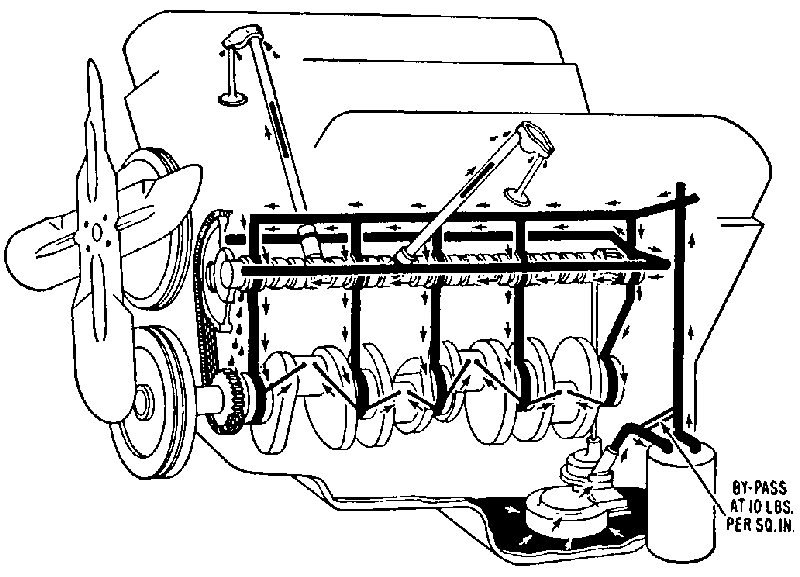
Main bearing spun in a way that blocked the oil feed, and cause starvation and seizing.

RBs are oiled through holes in the crank, and the crank is oiled from holes in the main bearings. The main bearings have a groove and a hole, where oil is pumped in, into the crank, where it comes out at the RBs.
Main bearing spun in a way that blocked the oil feed, and cause starvation and seizing.
chocstraw wroteMultiple ways to blow your engine due to incorrect install:Isn't the main issue actually the notch on the lip of the bearing wearing down, causing it to spin? Hard to imagine that any level of incorrect installation would cause such a catastrophic failure as demonstrated here. Can anyone chime in how incorrect installation could lead to seizing like this?
.
The car uses fractured rods. Installing them incorrectly is much easier than you'd think and guarantees a failure. A track buddy was talking about rebuilding his Pcar engine and did this, the engine blew 5k later.
Not properly seating the new rod bearing. There is a little groove, if not seated well kaboom
If you used stock bolts it is also possible the install seemed too much of a PITA and the shop ignored the correct procedure
All this, of course, assumes this is actually a rod bearing failure. It could be a mains failure that then took out the rod.
As always, one should be very careful when selecting who will install their bearings. I'd extend this to general work. I totally understand people driving hundreds of miles to see deansbimmer for example
chocstraw wroteI am unsure as to where you found that the locating lug will wear. If the locating lug is properly nested, the bearings will not move (unless they are the wrong bearing for the rod...). Perhaps I am misunderstanding what you are saying.Isn't the main issue actually the notch on the lip of the bearing wearing down, causing it to spin? Hard to imagine that any level of incorrect installation would cause such a catastrophic failure as demonstrated here. Can anyone chime in how incorrect installation could lead to seizing like this?
Found this quote here: "In simple terms, bearing crush is what holds the bearing in place. Think of it as putting 10 pounds of something into a five-pound bag. The tang or locator tab on the shell that fits the saddle is only for locating the bearing during assembly."
This article discusses bearing failure modes in great detail. Number 17, Oil Starvation, is consistent with the typical rod bearings being removed from S65s.
Bearings spin when the hydrodynamic bearing stops functioning properly and metal-on-metal friction occurs which "spins" the bearing shells in the rod big end. This ruins the rod and crank, and if the rod breaks, the block as well. SIGNIFICANT force is needed for this to happen. That force will never occur if the bearing is operating properly.
Let me know if I am misunderstanding what you are trying to say.
SYT_Shadow wroteThought it was hard to install fractured rods the hard way lol. When I changed my bearings with my mech it was pretty obvious how a cracked rod goes back together. Guess there's no shortage of stupid out there.Multiple ways to blow your engine due to incorrect install:
The car uses fractured rods. Installing them incorrectly is much easier than you'd think and guarantees a failure. A track buddy was talking about rebuilding his Pcar engine and did this, the engine blew 5k later.
Not properly seating the new rod bearing. There is a little groove, if not seated well kaboom
If you used stock bolts it is also possible the install seemed too much of a PITA and the shop ignored the correct procedure
All this, of course, assumes this is actually a rod bearing failure. It could be a mains failure that then took out the rod.
As always, one should be very careful when selecting who will install their bearings. I'd extend this to general work. I totally understand people driving hundreds of miles to see deansbimmer for example
I got my money on mains failure that took the rod bearings out as collateral.
8500RPM wroteI read somewhere that fractured rods car easily messed up if you drop the cap - they never go back properly then. But I agree, it is pretty obvious when they fit properly as you can hardly see the parting line. Plus they are etched with a unique number only on one side IIRC.Thought it was hard to install fractured rods the hard way lol. When I changed my bearings with my mech it was pretty obvious how a cracked rod goes back together. Guess there's no shortage of stupid out there.
I got my money on mains failure that took the rod bearings out as collateral.
And I think you are likely correct. Main #1 possibly failed and the heat pooched #1 and #5 rod bearings as they are starved of oil and way hotter than the other rods. This sucks ass for the OP.
Wonder if we could start a go-fund-me for S65 owners
 The community could "self insure" against blown engines due to main failures. Everyone could kick into the kitty and if their mains take out their engine, boom, the kitty helps them out!!
Ah, to dream.
Scharbag wrotelol yeah in a perfect world that would be nice. I just changed my rod bearings and my COPPER bearings out of my 2012 E92 looked great. Lookout for that thread when I make time to post everything up! Gives me hope that my mains are in a similar good condition.I read somewhere that fractured rods car easily messed up if you drop the cap - they never go back properly then. But I agree, it is pretty obvious when they fit properly as you can hardly see the parting line. Plus they are etched with a unique number only on one side IIRC.
And I think you are likely correct. Main #1 possibly failed and the heat pooched #1 and #5 rod bearings as they are starved of oil and way hotter than the other rods. This sucks ass for the OP.
Wonder if we could start a go-fund-me for S65 owners
Ah, to dream.
chocstraw wroteNot sure where that came from, but it's wrong. The locating tang doesn't wear down and also doesn't play any role in bearing operation after the installation. The crush holds the bearings in place, not the locating tang. Hopefully this didn't come from a mechanic....Isn't the main issue actually the notch on the lip of the bearing wearing down, causing it to spin?
While we're talking about myths, here's two other myths to dispel.
- I've seen somebody say the blocks were machined wrong and the main bolts were machined at an angle. That's a myth. CNC's machine the blocks and can't even make this type of mistake.
- Factory workers torqued rods incorrectly. That's another myth. Machines do the torque sequence, and they get it right every time.
It's actually quite easy. I've seen both of the following:Hard to imagine that any level of incorrect installation would cause such a catastrophic failure as demonstrated here. Can anyone chime in how incorrect installation could lead to seizing like this?
- Locating tang not properly seated in the housing and was rotated 5+ degrees in the housing. This caused excessive pressure on the shells, and spun a bearing in less than 10000 miles. This failure was discovered because the shells leave an impression on the backs of the rod housing. Aligning the bearing manufacturer marks in the housing and you see the shell was rotated 5+ degrees. The locating tang was also polished -- as a clear sign that it was rubbing against the housing.
- One shell was installed backwards (locating tang on opposite side of the housing). This has similar results as the one above: excessive pressure, excessive wear, then a spun bearing. This on was discovered by lining up the scrape marks on the shells until the two shells matched. This lead to the discovery that one was installed backwards. The locating tang was also polished on this one because it wasn't anywhere near the pocket that it's supposed to fit in.
Last but not least: there was one forum user on here a few years ago. He was one of the most vocal disbelievers in the rod bearing clearance issue. He mocked everybody who changed their bearings (sound familiar in this thread?). The guy's engine threw a rod out the side, and he quietly disappeared -- and I've never seen him post ever again.
Any chance that not cleaning the engine oil off of the rod cap bearing surface before installing the bearing can lead to a spun bearing?
Green-Eggs wrotefwiw Evolve Automotive disagrees with you. check the ~5:00 mark of this video:Not sure where that came from, but it's wrong. The locating tang doesn't wear down and also doesn't play any role in bearing operation after the installation. The crush holds the bearings in place, not the locating tang. Hopefully this didn't come from a mechanic.
Not Sure wroteMuch respect for the Evolve guys, but they are flat wrong on that one. Many engines produced over the years have used tang-less bearings altogether and they don't fly apart.fwiw Evolve Automotive disagrees with you. check the ~5:00 mark of this video:
Source article for the quote above about 10lbs in a 5lb bag:
https://www.enginebuildermag.com/2009/11/get-your-bearings/
burnrbr wroteI know it can be hard to keep the top of the rod clean when changing bearings with the engine in the car. Damn crank is in the way. The cap is easy and can be kept very clean and dry. So this is a good question.Any chance that not cleaning the engine oil off of the rod cap bearing surface before installing the bearing can lead to a spun bearing?
I would think that the crush force and hatching on the rod big end bore would still hold the shell even if there was a bit of oil on the bearing back. It would be nice if one of the professional engine builders weighed in on this.
Cheers,
Green-Eggs wroteThat’s when living in denial catches up really quick to youLast but not least: there was one forum user on here a few years ago. He was one of the most vocal disbelievers in the rod bearing clearance issue. He mocked everybody who changed their bearings (sound familiar in this thread?). The guy's engine threw a rod out the side, and he quietly disappeared -- and I've never seen him post ever again.

A few people asked and it is a great question - who did the install?
TX wroteOriginal bearings weren't too bad but definitely starting to wear. Yes my crank was perfect until I spun the BEs. I had APR bolts for those who are asking. The install was done by one of the most reputable euro shops around me, who have done 20+ rod bearings jobs. I think something a lot of people are over looking is the loss of oil. Regardless of your bolts or bearings if you aren't getting oil in a journal then you're going to spin a bearing and do a lot of damage to your whole engine.seeing that scares the bleeped out of me.
I'd be curious to know the condition of the crank and original bearings that were changed. Was the crank originally undamaged? I won't ask who did the work, but was it DIY or shop? I see you (or they) went with BE bearings, but bolts are not mentioned. Do you know which bolts were used?
Is this the first failure of BE replaced bearings? I know shops have done hundreds of replacements, so I cant figure what might have gone wrong here.
Those bearings look horrible. The ends are completely gone to to point they spun showing wear marks from foreign material. Total lack of oil? top and bottom flipped during install? torqued out of spec, brings me back to the bolts.
Edit. The shop claimed all the bolts were torqued to spec, and was confirmed when they dropped the pan.
Don't mean to derail the thread....But a shop's image is only as good as the representative representing it. Evolve enjoys a fantastic reputation but like almost every other shop out there, the founder who built that reputation based on knowledge and experience usually isn't the one doing the labor once they're big enough to enjoy such a reputation. The tech on that video is simply incorrect. Unfortunately, the majority of RB's being replaced by well known RB shops, are being replaced by techs who really don't understand what's going on. Furthermore, most of the videos being pushed around are sourced from these types of mechanics. Of course there are some exceptions but the truly knowledgeable sources are usually too busy to make videos.
Example 1: A customer who just had his bearings done by a much larger, more well known, highly reputable shop brought me his M3 because within 200 miles the rod was knocking. Upon disassembly I found the #1 bearing shells were installed backwards (locating tang installed opposite of notch). The tech clearly made a noob mistake and it cost our customer his engine.
Example 2: A highly reputed competing shop in my area purchased BE bearings from us since we're one of BE's vendors. Their tech arrived to pick up the parts while we had two RB services in process, and was amazed that we actually remove the subframes for the service. We were shocked. There's no way to have the same level of accuracy, attention to detail, and cleanliness without removing the subframe. If you disagree, we have photos from the shop from Example 1 mid-service with the subframe dangling, while the tech was busy mis-installing a bearing shell and ruining the engine.
In the case of the OP, I would bet that this is a main bearing failure.
Example 1: A customer who just had his bearings done by a much larger, more well known, highly reputable shop brought me his M3 because within 200 miles the rod was knocking. Upon disassembly I found the #1 bearing shells were installed backwards (locating tang installed opposite of notch). The tech clearly made a noob mistake and it cost our customer his engine.
Example 2: A highly reputed competing shop in my area purchased BE bearings from us since we're one of BE's vendors. Their tech arrived to pick up the parts while we had two RB services in process, and was amazed that we actually remove the subframes for the service. We were shocked. There's no way to have the same level of accuracy, attention to detail, and cleanliness without removing the subframe. If you disagree, we have photos from the shop from Example 1 mid-service with the subframe dangling, while the tech was busy mis-installing a bearing shell and ruining the engine.
In the case of the OP, I would bet that this is a main bearing failure.
