1.2MVIEWS
3.2KREPLIES
3.1KAPPRECIATES
06-01-2026LAST POST
As they said in Chernobyl - Not Great, Not Terrible.
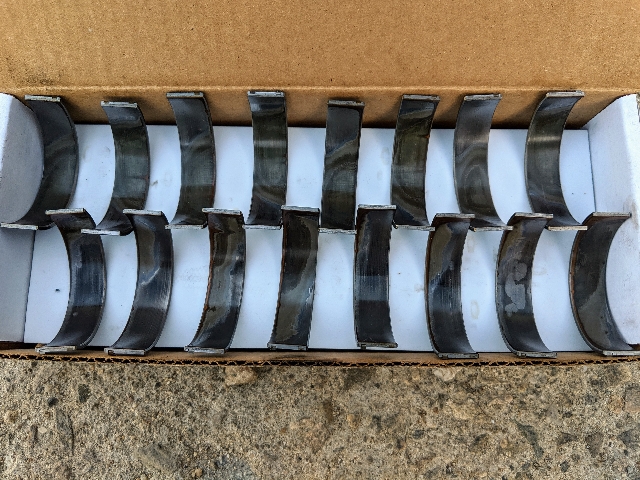
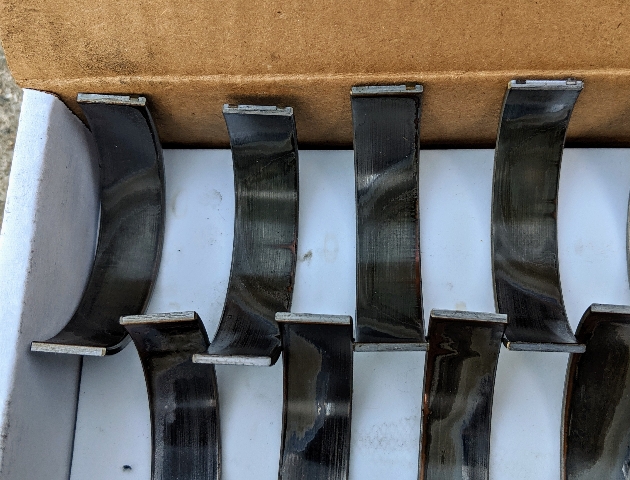
Changed them on the weekend. It's my second S65 engine, so I cannot tell for sure milage and such, but what I'm told is that it's around 60k kilometers from a '08 car.
Attached imageAttached imageAttached imageAttached imageAttached image
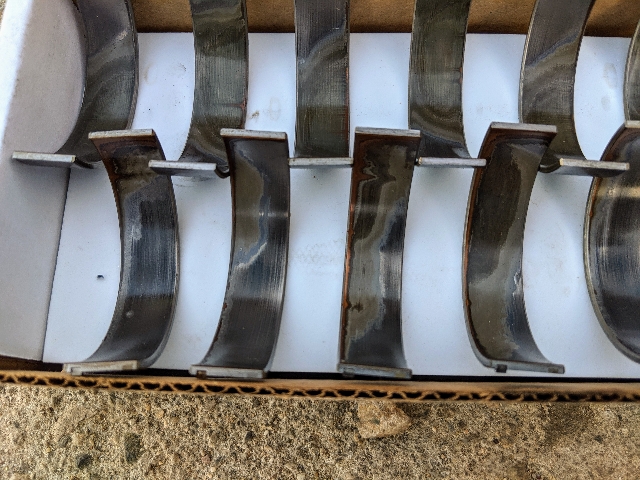
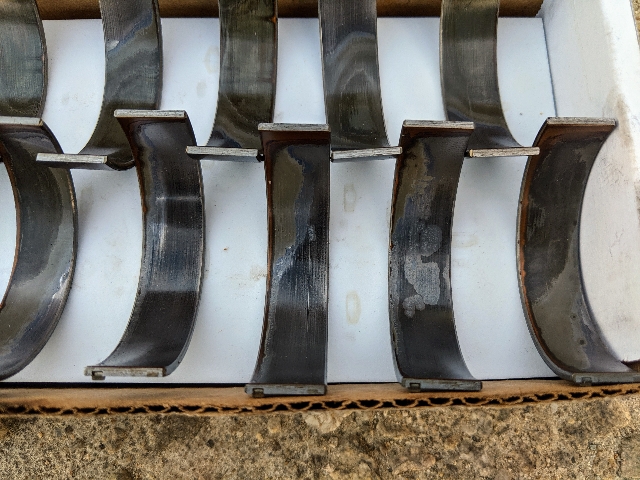
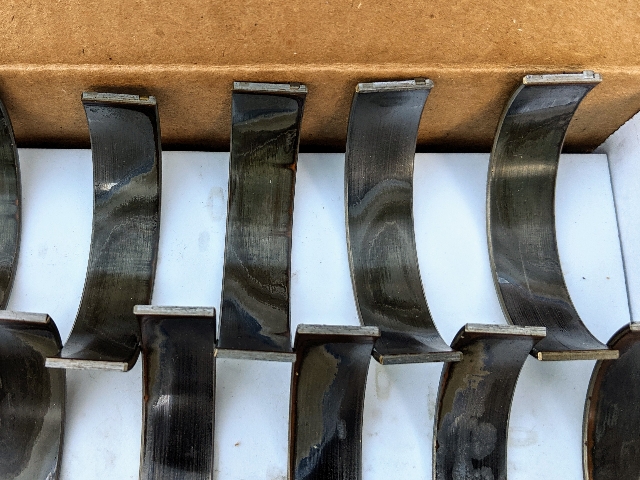
Had the bearings changed last week with WPC bearings at 120K on 2011 E90 M3. I have been religious with oil changes since taking ownership at 55K.

Bearings look dark in the first picture, but they are much lighter--#2 and #3 are more accurate. I believe I have the newer material from BMW.


Attached image

Attached image

Attached image

Attached image
Man these oil reports are all peaches and cream and yet the bearing metals magically disappear!
Alexand3r wrote
As they said in Chernobyl - Not Great, Not Terrible.
Great analogy on more than one level.
330indy wrote
Man these oil reports are all peaches and cream and yet the bearing metals magically disappear!
Right? It's almost like a one-off $30 oil analysis on oil with unknown chemistry in an engine with largely-unknown metallurgy operated in uncontrolled conditions isn't a good way to determine wear...


Right? It's almost like a one-off $30 oil analysis on oil with unknown chemistry in an engine with largely-unknown metallurgy operated in uncontrolled conditions isn't a good way to determine wear...
It’s even more concerning as I am showing strong, consistently healthy oil reports and yet the bearings have wear and some have significant wear. You could argue that occurred in the first 55k, but I doubt all wear occurred then. Interesting huh?
ThatM3guy wrote
It’s even more concerning as I am showing strong, consistently healthy oil reports and yet the bearings have wear and some have significant wear. You could argue that occurred in the first 55k, but I doubt all wear occurred then. Interesting huh?
They are not the early bearings. The oil analysis would not be nearly as useful for the later bearings because of the metallurgy.
ThatM3guy wrote
It’s even more concerning as I am showing strong, consistently healthy oil reports and yet the bearings have wear and some have significant wear. You could argue that occurred in the first 55k, but I doubt all wear occurred then. Interesting huh?
Well... yes and no.

Like most oil analysis labs, Blackstone gets its wear metals counts from ICP spectroscopy, which only catches particles up to a certain size -- and not all mechanical wear chucks out particles in that size range. Some wear modes produce bigger particles, to which ICP spectroscopy is completely blind. Furthermore, ICP-detectable particles can come from chemical processes that have nothing to do with what most people would consider mechanical wear -- processes like acid attack from overextended oil change intervals, or highly active surface chemistry from aggressive anti-wear additives in the oil. So, if you see big numbers, it's difficult or impossible to say whether they're anything to worry about. And if you see low numbers, maybe everything's fine, or maybe there's a wear mode that ICP spectroscopy can't detect. You have no idea just from looking at the report.

S65s with the original BMW rod bearings are lucky in that they sometimes produce lead and copper particles in ICP-detectable sizes when their rod bearings wear abnormally, AND they don't seem to produce ICP-detectable lead or copper in significant quantities for any other reason (barring leaded fuel or new oil cooler hardware or something). So, if you see those high numbers from one of those engines, then yeah, it's probably rod bearings. But again, if you don't see those numbers, you have no idea.

We don't know how or to what extent the updated BMW rod bearings or any aftermarket rod bearings will show wear on ICP spectroscopy, if they even do at all. Aftermarket bearing manufacturers will say they went for leaded bearings to facilitate oil analysis, but there's been no rigorous testing of that idea and the data from the field is incomplete. What little evidence we have on the updated BMW bearings is not favorable, though we don't even know what we're looking for because we don't really know what they're made of.

ICP spectroscopy can be useful for tracking early-stage wear when you have a lot of background knowledge about the application in question. You have to know in advance whether and how any potential wear problems will show up on oil analysis, and you have to know about any possible sources of false-positives. Then you have to sample frequently enough to catch the wear while it's still in that early stage, before it starts producing particles too big for ICP spectroscopy to detect.

In other words, tracking wear with oil analysis requires a bunch of things that are difficult if not impossible for an end user, running oil with unknown chemistry, in a hand-built car engine with largely-unknown metallurgy, operated in the real world under uncontrolled and constantly varying conditions. And that's the main problem here.

It's generally assumed that frequent and regular sampling can reduce the futility of oil analysis in an application like this. That's why I'm doing it. But I'm sampling every 5k miles and using a slightly more extensive analysis package (Polaris Labs Advanced Engine Plus), and I'm not taking low numbers to mean a clean bill of health. I'm already planning to revisit my rod bearings within 60k-80k miles after the first change. What I'm looking for are signs that I might have to do them sooner, as well as signs of other kinds of trouble like fuel dilution and other contaminants -- which, by the way, is where oil analysis is truly useful in a car engine. Maybe that's another thread.

The set of oil analysis reports you had prior to changing your rod bearings wasn't so much a consistent history as a few snapshots over tens of thousands of miles. And again, that's in addition to the serious limitations of oil analysis for tracking wear.

Is what you did better than nothing? Absolutely.

Is it mysterious that oil analysis missed your rod bearing wear? Not in the least.
Here's mine (from a '12 E92 with 73k miles)
Attached imageAttached image
2009
73,828 miles

Brought the car to Mporium outside Dallas. Very happy with there service experience.

They're not good, but not bad. Happy with the piece of mind of having them done.
Attached imageAttached imageAttached image
ThatM3guy wrote
Had the bearings changed last week with WPC bearings at 120K on 2011 E90 M3. I have been religious with oil changes since taking ownership at 55K.

Bearings look dark in the first picture, but they are much lighter--#2 and #3 are more accurate. I believe I have the newer material from BMW.
Look on the backs of the bearing shells for markings, then compare them to the pictures posted on the BE Bearings wiki.
http://wiki.rcollins.org/core/index.php/Engine_Specs_-_S65_Rod_Bearings

These look more like early 088/089 shells to me than later 702/703 shells. But the backs of the bearings will tell the story. If you see <CL> stamped, then they are early 088/089 Clevite shells. If you see a CIRCLE-G stamped, then they are later 702/703 Glyco shells.
TigerTater wrote
2009
73,828 miles

Brought the car to Mporium outside Dallas. Very happy with there service experience.

They're not good, but not bad. Happy with the piece of mind of having them done.
Looks like one of the better set at fair milage, bottoms great and slight wear on tops.
Green-Eggs wrote
Look on the backs of the bearing shells for markings, then compare them to the pictures posted on the BE Bearings wiki.
http://wiki.rcollins.org/core/index.php/Engine_Specs_-_S65_Rod_Bearings

These look more like early 088/089 shells to me than later 702/703 shells. But the backs of the bearings will tell the story. If you see <CL> stamped, then they are early 088/089 Clevite shells. If you see a CIRCLE-G stamped, then they are later 702/703 Glyco shells.
They are in fact 088/089 shells with <CL> stamped. Thanks for the tip!
Thread referenced by Helmsman in How do my old rod bearings looks? 11-12-2019
How do these look? 2013 @ 60k miles.
Credits to BMW ONLY in Las Vegas NV :)
Attached imageAttached imageAttached image
andykx213 wrote
How do these look? 2013 @ 60k miles.
Credits to BMW ONLY in Las Vegas NV :)
Looks like LCI shells? "Right on time" looks like a tad strong word in your case but leave it to you to compare.
2011 M3 DCT @ 100,674 miles:

Image hosted on: live.staticflickr.com
tom @ eas wrote
2011 M3 DCT @ 100,674 miles:

Image hosted on: live.staticflickr.com
Another replacement at fair milage, still well in time prior any issues, nice!
tom @ eas wrote
2011 M3 DCT @ 100,674 miles:

Image hosted on: live.staticflickr.com
I'd be interested to hear the OCI and oil choice on this engine
deansbimmer wrote
In reality nobody can really know what "close to death" bearings look like, because they would obviously need to know what failed ones looked like just before they failed. We can all make guesses though.
Questions for the experts (or anyone) please (I'm new to this and have not been able to find answer.).

1. Do you think a big factor is how much car has spent around red line? It seems very possible to me this is why damage occurs even in low mileage car (a high rpm event). Porsche in-car CPU actually keeps over rev events in memory - no such thing in M3?

2. Any opinion on incident of blown engine or severity of bearing damage in DCT versus Manual? In as much as DCT in auto mode shifts automatically below red line (except for those who use manual mode of course), if above is true incident might be less with DCT car.

3. Have there been many inspections of the BE etc bearings after say 20-30k miles? Are they completely free of sign of damage?


Thanks in advance.
In general wear increases with rpm. However, cold starts are also a general cause of wear.

Just a few replaced bearings have been removed after 30k miles. Not enough to come to any conclusions.

In time there will be more. I changed mine 5 years ago at 60k and will change them again by 120k, but am at only 100k now.
pbonsalb wrote
In general wear increases with rpm. However, cold starts are also a general cause of wear.

Just a few replaced bearings have been removed after 30k miles. Not enough to come to any conclusions.

2. In time there will be more. I changed mine 5 years ago at 60k and will change them again by 120k, but am at only 100k now.
Thank you. So many posts to go through to find these answers quickly.

1. Of the posts I have read, IIRC someone has stated normal rod bearings shouldn't show any wear at all, has that been the case with those few after-market rod bearings that were inspected? Or was there some wear and tear also?

2. Without use of supercharger and/or engine mods, there has been no case of engine blown with after-market rod bearings?

3. How did you decide on 60k miles interval please? Is this a generally accepted interval, or just something you're comfortable with? I've read another statement that it could occur at any mileage interval. TIA
I've spent time on Porsche, GTR and other performance forums.
I've seen plenty of RB issues there also.
We don't have an exclusive on it.
cannga wrote
Thank you. So many posts to go through to find these answers quickly.

1. Of the posts I have read, IIRC someone has stated normal rod bearings shouldn't show any wear at all, has that been the case with those few after-market rod bearings that were inspected? Or was there some wear and tear also?

2. Without use of supercharger and/or engine mods, there has been no case of engine blown with after-market rod bearings?

3. How did you decide on 60k miles interval please? Is this a generally accepted interval, or just something you're comfortable with? I've read another statement that it could occur at any mileage interval. TIA
Rod bearings from other brands or models of cars might show pretty much no wear at 100k or even 200k miles. People take apart high mileage S52 from E36 and find little to no wear. But S54 in E46 do show rod bearing wear. Some aftermarket rod bearings have shown wear, some have not. But the sample size — maybe 10 out of thousands changed — is too small to reach any conclusions. I think that the extra clearance bearings will likely end up showing the least wear. BE, VAC and ACL sell extra clearance bearings.

I don’t know the answer to 2. I think n/a engine’s with replaced rod bearings have failed, but due to main bearing failure not rod bearing failure. The same is true of the supercharged motors that failed — it was the main bearings as I recall. Main bearing failures are not common and preventative maintenance is much more expensive. Probably 4 times the labor.

I decided on 60k because my original bearings had wear but were not on the verge of failure at 60k. I feel like the replacement set could go at least that far. If I had pulled them at 30k and they looked the same, I’d be changing in another 30k. If I pulled them at 90k and they looked the same, I’d change in another 90k. If mine had looked worse at 60k, I’d change them sooner next time. We just don’t have any evidence yet as to how many miles to expect from replacement bearings so I would base the interval on how the last set looked at the miles they were pulled. If my aftermarket bearings look great with 60k on them, I’ll increase the interval for the 3rd change.

Mine are wpc treated stock. BE had not yet made bearings in 2014 when I changed mine. I think BE are expensive so I will probably buy ACL next.