

russiamutha wroteSorry if this may be a stupid question, but do those bearings look like they're in good condition or is there a lot of wear?Recently picked up my 4th E92 M3, this time with higher mileage but it was looked after by PO. Took it todeansbimmer MPORIUM for RB service, here is the result:
1.2MVIEWS
3.2KREPLIES
3.1KAPPRECIATES
06-01-2026LAST POST
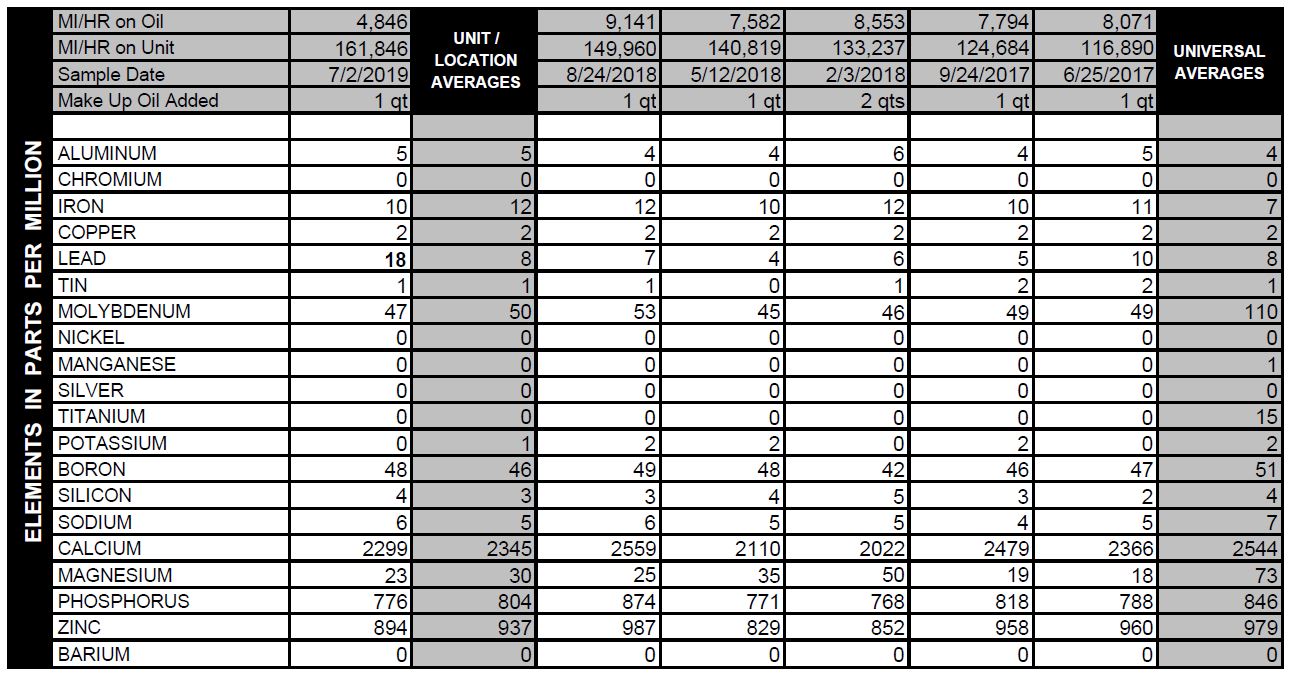
Just got my bearings done by Harrison Motorsports in Atlanta. Need to re-take a better picture, but the results were cylinder 1 and 2 bearings were the only ones worn down to the copper. Was originally interested in BE for replacement bearings, but availability has been scant and the shop owner stands by the latest revision of OEM bearings. He has used them on his own M3 and they also offer a 2 year warranty. His opinion is that ANY bearing on an engine such as the S65 should be considered a consumable at the 100k+ mile range. Also, in my mind, if my engine held up this well on original bearings, I'm inclined to believe I have a "good" engine that won't be "more prone" to failure by "bad" OEM bearings (if it ain't broke, don't fix it?). But only time will tell. Good thing for the warranty 
2010 E92 M3 (09/09 production), 163k miles, 30 track days. Purchased in 2015 with 42k miles, oil changed every ~8k miles with BMW Twin Power 10w-60. Daily driven year round in AL/GA climate, primarily highway miles. Always warmed up properly, but never held back from revving all the way out once oil was up to temp.
The last Blackstone test before I decided to change the bearings
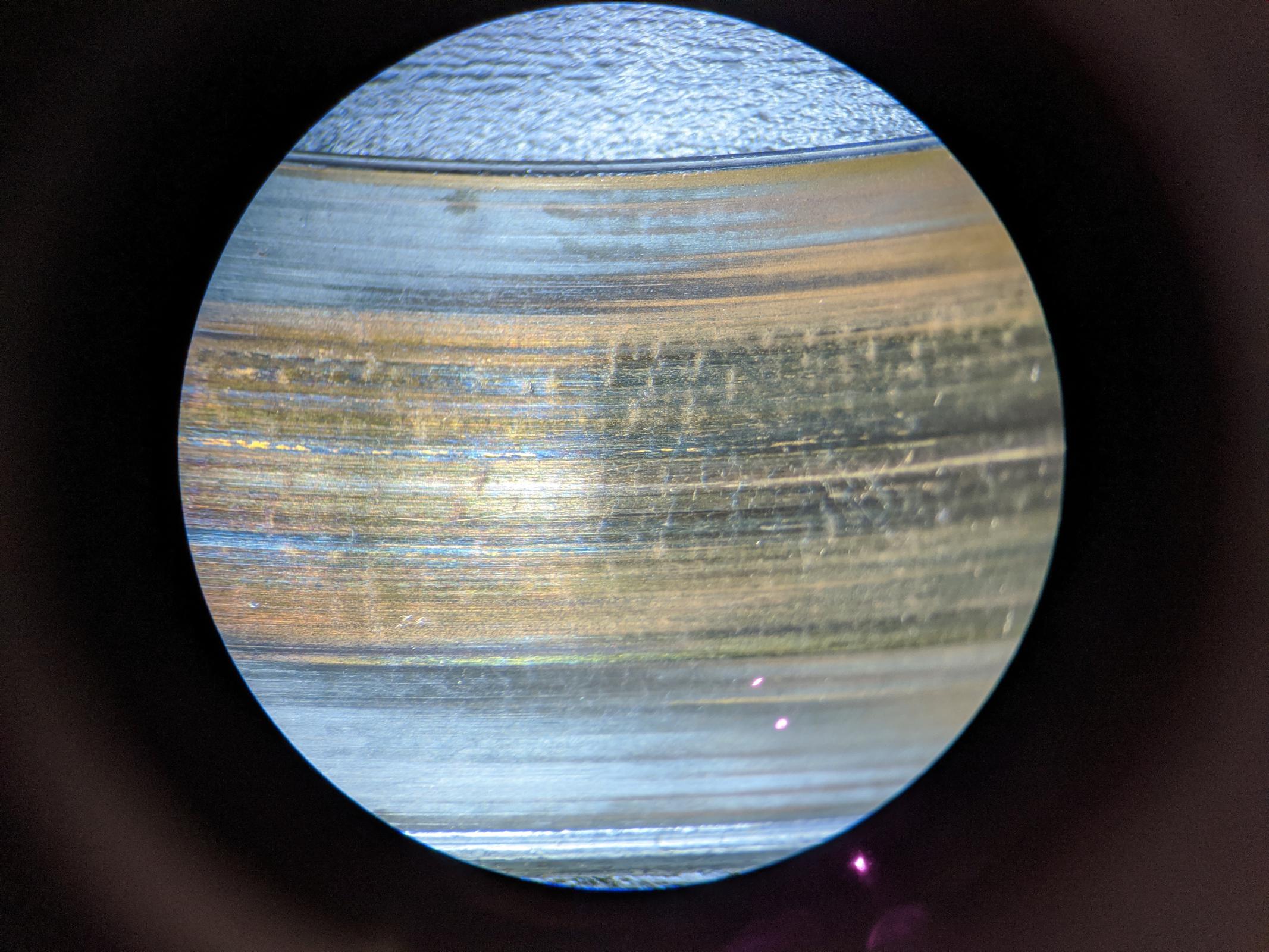
And the bearings
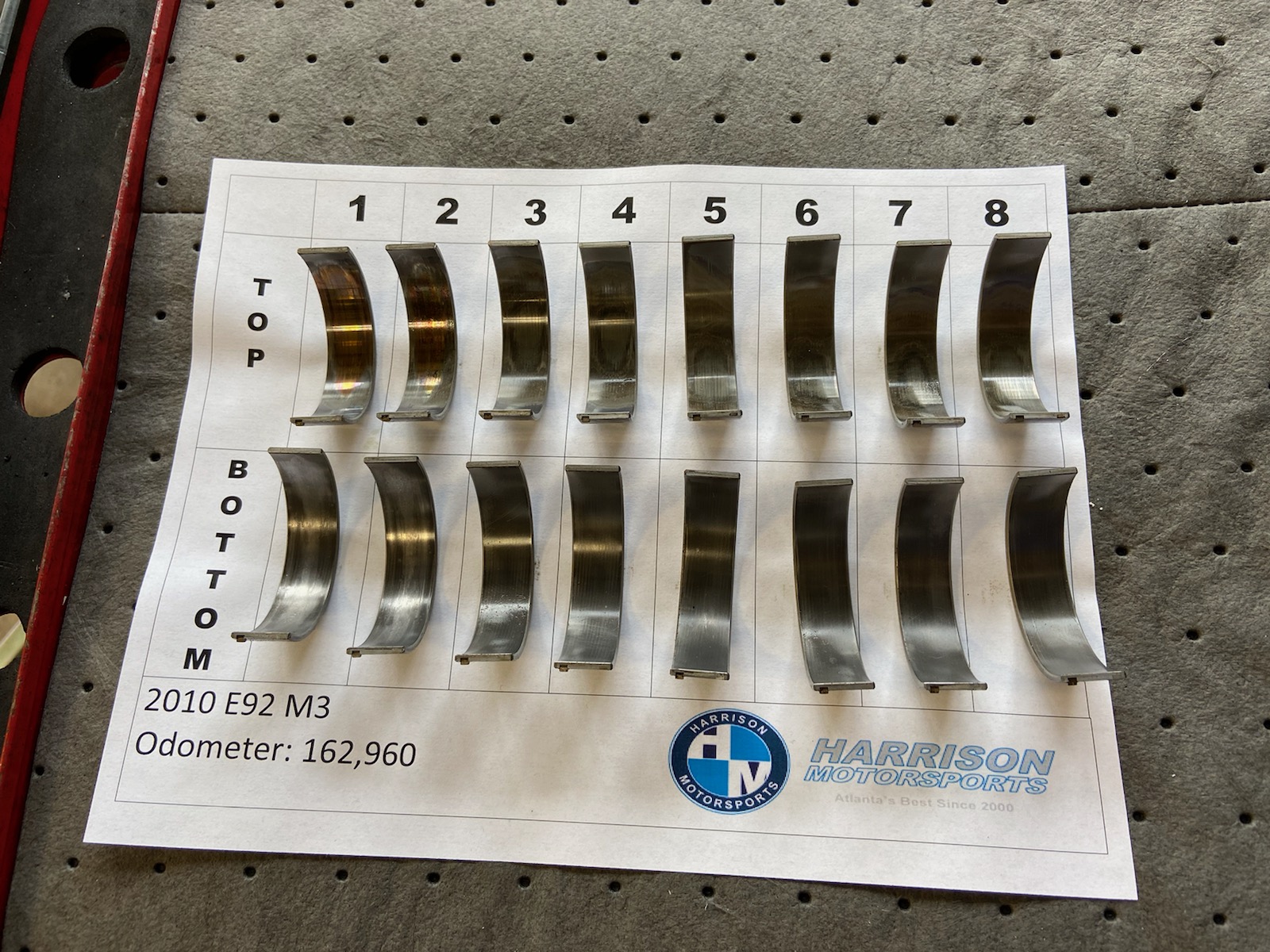
2010 E92 M3 (09/09 production), 163k miles, 30 track days. Purchased in 2015 with 42k miles, oil changed every ~8k miles with BMW Twin Power 10w-60. Daily driven year round in AL/GA climate, primarily highway miles. Always warmed up properly, but never held back from revving all the way out once oil was up to temp.
The last Blackstone test before I decided to change the bearings
And the bearings
Post referenced by Assimilator1 in S65 Oil reports collation - does oil analysis work for tracking bearing wear? 02-26-2020
1 and 2 are very bad. I would not wait 162k miles for the next change. I’d probably cut that in half. Mine at 60k we’re in much better shape than yours, so I feel like I could go at least 60k on the current bearings but will probably still change them by that number of miles. Plus I am curious how they look. My 2nd set has 42k on them now and it could be 2 more years at the rate I drive that car before I have 60k on them.
There is also a theory that wear does not occur at the same gradual rate. It could be they wear quickly and then the wear slows down. It seems like 90% of the bearings that come out are prematurely worn yet at the same time, probably 75% of these cars are still on the road with their original bearings.
There is also a theory that wear does not occur at the same gradual rate. It could be they wear quickly and then the wear slows down. It seems like 90% of the bearings that come out are prematurely worn yet at the same time, probably 75% of these cars are still on the road with their original bearings.
pbonsalb wroteAgreed, definitely not waiting another 162k. This was really only a factor of 80 mile roundtrip daily commute. The car is solely track duty now, so I'll probably measure change interval by track days rather than miles, but surely by 80k miles if I was dailying it.1 and 2 are very bad. I would not wait 162k miles for the next change. I’d probably cut that in half. Mine at 60k we’re in much better shape than yours, so I feel like I could go at least 60k on the current bearings but will probably still change them by that number of miles. Plus I am curious how they look. My 2nd set has 42k on them now and it could be 2 more years at the rate I drive that car before I have 60k on them.
There is also a theory that wear does not occur at the same gradual rate. It could be they wear quickly and then the wear slows down. It seems like 90% of the bearings that come out are prematurely worn yet at the same time, probably 75% of these cars are still on the road with their original bearings.
pbonsalb wrotePretty much has to be true, at least WRT the 702/703 bearings, no?There is also a theory that wear does not occur at the same gradual rate. It could be they wear quickly and then the wear slows down. It seems like 90% of the bearings that come out are prematurely worn yet at the same time, probably 75% of these cars are still on the road with their original bearings.
Amazing to me that people don't find this hypothesis more plausible than "OMG they look worn at 7k miles therefore they must sometimes wear out that soon".
Unfortunately, we don’t know. At least one engine died with less than 7k miles. There seems to be absolutely no guarantees. I do subscribe to Deansbimmer’s comment that once the sacrificial layer is sufficiently gone, the risk of failure goes up dramatically. The most reliable way to know the condition of your bearings is to take them out and look at them. I would do the next change interval based on what the old bearings look like.
pbonsalb wroteThe 702/703 LCI shells doesn't have a proper sacrificial layer, does it?Unfortunately, we don’t know. At least one engine died with less than 7k miles. There seems to be absolutely no guarantees. I do subscribe to Deansbimmer’s comment that once the sacrificial layer is sufficiently gone, the risk of failure goes up dramatically. The most reliable way to know the condition of your bearings is to take them out and look at them. I would do the next change interval based on what the old bearings look like.
I am definitely not an engineer. I think King explains the difference between bimetal and trimetal bearings well.
http://kingbearings.com/files/Engine_Bearing_Materials.pdf
http://kingbearings.com/files/Engine_Bearing_Materials.pdf
[edit] And from that paper - Good embedability. The lining is thick so it is capable to absorb both small and
large dirt particles circulating with the oil
So that's a yes then, but it's still harder than lead/copper.
M3MPH1S
Very useful post of pics + oil report.
Was it the elevated lead levels that made you change the bearings?
I've added your post to my list of M3 oil reports & bearings reports, I'll be posting a thread soon about it (maybe tonight if I have time).
large dirt particles circulating with the oil
So that's a yes then, but it's still harder than lead/copper.
M3MPH1S
Very useful post of pics + oil report.
Was it the elevated lead levels that made you change the bearings?
I've added your post to my list of M3 oil reports & bearings reports, I'll be posting a thread soon about it (maybe tonight if I have time).
Assimilator1 wroteYes, absolutely it was the report. I knew I was pushing the limit, but I took inspiration from another forum member who was very active in the HPDE community that kept his original bearings until 165k. So ever since I owned the car, I've had oil analysis performed and was ready to raise the white flag at any significant increase.[edit] And from that paper - Good embedability. The lining is thick so it is capable to absorb both small and
large dirt particles circulating with the oil
So that's a yes then, but it's still harder than lead/copper.
M3MPH1S
Very useful post of pics + oil report.
Was it the elevated lead levels that made you change the bearings?
I've added your post to my list of M3 oil reports & bearings reports, I'll be posting a thread soon about it (maybe tonight if I have time).
Thanks for your educational effort!
pbonsalb wroteDidn't we establish that this isn't actually a bimetal bearing in the sense used in that PDF?I am definitely not an engineer. I think King explains the difference between bimetal and trimetal bearings well.
http://kingbearings.com/files/Engine_Bearing_Materials.pdf
The experts in the bearing wiki say they are tin/aluminum and call them bimetal aluminum.
http://wiki.rcollins.org/core/index.php/Engine_Specs_-_S65_Rod_Bearings#OEM_702.2F703_Bearings
M3MPH1S wroteCool! Got them online anywhere? If so could you post a link to my new oil report collation thread?Yes, absolutely it was the report. I knew I was pushing the limit, but I took inspiration from another forum member who was very active in the HPDE community that kept his original bearings until 165k. So ever since I owned the car, I've had oil analysis performed and was ready to raise the white flag at any significant increase.
Thanks for your educational effort!
pbonsalb wroteYes, but...The experts in the bearing wiki say they are tin/aluminum and call them bimetal aluminum.
http://wiki.rcollins.org/core/index.php/Engine_Specs_-_S65_Rod_Bearings#OEM_702.2F703_Bearings
In the PDF you linked, the definition of a "bimetal" bearing does not include an overlay or an intermediate layer. A few pages back, deansbimmer said 702/703 bearings do indeed have an overlay of some kind and an intermediate layer containing copper, and posted pics in support: https://www.m3post.com/forums/showpost.php?p=25286461&postcount=1222
Moreover, "bimetal aluminum" bearings, when worn, don't seem to show the kind of discoloration we tend to see on 702/703 bearings. They'll score, polish, etc., but not radically discolor. I mentioned this as well a few pages back. Attached is a PDF I got from Glyco when I emailed them a while back. It shows clear differences between wear on lead/copper bearings and the same wear modes on aluminum bearings.
Your PDF is good for showing the differences in wear that everyone who looks at the pictures of removed bearings sees between 088/089 and 702/703 bearings.
I liked the explanation in the King pdf that once the thin top layer is gone from the tri metal bearings, seizure resistance is much less.
The king pdf also explains that the aluminum bearings have good imbed-ability, which may explain the specks that are often visible on removed bearings.
I liked the explanation in the King pdf that once the thin top layer is gone from the tri metal bearings, seizure resistance is much less.
The king pdf also explains that the aluminum bearings have good imbed-ability, which may explain the specks that are often visible on removed bearings.
Production date 12/2007 European version 6-speed
Original tri-metal bearings changed at 98k kilometers /61k miles/
Replaced with the new updated OEM aluminum-tin alloy bearings and OEM bolts
Looks like I caught them just on time
Also replaced the flywheel and clutch assembly with the updated OEM version
Don't ask me for the bill
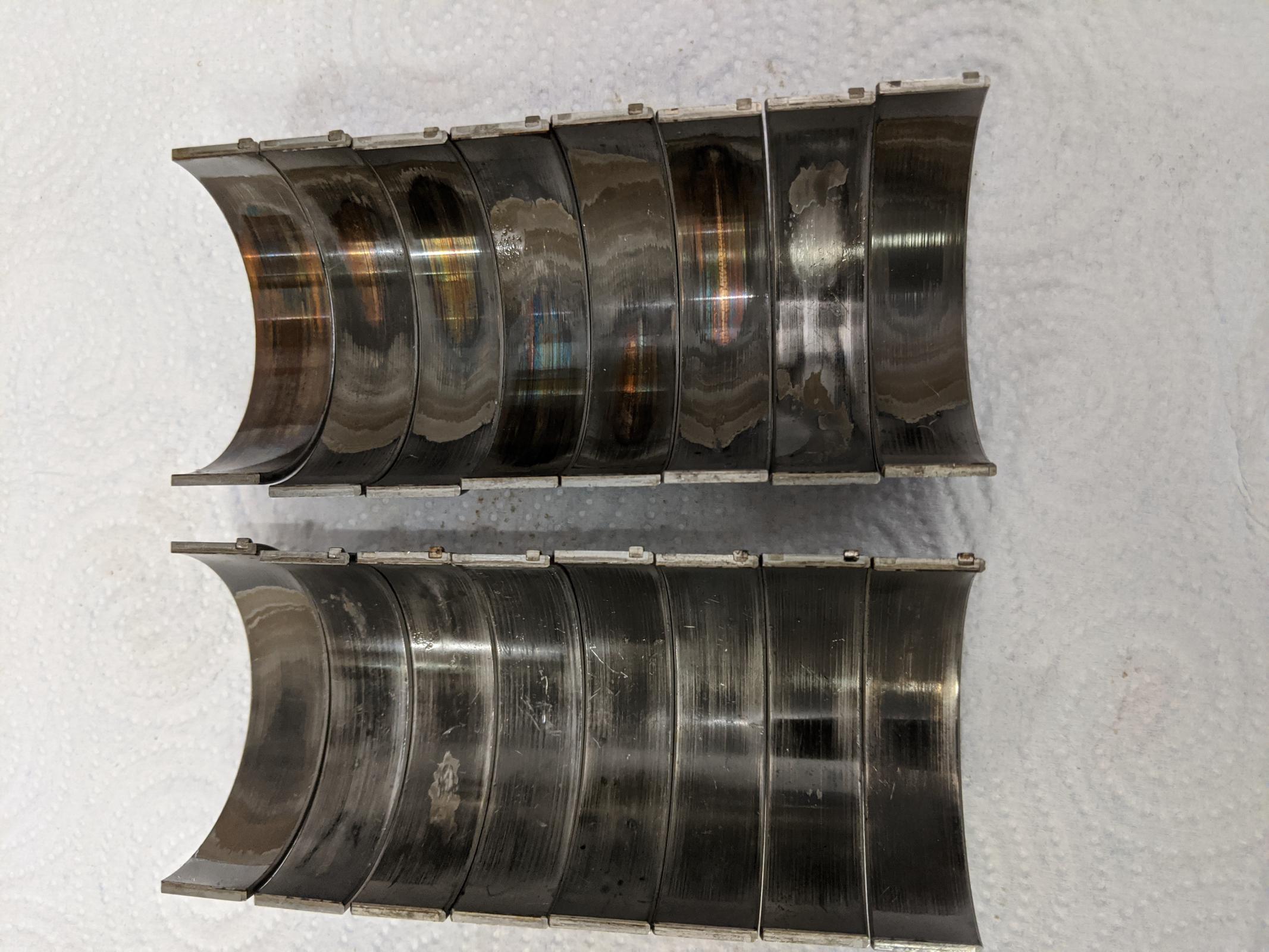
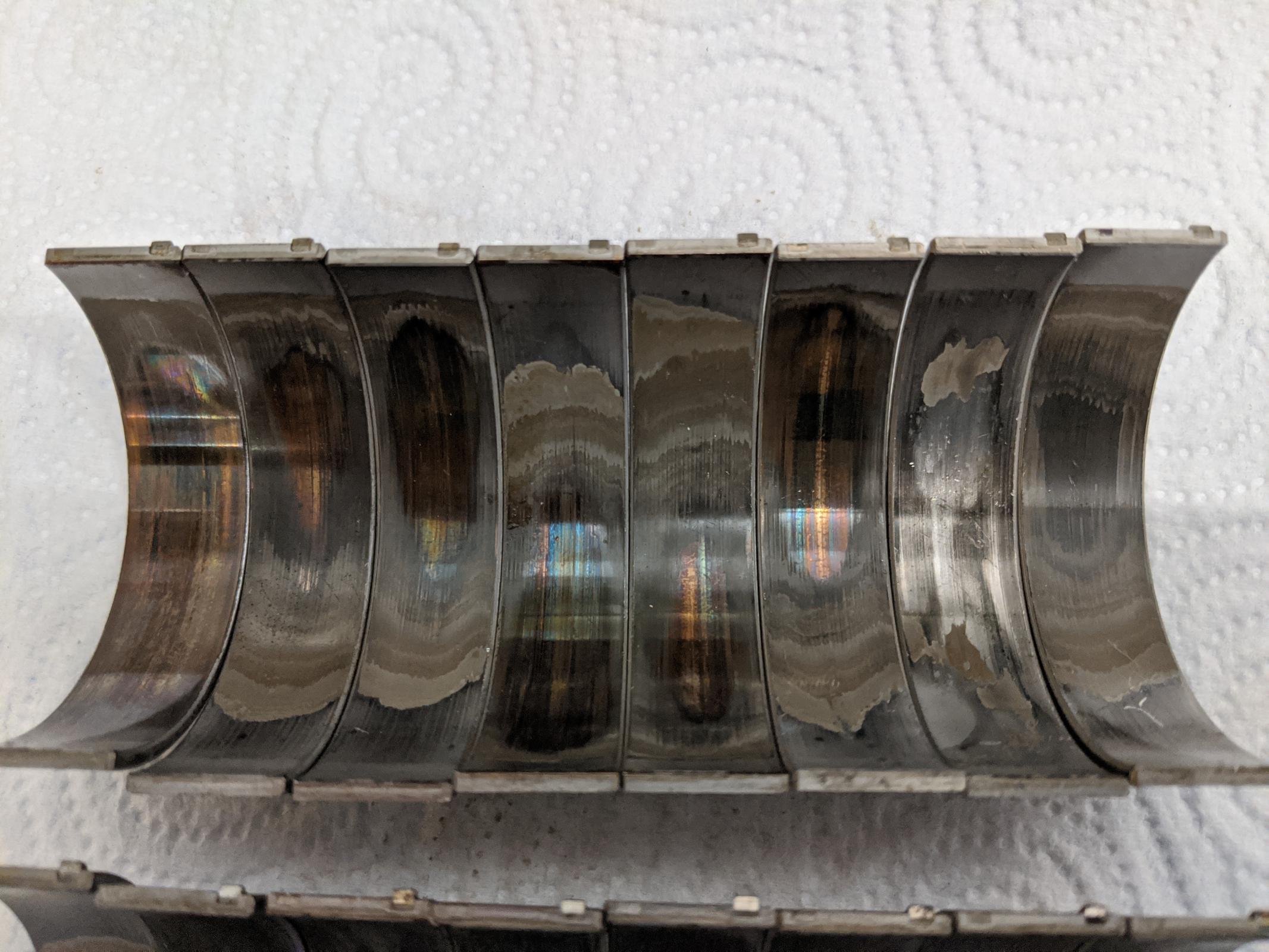
Original tri-metal bearings changed at 98k kilometers /61k miles/
Replaced with the new updated OEM aluminum-tin alloy bearings and OEM bolts
Looks like I caught them just on time
Also replaced the flywheel and clutch assembly with the updated OEM version
Don't ask me for the bill
pbonsalb wroteI was talking specifically about discoloration. 702/703 bearings discolor in a way that the aluminum bearings in the PDF have not done.Your PDF is good for showing the differences in wear that everyone who looks at the pictures of removed bearings sees between 088/089 and 702/703 bearings.
pbonsalb wroteBert's been in contact with Glyco manufacturer. They have confirmed that the 702/703 bearings are trimetal tin/aluminum...not bimetal. After seeing this thread, Bert changed the wiki to correct the information.The experts in the bearing wiki say they are tin/aluminum and call them bimetal aluminum.
http://wiki.rcollins.org/core/index.php/Engine_Specs_-_S65_Rod_Bearings#OEM_702.2F703_Bearings
Green-Eggs wroteNice. Thanks.Bert's been in contact with Glyco manufacturer. They have confirmed that the 702/703 bearings are trimetal tin/aluminum...not bimetal. After seeing this thread, Bert changed the wiki to correct the information.
Any further information on the composition? What's the layer under the Sn/Al?
tol4o wroteGood quality photos! ThanksProduction date 12/2007 European version 6-speed
Original tri-metal bearings changed at 98k kilometers /61k miles/
Replaced with the new updated OEM aluminum-tin alloy bearings and OEM bolts
Looks like I caught them just on time
Also replaced the flywheel and clutch assembly with the updated OEM version
Don't ask me for the bill
, don't suppose you have an oil report too?Shocking state the bearings are in though! With the amount of copper showing on some of those shells you definitely dodged a bullet!
That last photo, which part of which shell is that zooming in on?
Btw, what made you go with OEM shells? You know even the later shells have suffered premature wear too? (although it appears they often fair better).
Assimilator1 wroteThat excerpt refers to bimetal aluminum bearings, which 702/703 bearings evidently are not (contrary to the previous assumption).[edit] And from that paper - Good embedability. The lining is thick so it is capable to absorb both small and
large dirt particles circulating with the oil
Assimilator1 wroteMost likely true, though it's still WAY softer than the crankshaft.So that's a yes then, but it's still harder than lead/copper.
Ok, good to know
