

Assimilator1 wroteIt's a spreadsheet posted by a rod bearing denier. He left the forum a long time ago after he had a rod bearing problem of his own. His engine didnt blow though. It's on this forum somewhere. Others have had an interest in updating it. I don't know if they did or not.What data set?
1.2MVIEWS
3.2KREPLIES
3.1KAPPRECIATES
06-01-2026LAST POST
Ah yes, I remember now, I think you linked me to that thread before*, lol.
And I think you sent me a zip file from an engine builders re bearings, can't remember what either tallied to now. I'll have to check them out again....
[edit]*Damn, can't find a subscribed thread or a relevant PM from you about it, maybe we discussed it in a thread.... (unless it was in a PM I inadvertently purged , I had to free up space ).
Found it! I looked through your posts, I'm glad you don't post too much! lol.
lol.
DrFerry found the member we were discussing and the relevant thread (see here for those interested).
Btw, SFP is still an active member, he posted a few days ago.
The other data set is the blown engine thread itself (which was 1 of the 2 threads SFP used for his list). Long after SFPs thread I tidied, sorted and posted the list later on in the blown engine thread, that shows that 47 lead bearing engines failed and 26 tin bearing engines failed (which both include likely, but not confirmed cases).
So that shows fewer cases for the tin bearing engines, although still quite a few! [another edit. Actually that tally is slightly out of date, I've since added a few more cases, but didn't add them to the total].
Anyway, my initial comment included what I saw in all the photos posted here, in ACM's thread and a UK M3 FB page as I documented here. And in those photos I didn't see 1 set of tin/al shells which had worn to copper (although their might have been 1, but the photo was poor quality). Between those 3 sources, I think it's fair to say that my comment that tin/al engines fail less often than the lead/copper bearing engines is fair (and as I said, I'll look at Bert's file later to see if that changes anything. Btw, do you think he'll mind if I post it here?).
But perhaps the disparity between the photos and the engine failures could be explained by the tin/alu bearings failing before they hit copper?? (because of the insufficient clearance and harder material?).
And I think you sent me a zip file from an engine builders re bearings, can't remember what either tallied to now. I'll have to check them out again....
[edit]*Damn, can't find a subscribed thread or a relevant PM from you about it, maybe we discussed it in a thread.... (unless it was in a PM I inadvertently purged
, I had to free up space ).Found it! I looked through your posts, I'm glad you don't post too much!
lol.DrFerry found the member we were discussing and the relevant thread (see here for those interested).
Btw, SFP is still an active member, he posted a few days ago.
Green-Eggs wroteSo according to an earlier conversation we had (after link above), this is the thread you had in mind. And you're right, that data set does show slightly higher failure rate for the tin bearings (although it's for only 47 cars). I recall that Bert had a more updated version (and some of his older entries were missing from SFPs file), with, IIRC 68 entries. I can't remember what it's tally was, but I think Bert did send it to me so I'll check that out (again) later.The comment about 702/703 shells causing fewer engine failures is incorrect. There is only one set of data that I've seen on the subject a few years ago. In that data set, 702/703 shells had numerical higher instances of bearing failure than the earlier 088/089 shells. I don't know the production numbers of each, so I can't tell you if that is less per-capita than 088/089 shells; but in actual numbers, they were greater...and when failed, they tended to cause more damage (e.g. holes in the block, etc.).
The other data set is the blown engine thread itself (which was 1 of the 2 threads SFP used for his list). Long after SFPs thread I tidied, sorted and posted the list later on in the blown engine thread, that shows that 47 lead bearing engines failed and 26 tin bearing engines failed (which both include likely, but not confirmed cases).
So that shows fewer cases for the tin bearing engines, although still quite a few! [another edit. Actually that tally is slightly out of date, I've since added a few more cases, but didn't add them to the total].
Anyway, my initial comment included what I saw in all the photos posted here, in ACM's thread and a UK M3 FB page as I documented here. And in those photos I didn't see 1 set of tin/al shells which had worn to copper (although their might have been 1, but the photo was poor quality). Between those 3 sources, I think it's fair to say that my comment that tin/al engines fail less often than the lead/copper bearing engines is fair (and as I said, I'll look at Bert's file later to see if that changes anything. Btw, do you think he'll mind if I post it here?).
But perhaps the disparity between the photos and the engine failures could be explained by the tin/alu bearings failing before they hit copper?? (because of the insufficient clearance and harder material?).
Had mine done today by local shop. Could be worse, but definitely could be better. Glad I went ahead with getting them swapped out.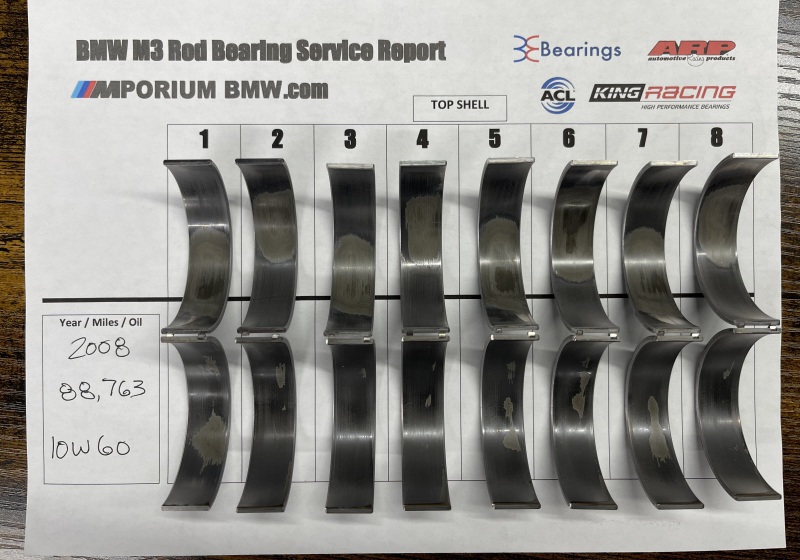
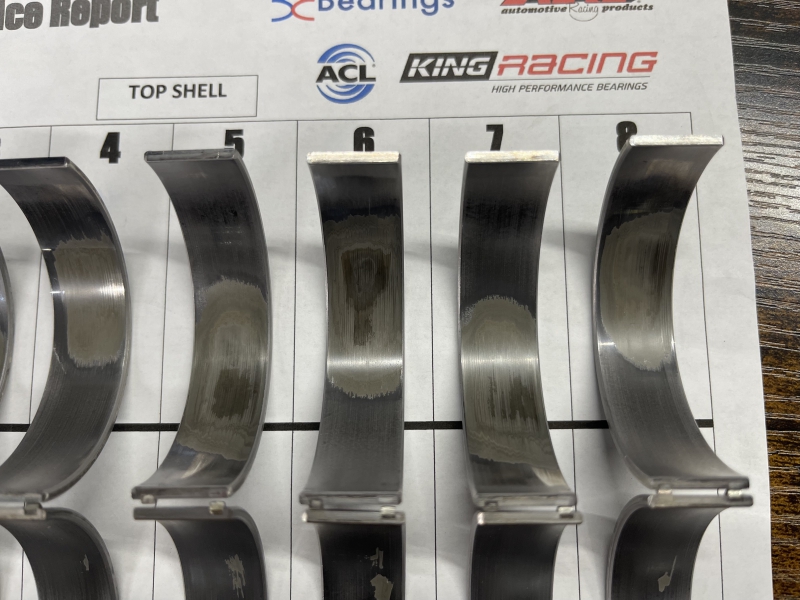
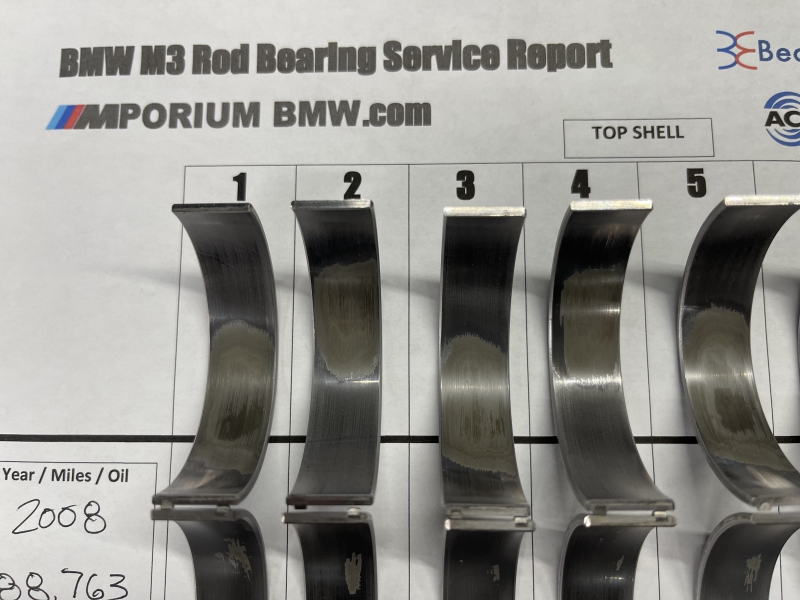
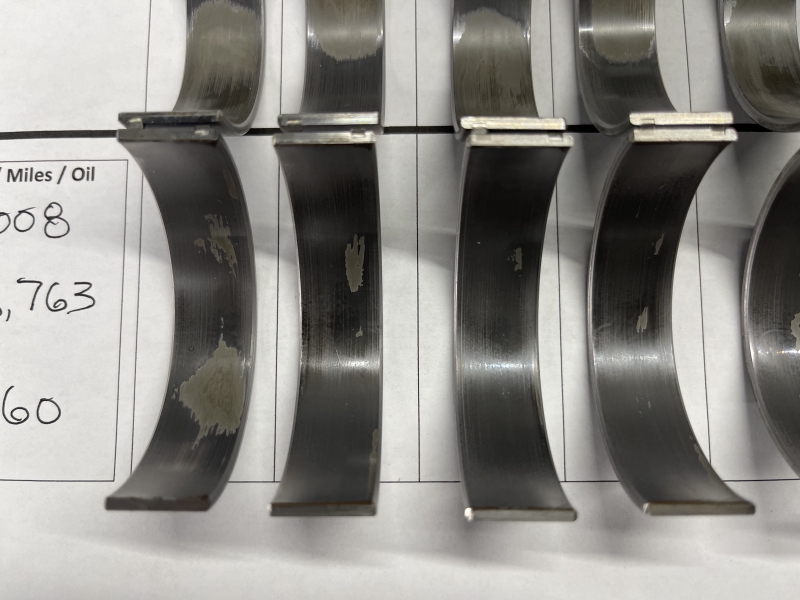
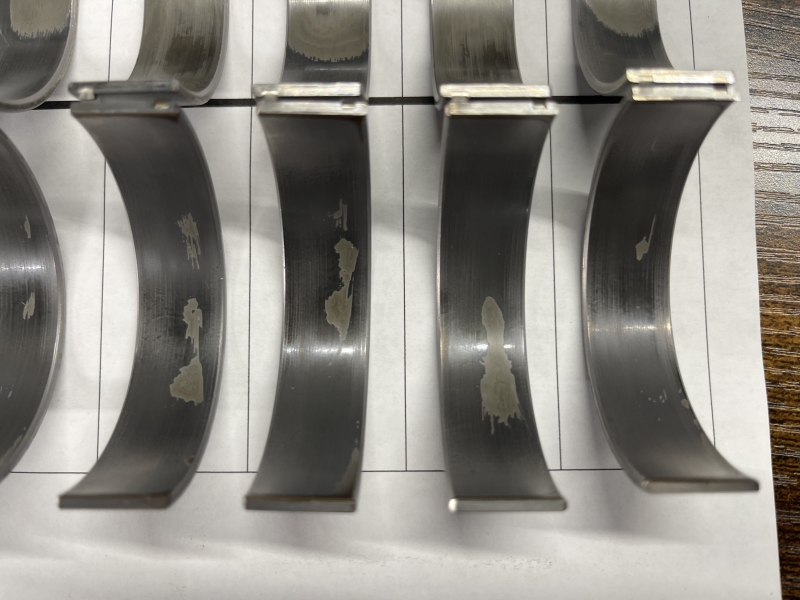
Djetaine wroteExcellent time to replace them. They do look a bit rough. Similar to mine out of my 09 with ~72K. They’re back a few pages. Great choice in your local shop as well.Had mine done today by local shop. Could be worse, but definitely could be better. Glad I went ahead with getting them swapped out.
Djetaine wroteGood move getting them done. I don't think they're too bad considering the mileage. I've seen much worse.Had mine done today by local shop. Could be worse, but definitely could be better. Glad I went ahead with getting them swapped out.
 lauz holds the prize for worst example published on this thread. You'll have some peace of mind now.
.
.
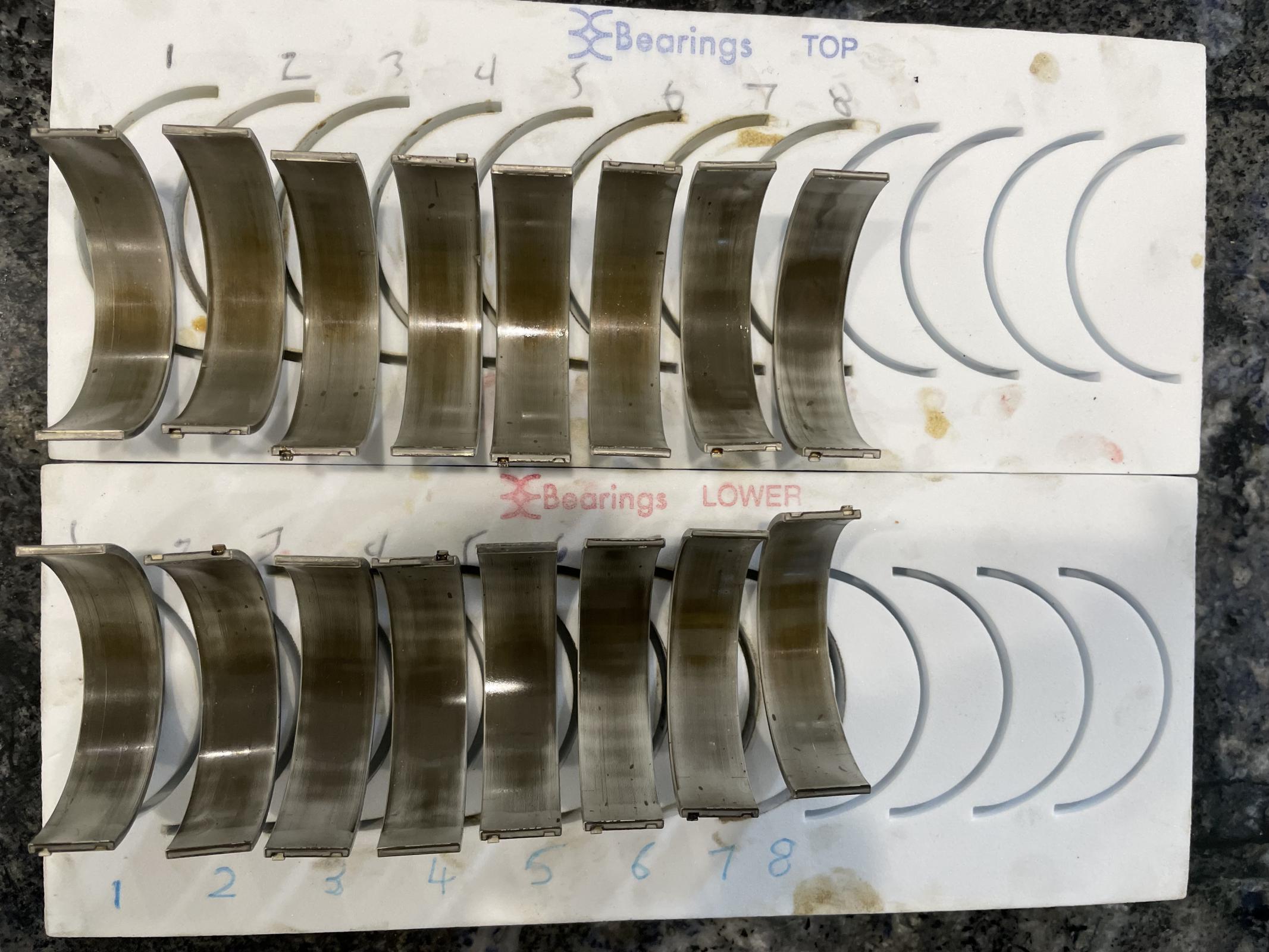
Had my RB replaced this week, pics attached. Car is at 100K miles, oil change every 5000-7500 miles, never go past 3K rpms till oil is heated up to 210 plus. Hard driven(but not crazy) every now and then - probably 10 to 15 % of the time. From what I have seen on the forums the bearings look great in my opinion - looks like I could have got another 50K plus miles just by looking at it but I will let the experts chime in. Nevertheless I have peace of mind now which is priceless. I went with BE bearings and ARP 2000 bolts. Also had Engine mounts replaced, the old ones were completely shot.
Plan to take it easy for the first 1000 miles after the RB swap and at that time, might do an oil change. Also planning to send the oil for analysis at that point.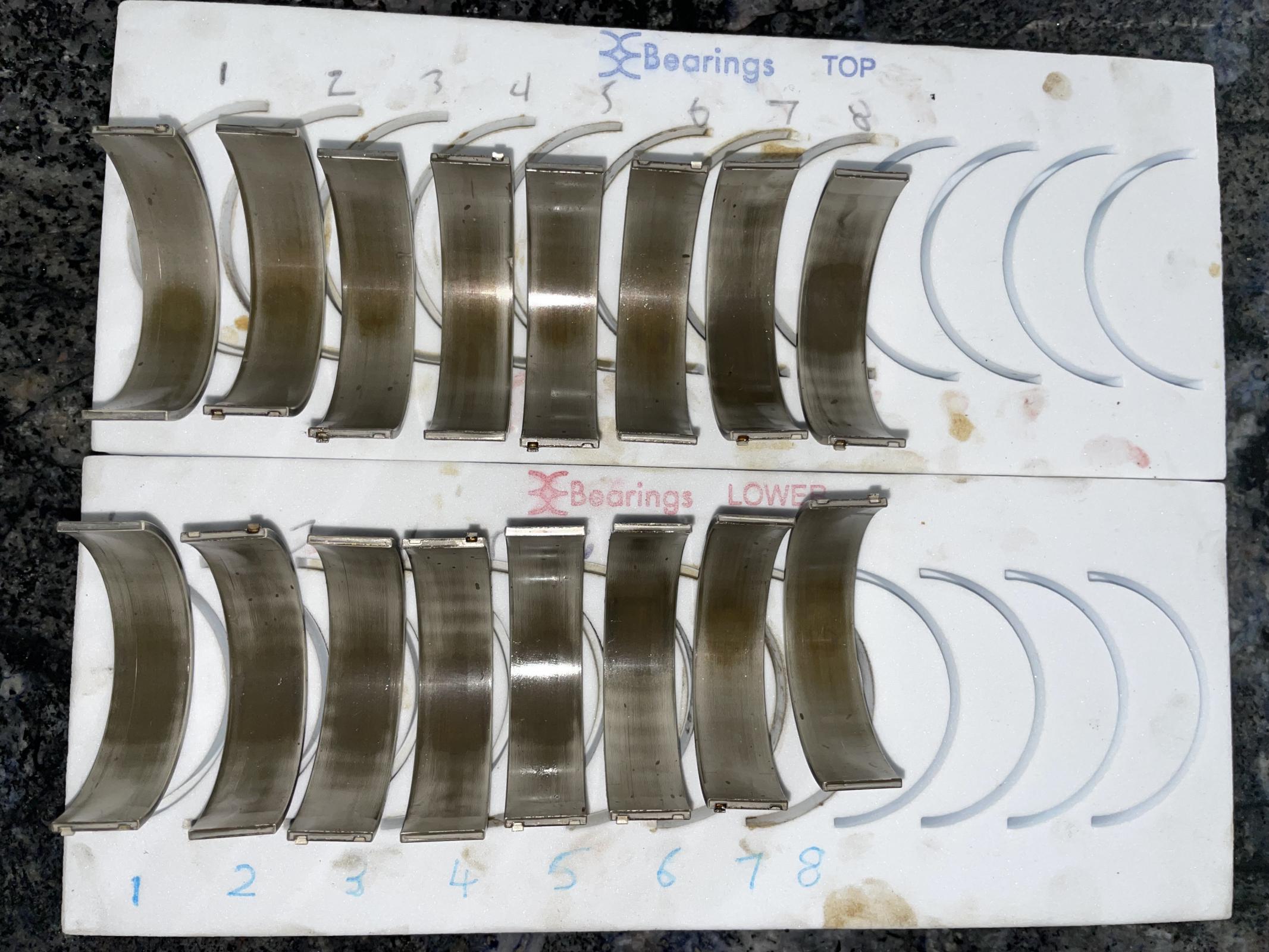
Plan to take it easy for the first 1000 miles after the RB swap and at that time, might do an oil change. Also planning to send the oil for analysis at that point.
M' wroteWow. You win the prize for the best 100K miles Rod bearings I've ever seen. Maybe the warm up protocol really helped or you had a tolerance stack up on the good side on every crank journal and shell. Pretty amazing. Thanks for posting.Had my RB replaced this week, pics attached. Car is at 100K miles, oil change every 5000-7500 miles, never go past 3K rpms till oil is heated up to 210 plus. Hard driven(but not crazy) every now and then - probably 10 to 15 % of the time. From what I have seen on the forums the bearings look great in my opinion - looks like I could have got another 50K plus miles just by looking at it but I will let the experts chime in. Nevertheless I have peace of mind now which is priceless. I went with BE bearings and ARP 2000 bolts. Also had Engine mounts replaced, the old ones were completely shot.
Plan to take it easy for the first 1000 miles after the RB swap and at that time, might do an oil change. Also planning to send the oil for analysis at that point.
Wow..good to know. Thanks for the input.
Following my post 2689, here is the picture of the inside of the engine… block is cracked,,,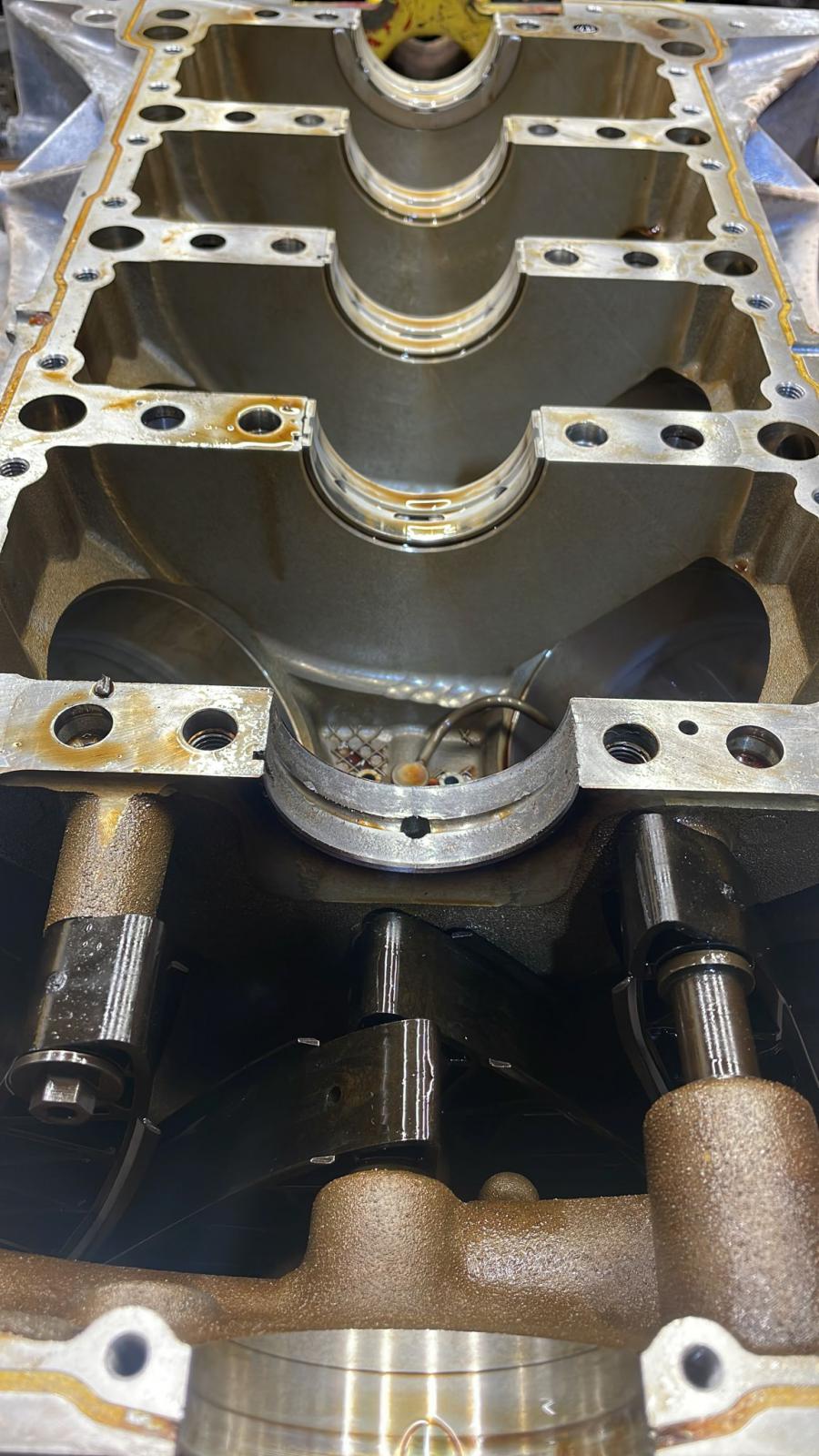
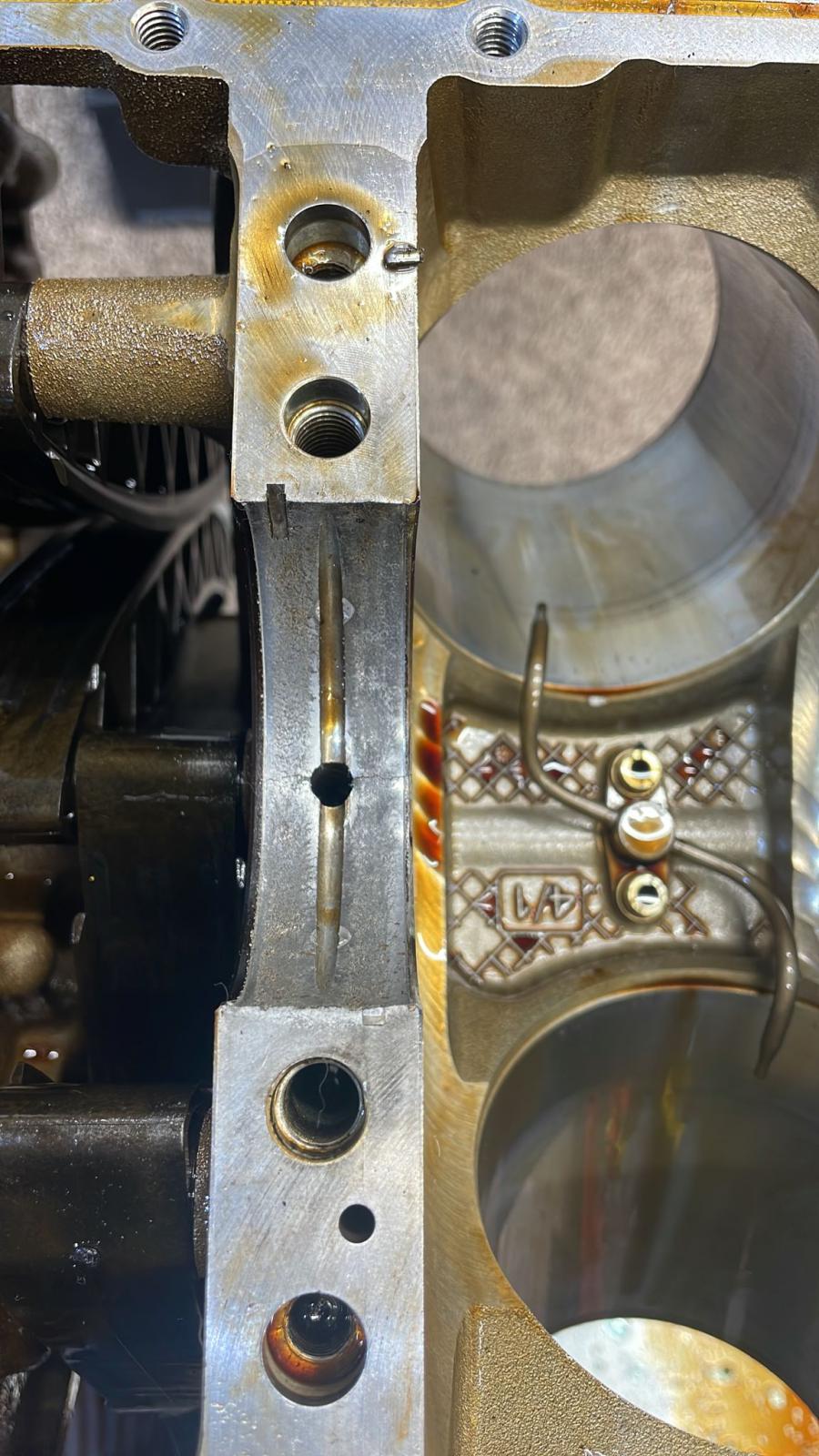
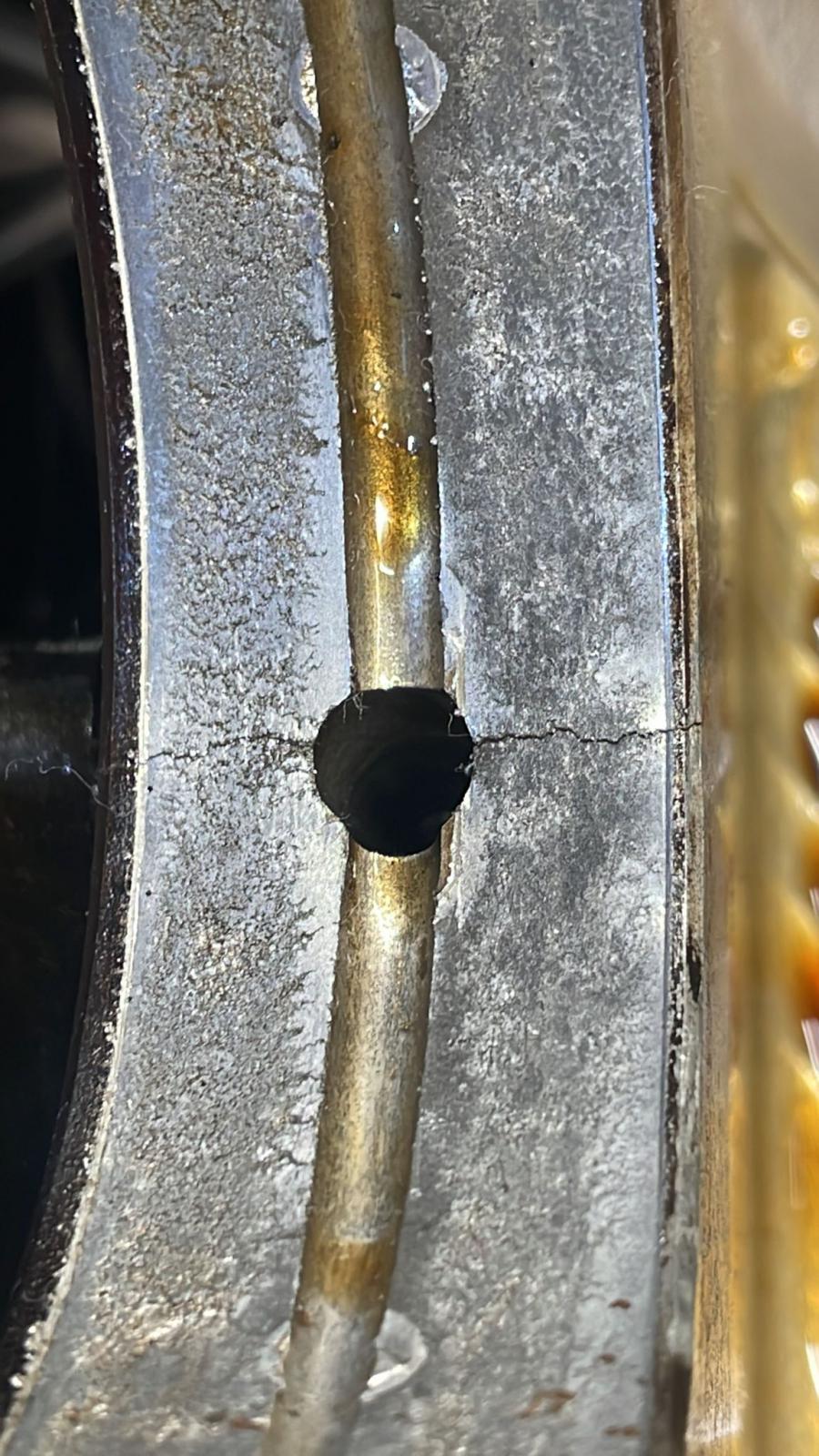
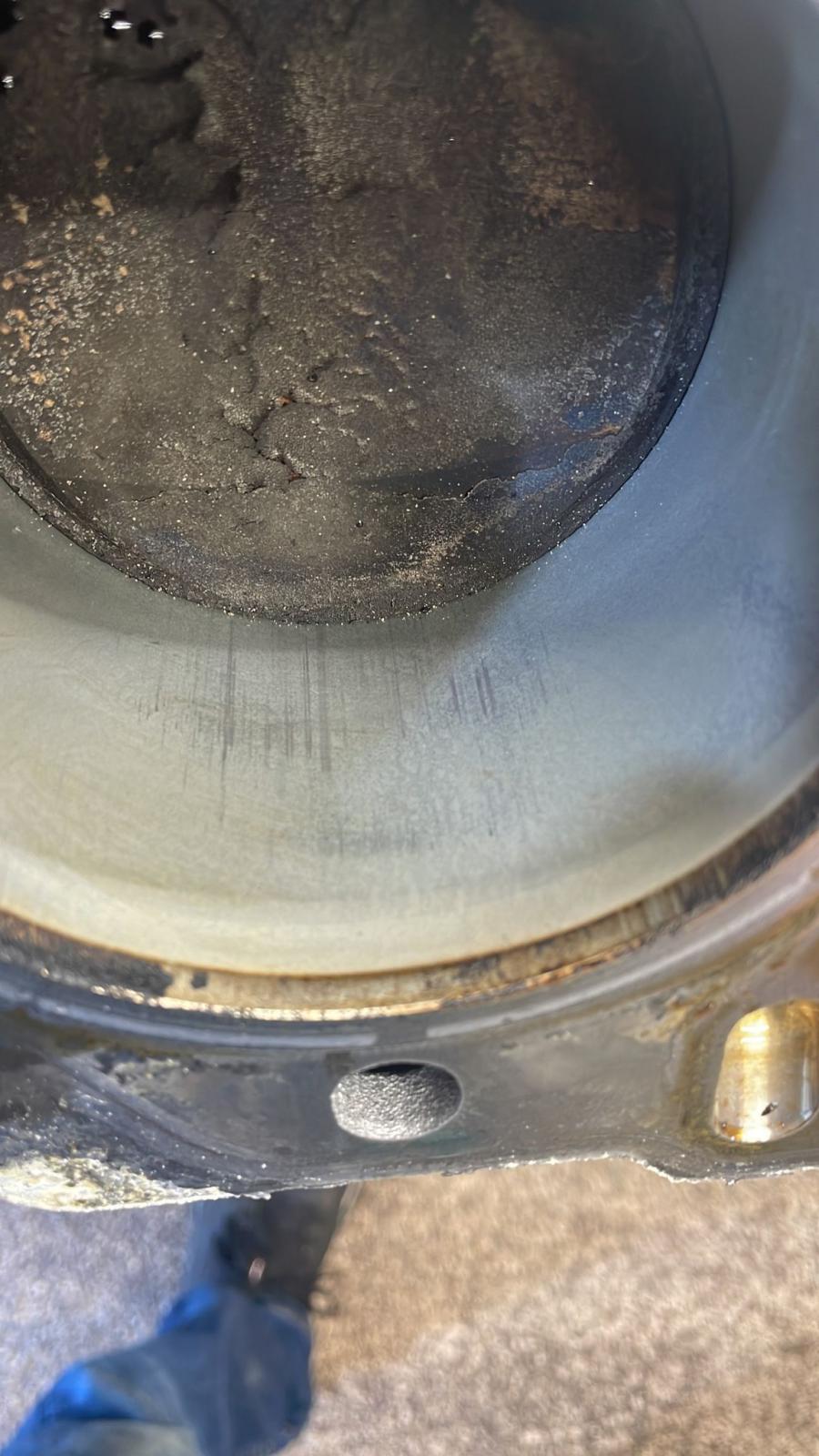
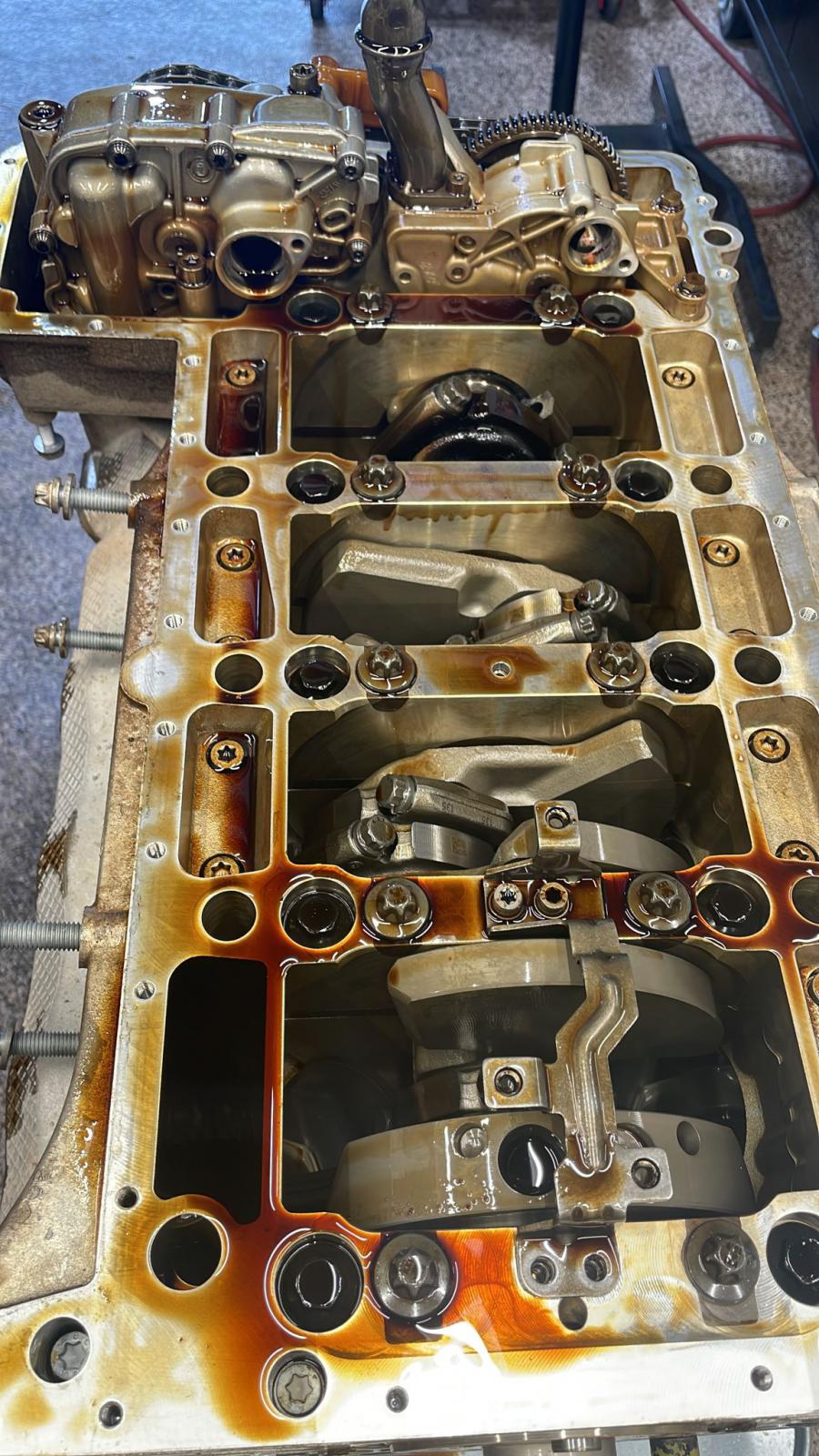
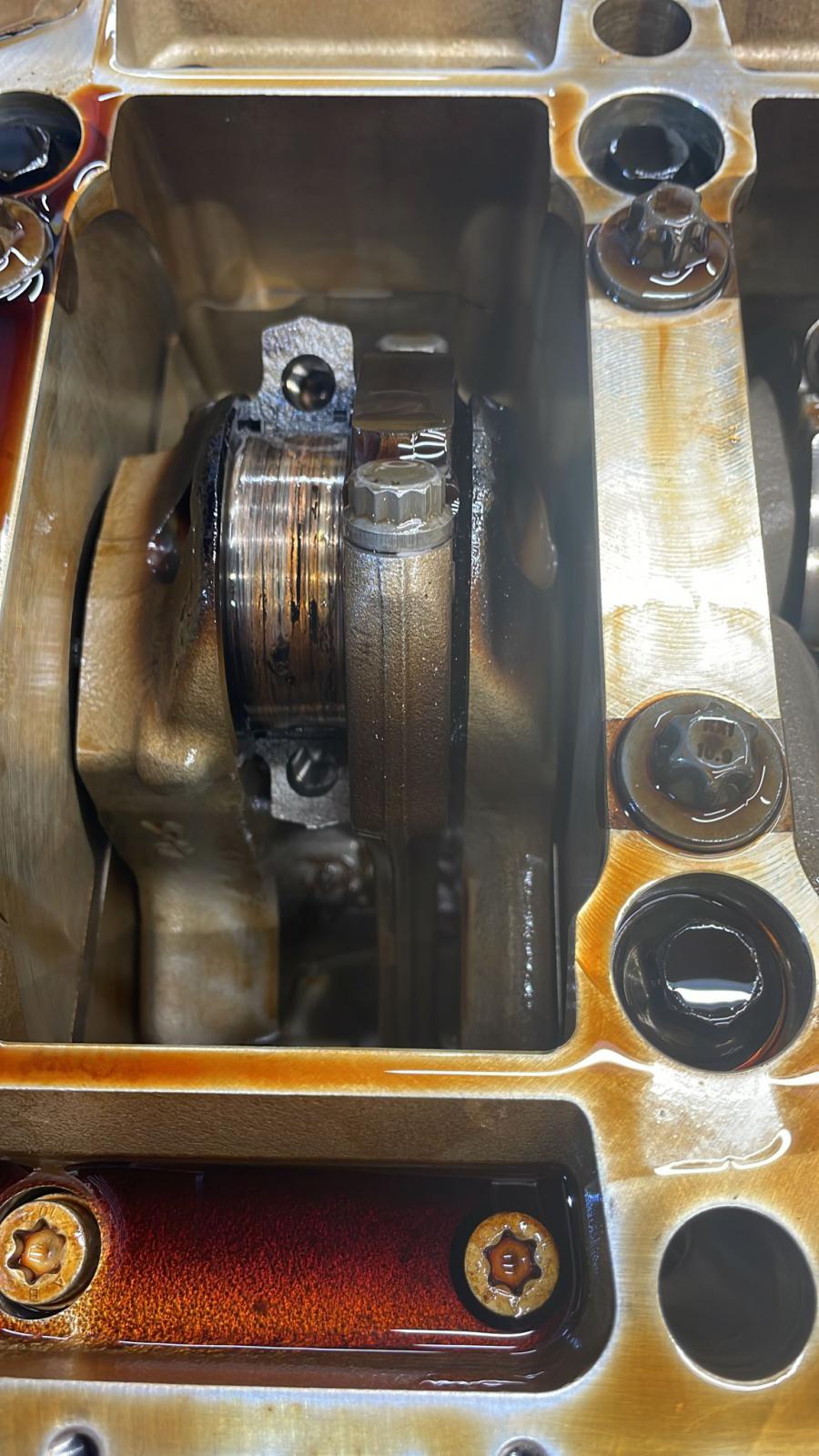
Do we think that No1 mains failed which then took out the adjoining RBs?
Btw, fancy performing a little experiment on one of the 'worst' shells?
M'EM wroteVery good bearings for an S65 @100k miles!Had my RB replaced this week, pics attached. Car is at 100K miles, oil change every 5000-7500 miles, never go past 3K rpm till oil is heated up to 210 plus. Hard driven(but not crazy) every now and then - probably 10 to 15 % of the time. From what I have seen on the forums the bearings look great in my opinion - looks like I could have got another 50K plus miles just by looking at it but I will let the experts chime in. Nevertheless I have peace of mind now which is priceless. I went with BE bearings and ARP 2000 bolts. Also had Engine mounts replaced, the old ones were completely shot.
Plan to take it easy for the first 1000 miles after the RB swap and at that time, might do an oil change. Also planning to send the oil for analysis at that point.
Btw, fancy performing a little experiment on one of the 'worst' shells?
Cross posted from  tom @ eas EAS' thread.

.
https://www.m3post.com/forums/showpost.php?p=29487116&postcount=200
.
https://www.m3post.com/forums/showthread.php?t=881588
.
I hadn't seen these examples until now. For a 2008 with 77K miles this person was lucky. Cylinder 4 upper shell is delaminated beyond the copper substrate. A few miles more and perhaps a spun bearing kaboom!
tom @ eas EAS' thread..
https://www.m3post.com/forums/showpost.php?p=29487116&postcount=200
.
https://www.m3post.com/forums/showthread.php?t=881588
.
I hadn't seen these examples until now. For a 2008 with 77K miles this person was lucky. Cylinder 4 upper shell is delaminated beyond the copper substrate. A few miles more and perhaps a spun bearing kaboom!
Eek! That was close!
What is the cost to have the RB's replaced?
racerbruce wroteDIY'd mine for $1,032 in BE bearings/bolts, pan gasket, oil and oil filter.What is the cost to have the RB's replaced?
Most folks replace their motor mounts at the same time, but I did my motor mounts separately about a year before I finally caved into the rod bearing internet hysteria.
And yes, I changed my 65,000 mile bearings even though I was CERTAIN the originals in my car were going to look fine.
I was VERY happy I succumbed to the hysteria.
Thought I'd drop a pic of mine here. With ~70k miles, done last year and replaced with BE bearings + ARP bolts. Bit of copper peaking out of cylinder 6 top bearing, but generally doesn't seem too bad.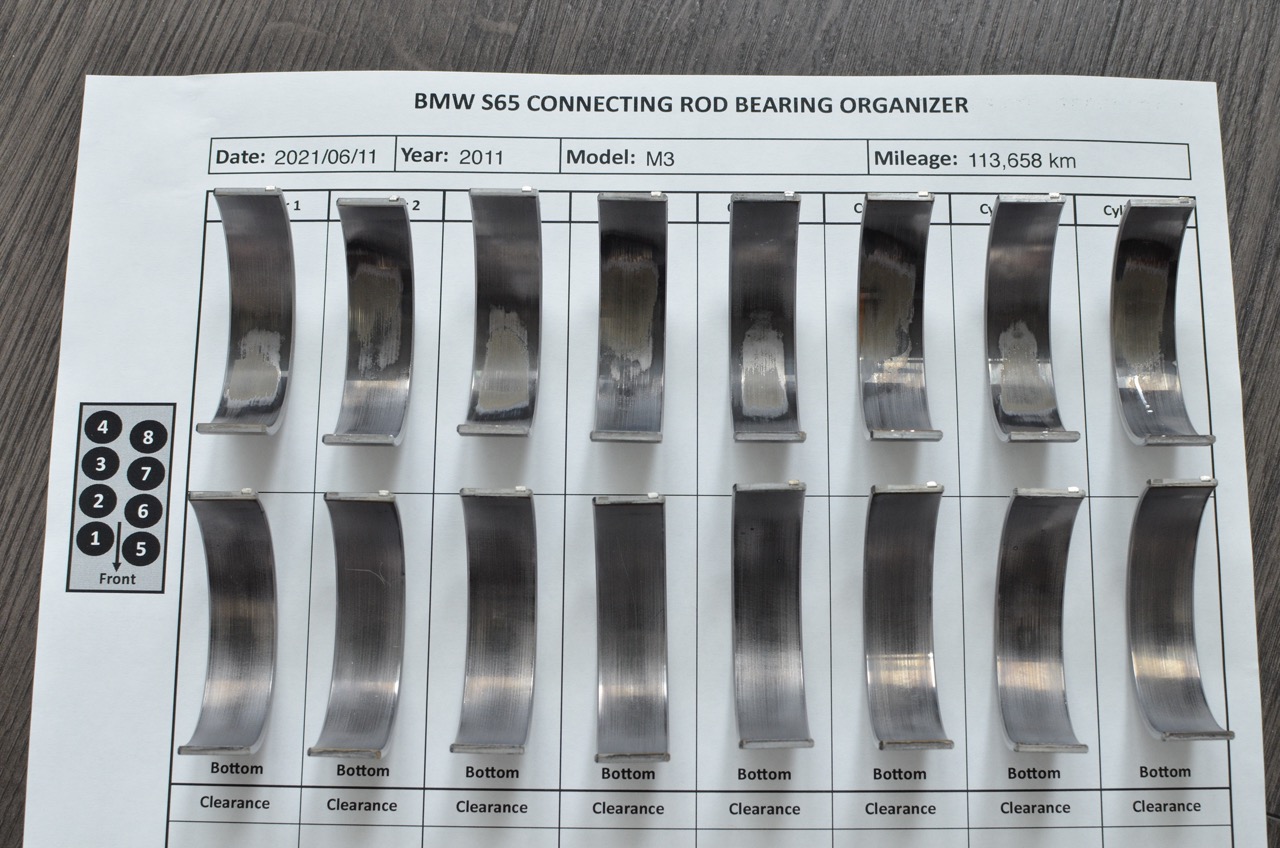
racerbruce wroteI DIY'ed mine as well, but going shop rate seems to vary by region between $2200 and $3000.What is the cost to have the RB's replaced?
After 7 years of ownership I sold my M3. I bought it in 2015 with 60k miles on it and ran Mobil1 0w40 the entire time, along with blackstone reports with each oil change 5-7k miles. No track time but lots of twisty road driving and redline pulls almost everytime I drove it. Always drove slow until the oil warned up, not much idling.
The new owner had the bearings done this week at 112k miles and I'm honestly surprised at how good these look.
A note from the tech who did the job, he said the compression was so good he had to take the spark plugs out to move the crank by hand. He said he has never had that happen before.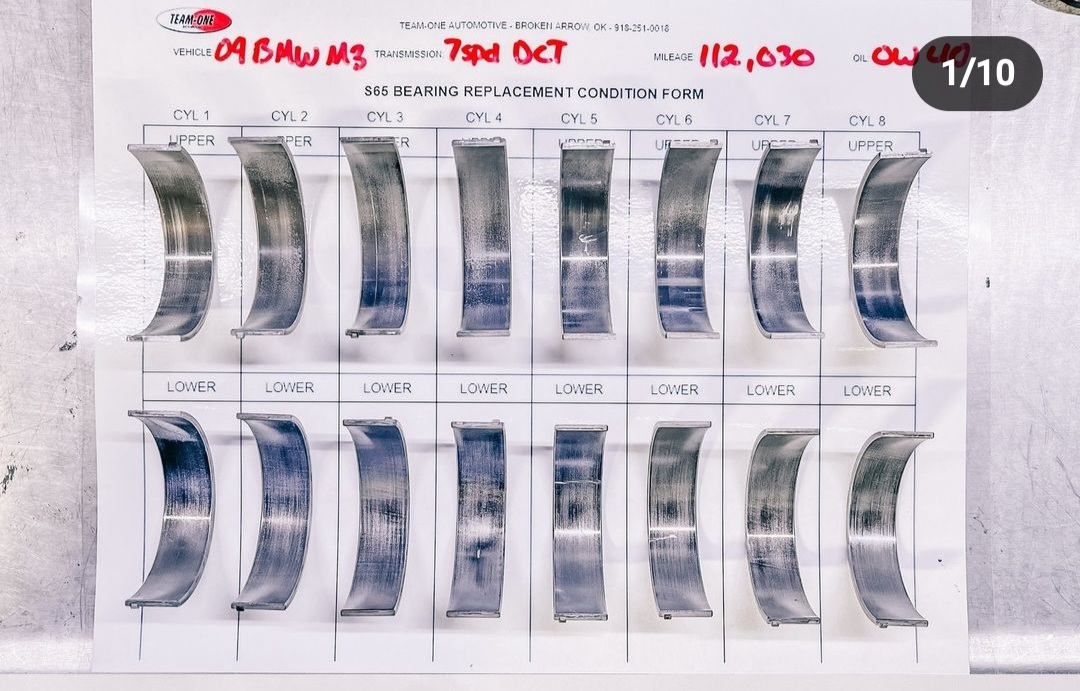
The new owner had the bearings done this week at 112k miles and I'm honestly surprised at how good these look.
A note from the tech who did the job, he said the compression was so good he had to take the spark plugs out to move the crank by hand. He said he has never had that happen before.
JPSurratt2005 wroteWow those shells really do look amazingly good for the 112K mileage. You maybe onto something with the 0W40 Mobil 1. Around 2012ish - on this very forum - there were various oil threads debates about the ZCP (zinc and phosphorus) parts per million of 0W40 M1 which was called "Euro Formula" at the time and factory fill for Porsche.After 7 years of ownership I sold my M3. I bought it in 2015 with 60k miles on it and ran Mobil1 0w40 the entire time, along with blackstone reports with each oil change 5-7k miles. No track time but lots of twisty road driving and redline pulls almost everytime I drove it. Always drove slow until the oil warned up, not much idling.
The new owner had the bearings done this week at 112k miles and I'm honestly surprised at how good these look.
A note from the tech who did the job, he said the compression was so good he had to take the spark plugs out to move the crank by hand. He said he has never had that happen before.
Subsequent to those threads, 5W50 M1 was also debated and used by myself for sometime. Prior to changing out my car's rod bearings - with BE bearings and ARP bolts - I was using the OEM Castrol TWS 10W60 *but with top ups consisting of 0W40 M1*. I then switched to 5W50 M1 around 96K miles. I managed to nurse my car's bearings until 115K miles (see link to post with photos below). Theories abound that the cold pump ability of the 0W40 M1 and/or the 5W50 M1 in cold climates, when compared to the cold pump ability of the 10W60, is what actually helps save S65 OEM bearings due to its close (tight) factory bearing clearances. This assumes that most bearing wear takes place at cold start.
 Assimilator1 and I shared oil spec information sheets on the 5W50 M1 thread years ago (attached), but due to the myriad of oil threads not much conclusion was ever reached. However, visual inspection of your shell photos seems to suggest either A) your engine was a 'loose' engine on the end of the tolerance curve tail or B) the thiner 0W40 oil strategy really helped preserve and extend the life of the bearings.
For anybody that's already switched to BE Bearings, and due to the extra clearance of BE Bearing design solution, BE recommends only using a 10W60 oil viscosity.
PS: When running thinner oil I noticed myself that oil consumption increased. So your better than usual compression is also an interesting fact.
My own Official Rod Bearing post with the car's oil viscosity use history.
https://www.m3post.com/forums/showpost.php?p=27097840&postcount=1966
Conversely, here again is what the manual says as well as the Mobil 1 Product Spec Sheet showing the zinc and phosphorus ppm as well as viscosity information (specs):
.
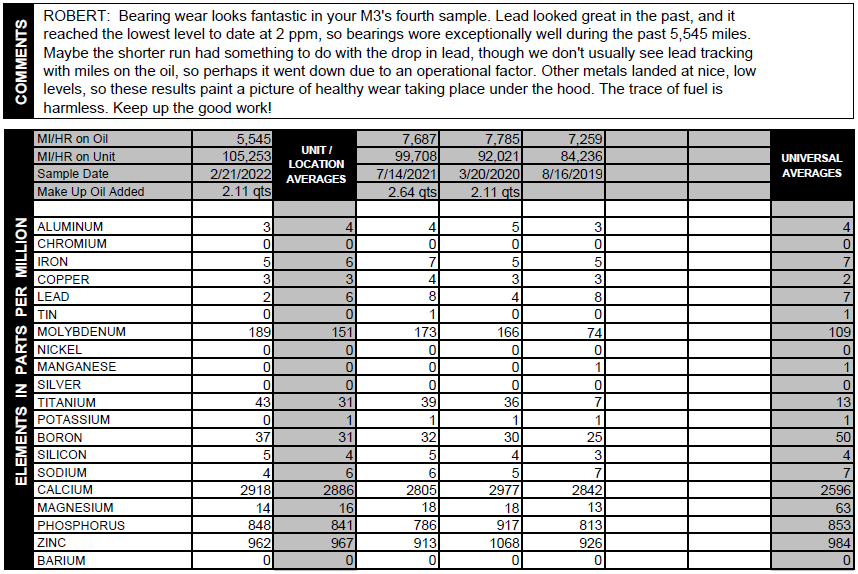
112k on what I believe to be original bearings. Oil reports taken at every 7.5k change since I bought it at 77k. I don't baby it or do any cautious warmups.
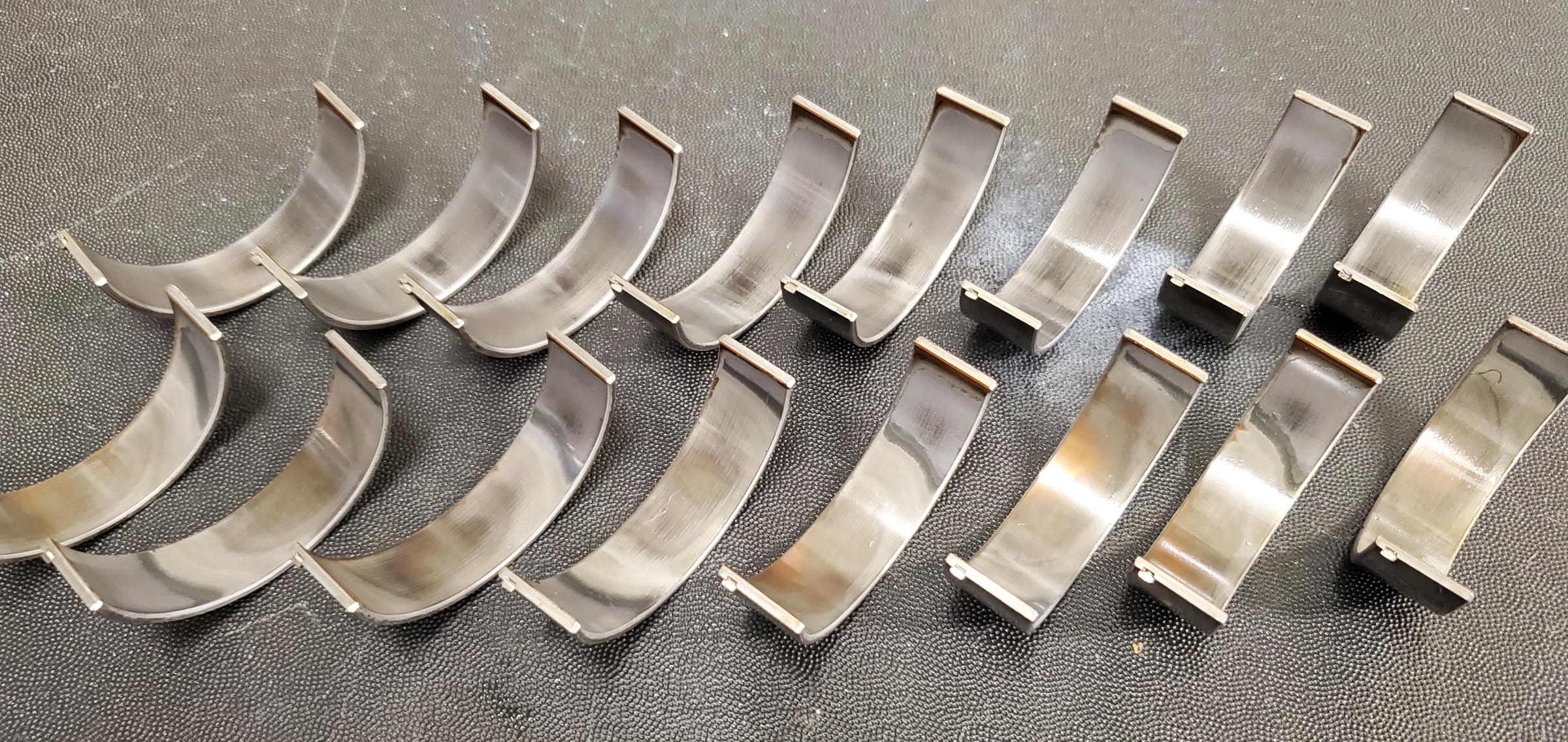
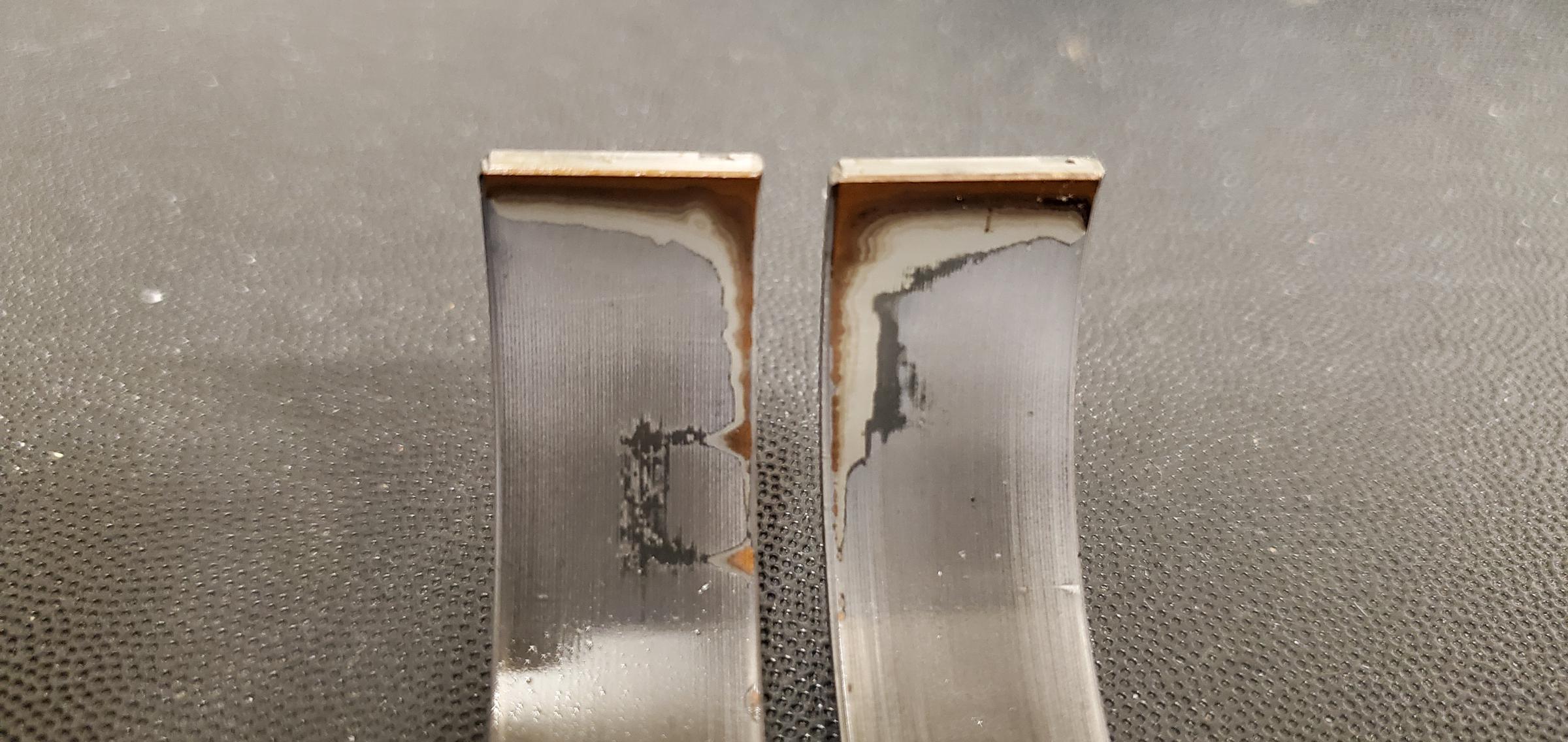
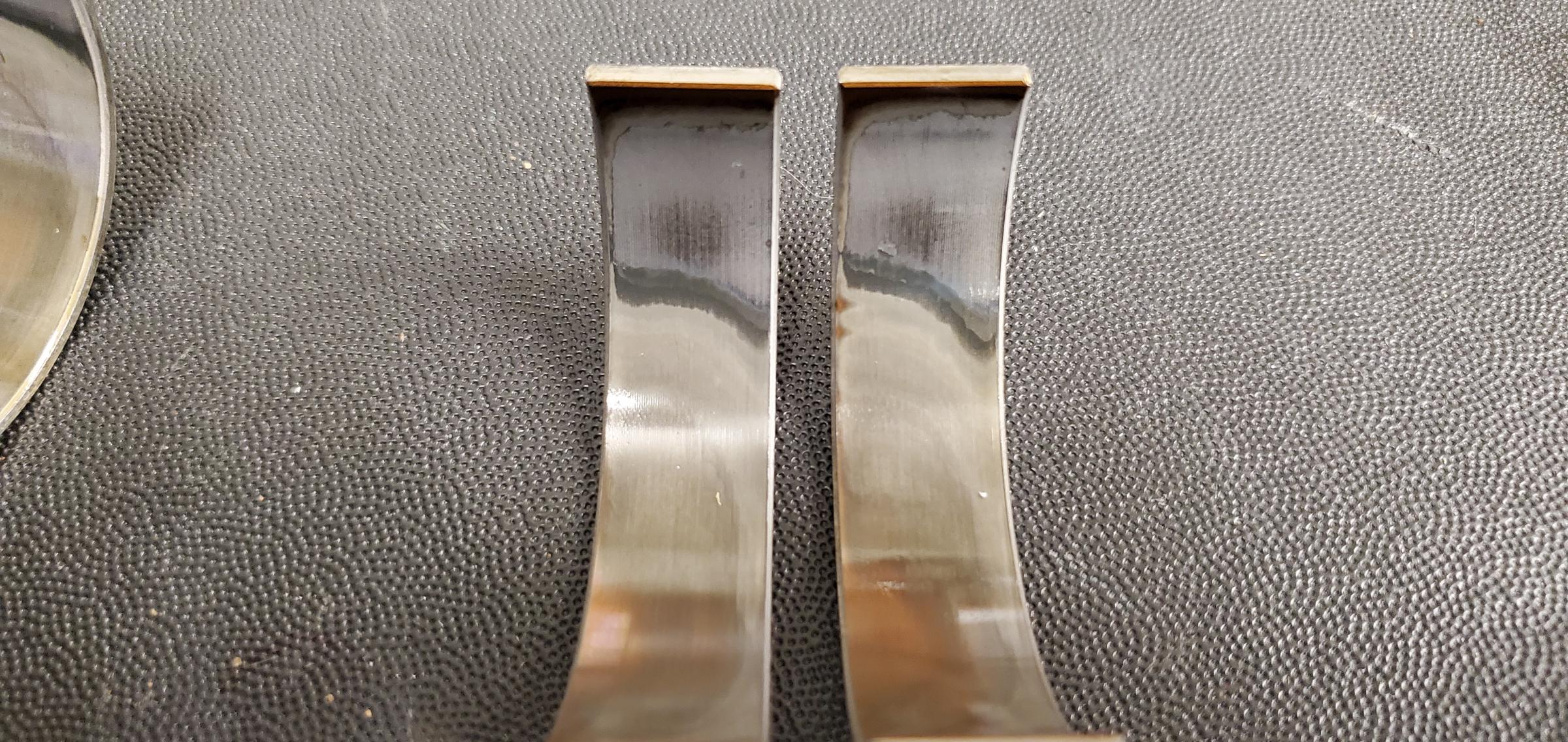
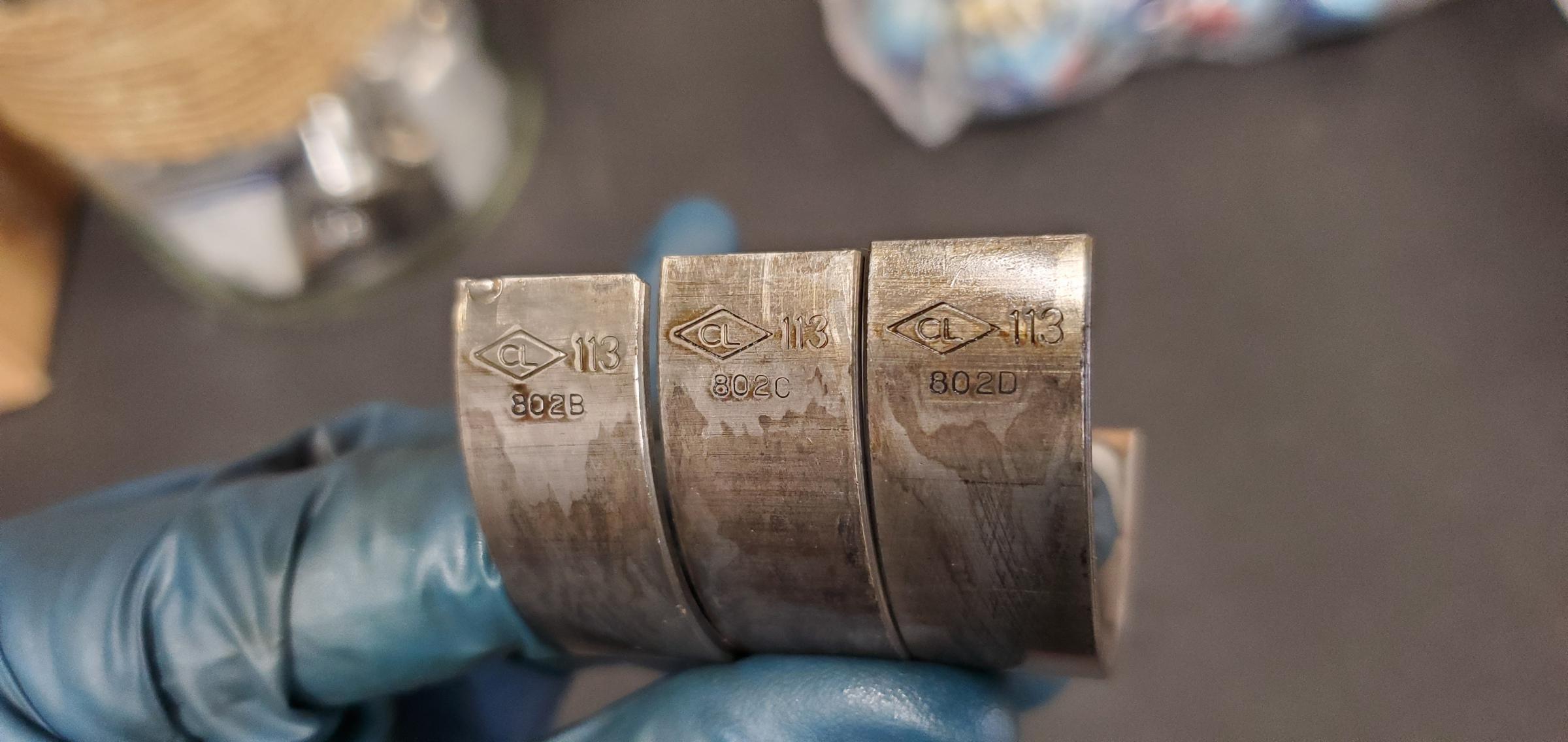
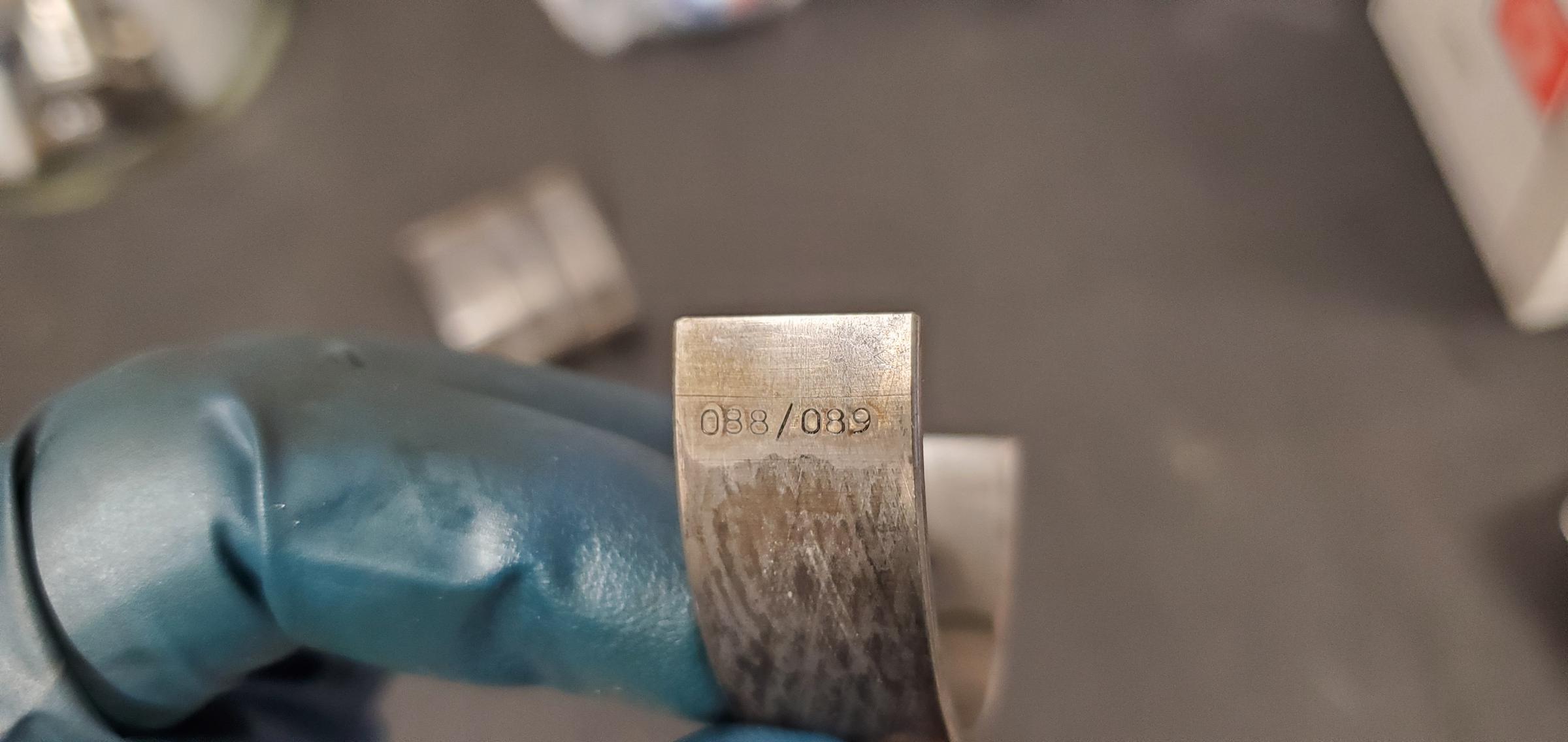
My contribution: 2008 E90 M3 with 94252 miles. Under factory maintenance used the oil bmw recommended, then switched to redline 5w-40 until now using 10w-60 again.
Replaced with BE bearings and BE ARP rod bolts.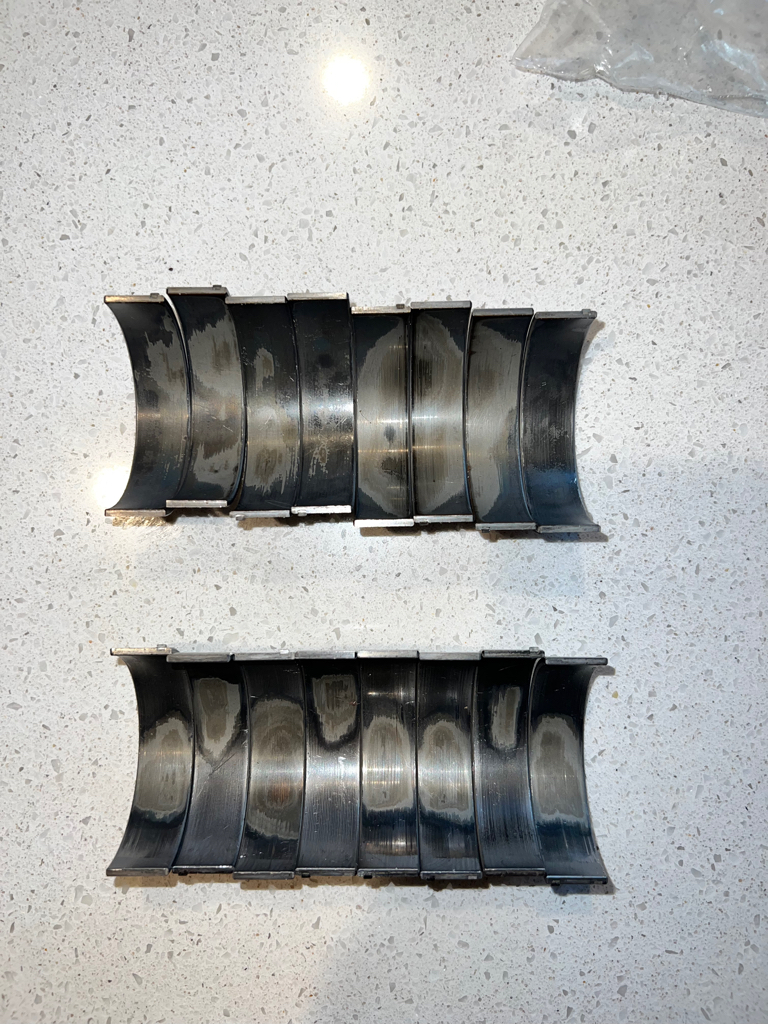
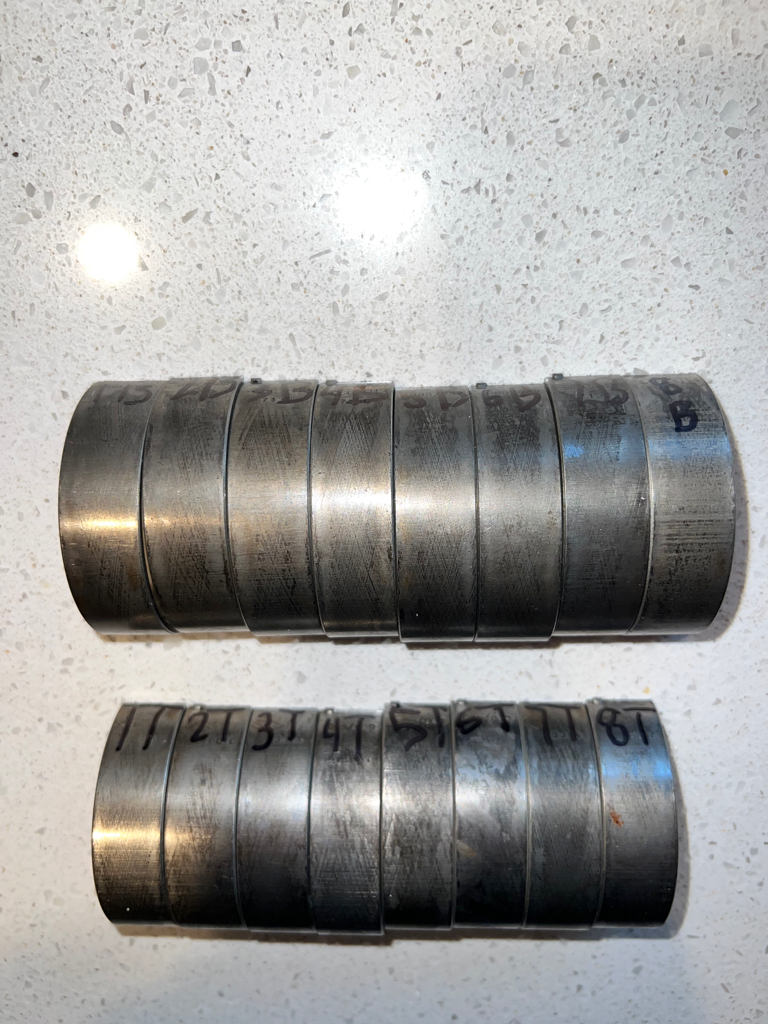
Replaced with BE bearings and BE ARP rod bolts.
bobbert wroteInteresting, your bearings were better than mine at ~76k, what are your typical coldest temperatures you get through the winter?112k on what I believe to be original bearings. Oil reports taken at every 7.5k change since I bought it at 77k. I don't baby it or do any cautious warm-ups.
one thing I noticed in this thread is how are people's crankshafts and oil journals during the RB overhaul? Some bearing conditions in this thread suggests there was heavy contact to get it worn down that bad.
