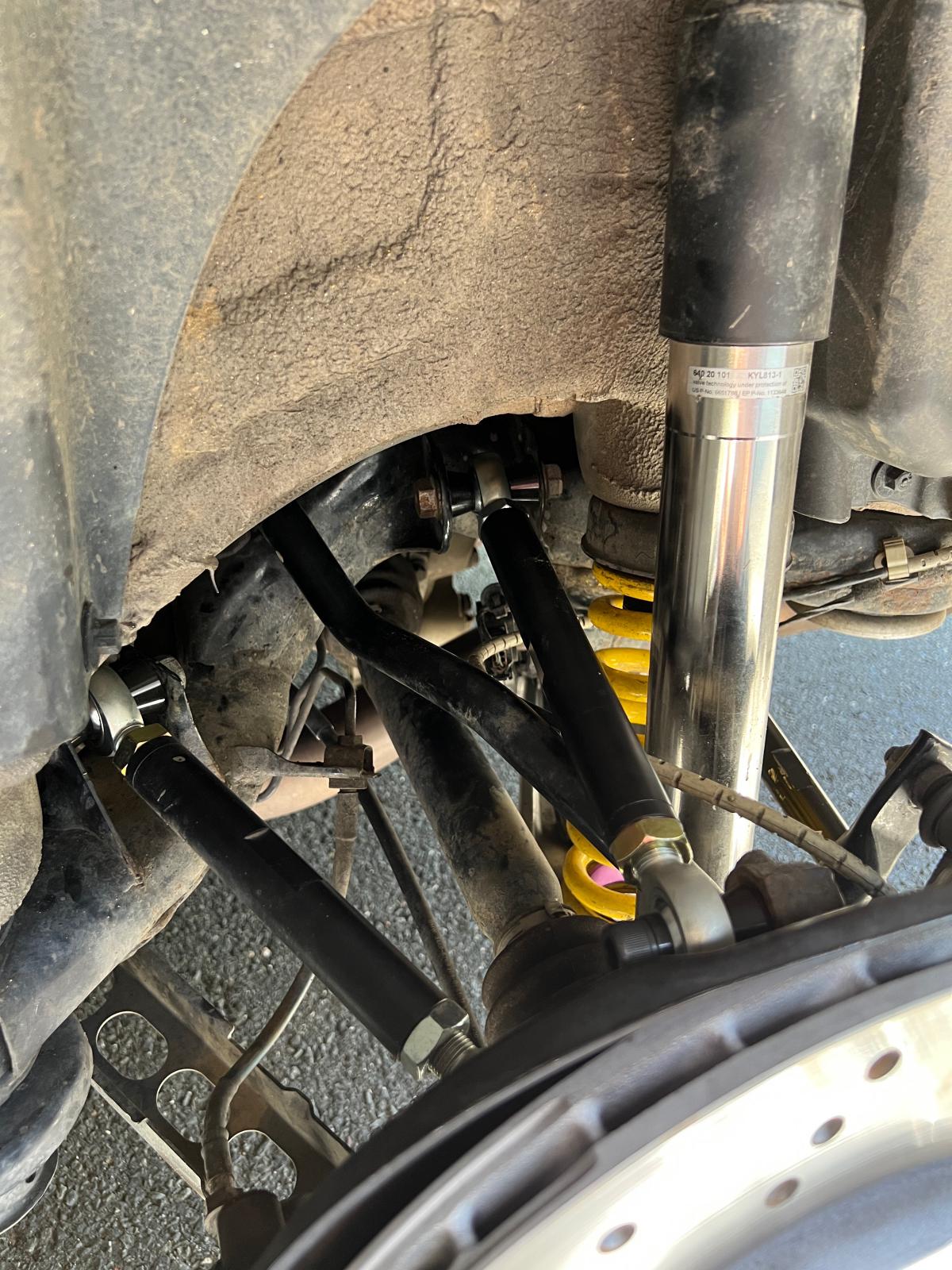
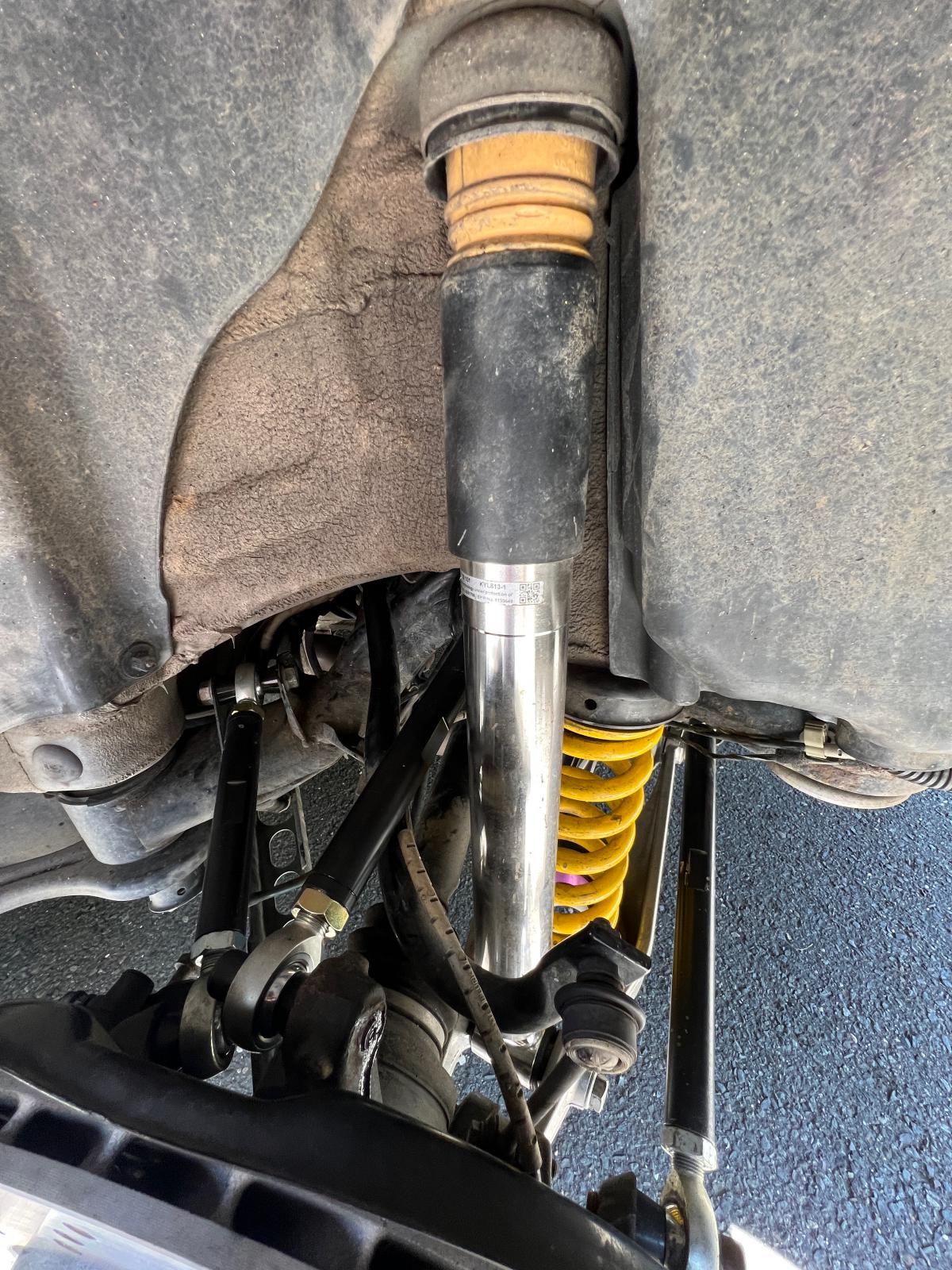
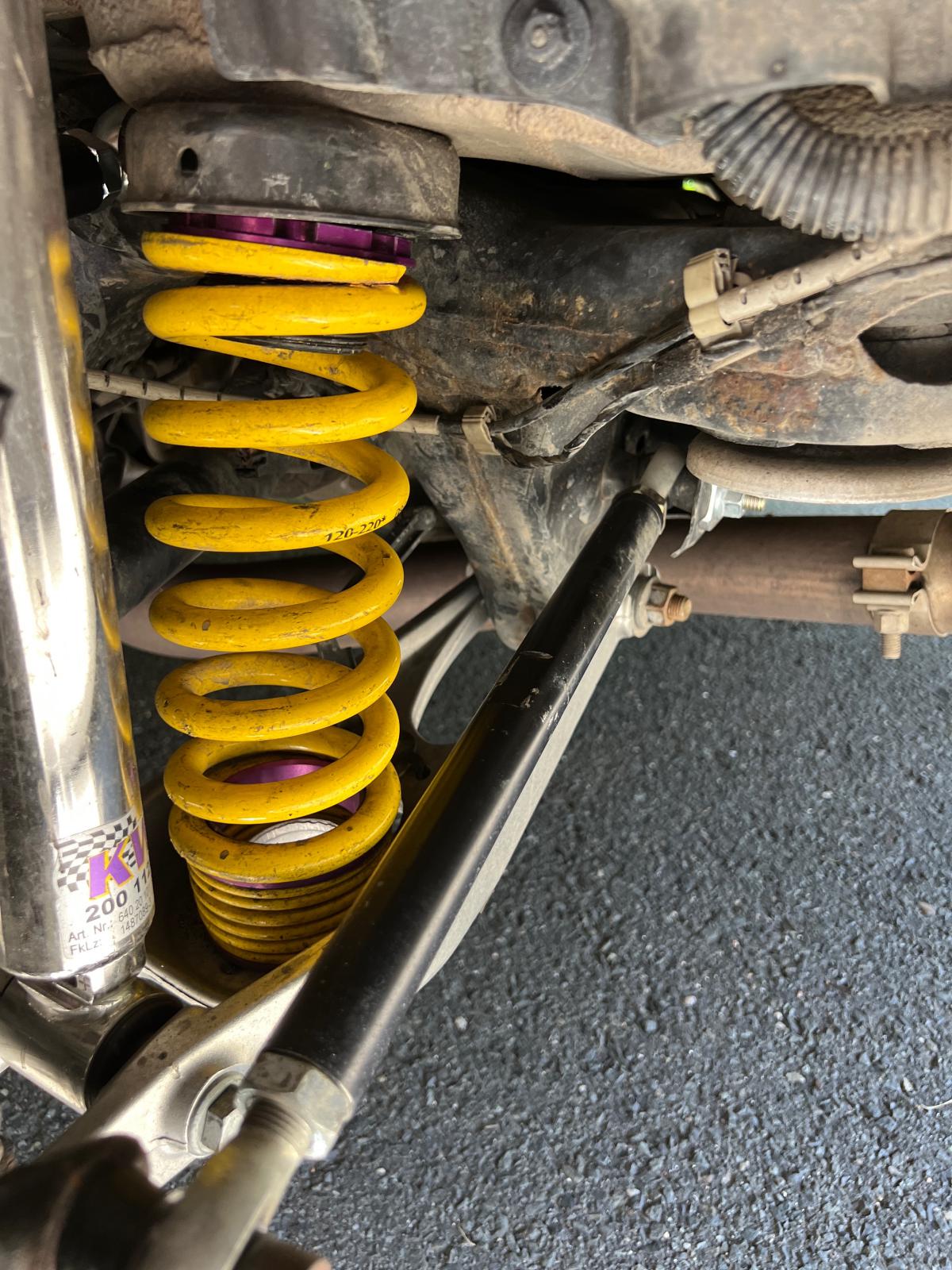
maicol76 wroteI meant this....which tapered washer/spacer did you use? It seems as though a bunch of the people that have had problems were using some other solution. I know someone a few pages in found what looked like a good off the shelf solution but later data showed, if I recall correctly, that it wasn't allowing the tapered face to sit fully flush.I bought these
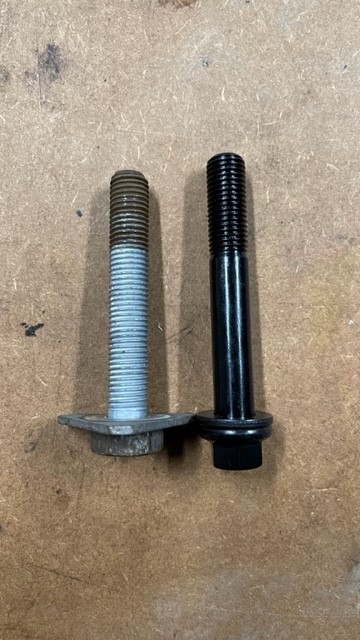
inside : arp M12 x 70mm
outside : arp M12 x 80mm
I installed it with big flat washers like stock bolts.
IMO, preventive maintenance and using reinforced parts are the best I can do for the track car. So, I already changed almost all stock bolts related to rear arms to ARP's.
Broken bolt in the track....This is a disaster.
105.5KVIEWS
373REPLIES
201APPRECIATES
03-29-2025LAST POST

I might have already asked this question. But since a majority of these failures are happening on the arms with washers/spacers, woould it be a good alternative to replace the upper arms with something like SPL offers and then replace the other arms that dont require spacers with lemforders ?
I know some of the failures, if not most, happened with people that found some alternative tapered washer solution like pictured below. You can see with those it has that flat shoulder and with them the tapered face wasn't seating properly in the knuckle. With the proper tapered washers I really don't see how they would be more prone to failure than OE or any aftermarket arm like SPL that still has to replicate that tapered portion.

This is my opinion that the reason why the bolt breaks is not simply the washer problem.
1) short stock bolt
If you use washers on ball bearings, they will be wider than stock rubber bushings,
so when the stock bolts are tightened to the knuckles, they won't be tightened deep enough.
Even if it is the same bolt, it is natural that it becomes weaker under stress, especially in the force of pushing and pulling.
2) Mounting position of bearing on arm
The ball bearing is wider than the stock bushing, and the bearing is mounted to the outside of the arm by the difference in order not to change the position of the stock arm.
So, the center axis of motion of the ball bearing shifted outward by a few millimeters. This puts more stress on the bolt as the arm moves, like a lever.
If the bearing is less wide than the stock bushing, so the center axis of the bearing is closer to the knuckle, the stress on the bolt will be reduced.
(Honestly, I wonder if arm's movement will be the same as stock.)
3) The gap between the washer and the bolt
The play between the washer and the bolt doesn't effectively transfer the stress of the bolt to the knuckle.
It is clear that very small gap in bolt fastening is the cause of continuous stress at any time.
If deciding not to use a material that can absorb the stress such as a rubber bushing, we should pay much more attention to this.
In fact, the stock rubber bushing is completely adhered to the knuckle. The reason for this is not because the conical shape of the genuine bushing, but because the thin rubber surrounding the conical shape completely touches the knuckle.
Of course, this rubber part becomes meaningless if it receives even a little force.
Also, the conical shape of the rubber bushing is almost horizontal. Even if it is slightly curved, it is almost negligible, IMO.
I think the above 1). 2). 3) are the reason why the stock bolt breaks in the track.
Simply how well the conical shape of washer fits the knuckle doesn't seem to be the most important factor.
So, I made the washer very~ tight with the bolt and installed it. Also, I used bolts that were long enough to stick out of the knuckle, and also used ARP bolts that were much stronger than the stock 10.9 strength.
However, I haven't tried circuit driving yet, so I don't know the results.
I just wrote down what I thought while installing the ball bearing.
% If you don't trust aftermarket washers, cutting off the conical part of the stock bushing may be a good idea. The material is iron.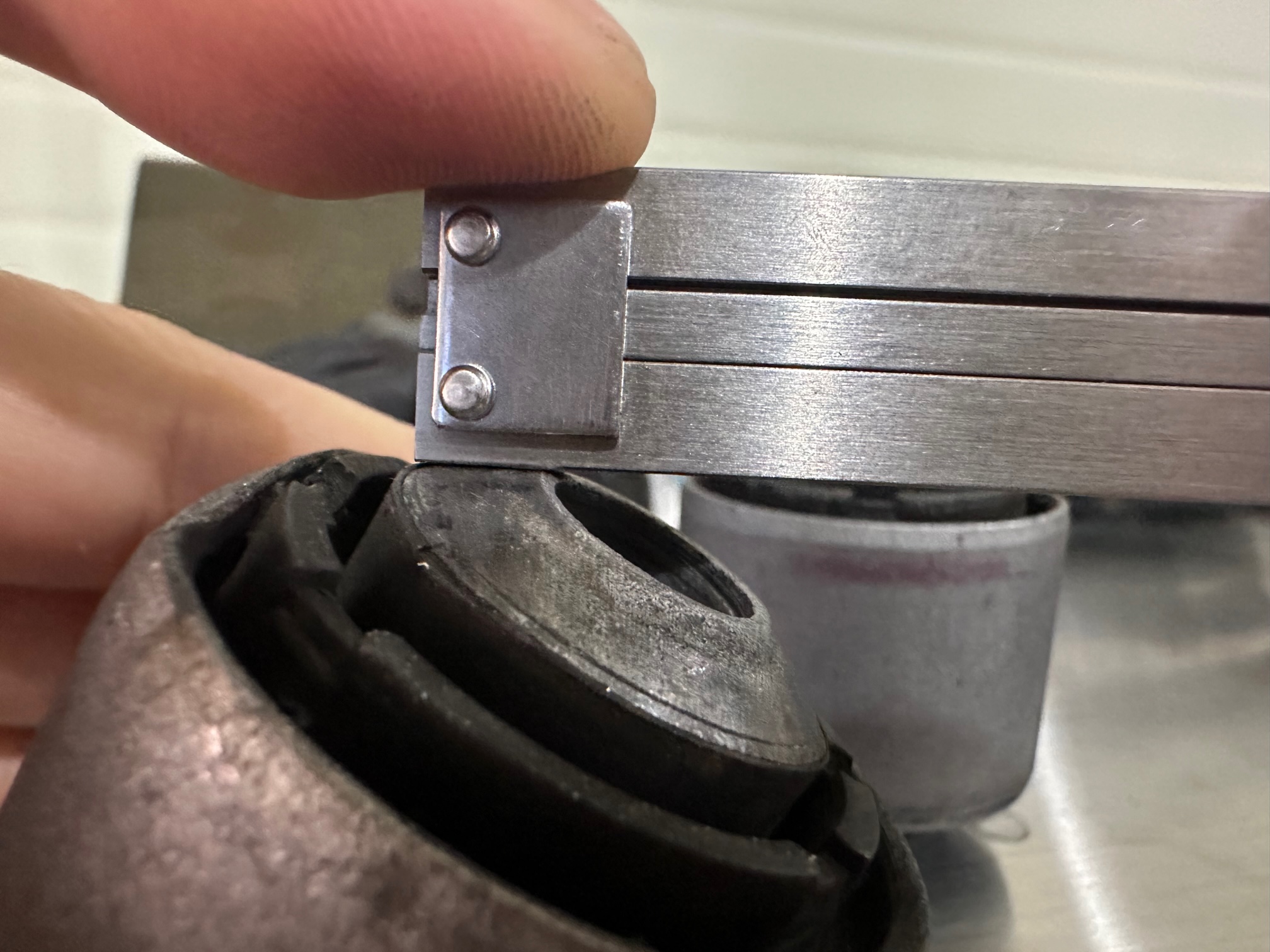
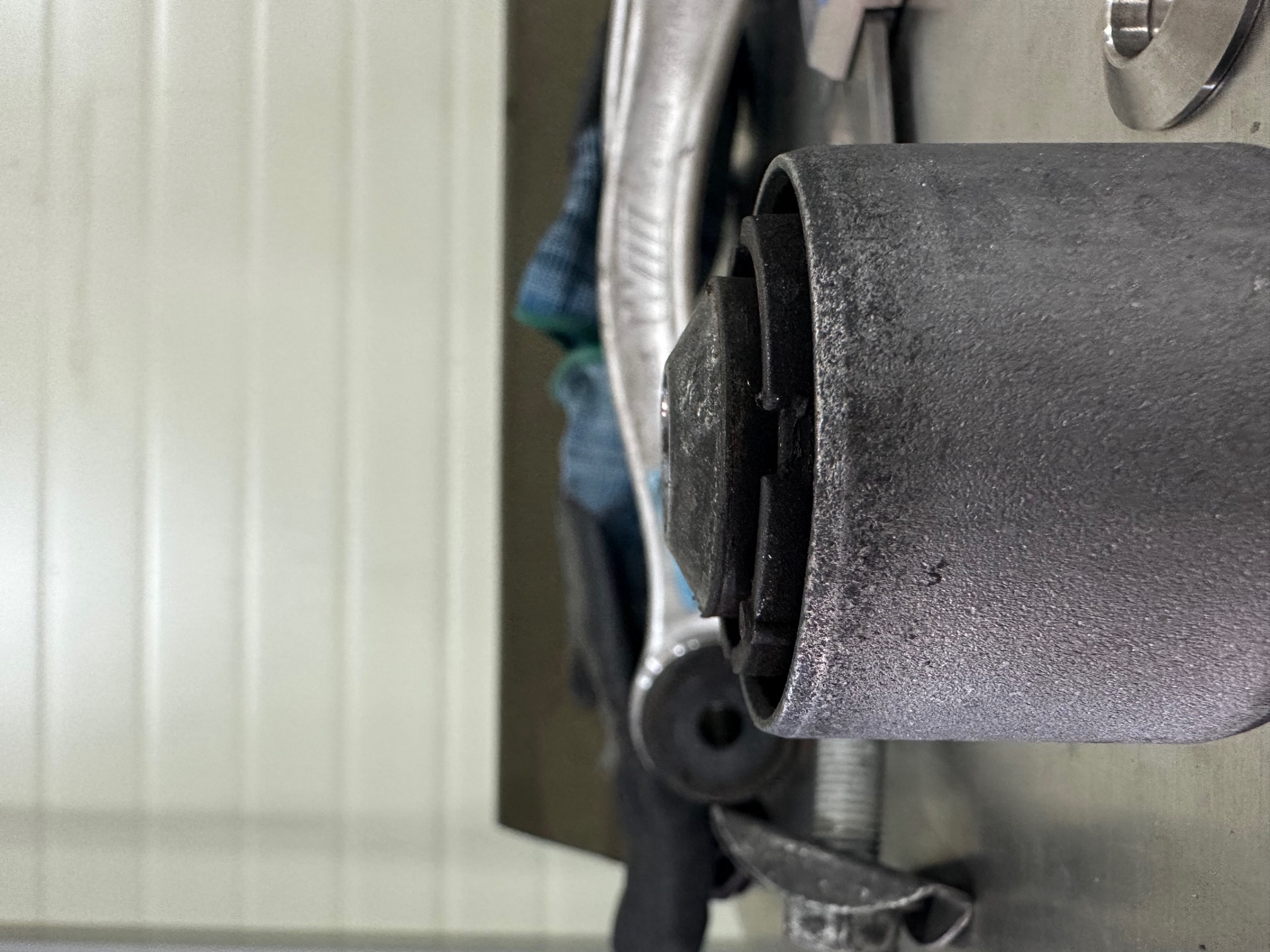
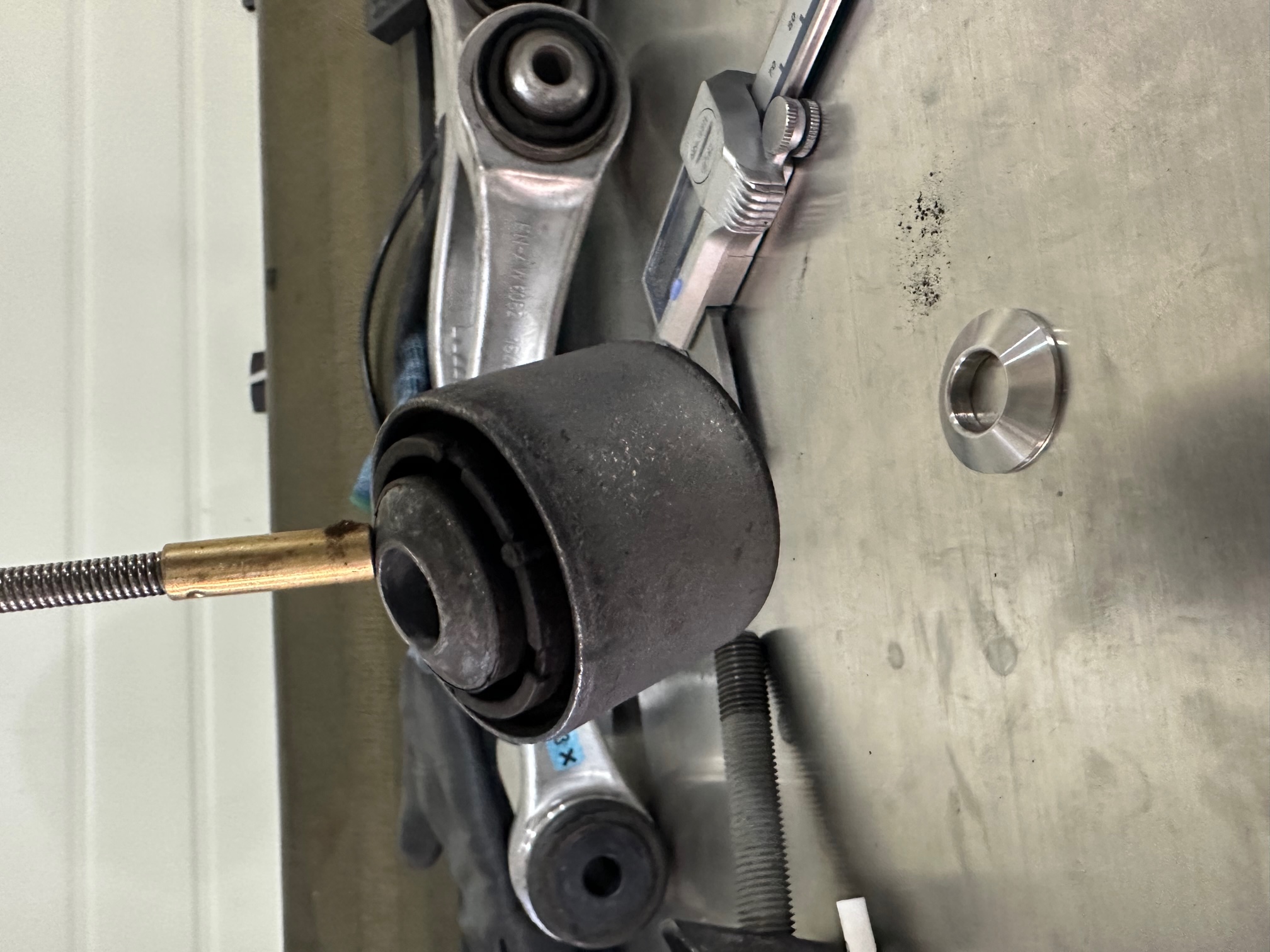

1) short stock bolt
If you use washers on ball bearings, they will be wider than stock rubber bushings,
so when the stock bolts are tightened to the knuckles, they won't be tightened deep enough.
Even if it is the same bolt, it is natural that it becomes weaker under stress, especially in the force of pushing and pulling.
2) Mounting position of bearing on arm
The ball bearing is wider than the stock bushing, and the bearing is mounted to the outside of the arm by the difference in order not to change the position of the stock arm.
So, the center axis of motion of the ball bearing shifted outward by a few millimeters. This puts more stress on the bolt as the arm moves, like a lever.
If the bearing is less wide than the stock bushing, so the center axis of the bearing is closer to the knuckle, the stress on the bolt will be reduced.
(Honestly, I wonder if arm's movement will be the same as stock.)
3) The gap between the washer and the bolt
The play between the washer and the bolt doesn't effectively transfer the stress of the bolt to the knuckle.
It is clear that very small gap in bolt fastening is the cause of continuous stress at any time.
If deciding not to use a material that can absorb the stress such as a rubber bushing, we should pay much more attention to this.
In fact, the stock rubber bushing is completely adhered to the knuckle. The reason for this is not because the conical shape of the genuine bushing, but because the thin rubber surrounding the conical shape completely touches the knuckle.
Of course, this rubber part becomes meaningless if it receives even a little force.
Also, the conical shape of the rubber bushing is almost horizontal. Even if it is slightly curved, it is almost negligible, IMO.
I think the above 1). 2). 3) are the reason why the stock bolt breaks in the track.
Simply how well the conical shape of washer fits the knuckle doesn't seem to be the most important factor.
So, I made the washer very~ tight with the bolt and installed it. Also, I used bolts that were long enough to stick out of the knuckle, and also used ARP bolts that were much stronger than the stock 10.9 strength.
However, I haven't tried circuit driving yet, so I don't know the results.
I just wrote down what I thought while installing the ball bearing.
% If you don't trust aftermarket washers, cutting off the conical part of the stock bushing may be a good idea. The material is iron.
Solid hypothesis.
I was thinking of doing long/stronger bolts myself.
Do u have a p/n or specs for the ARP bolts you used?
I was thinking of doing long/stronger bolts myself.
Do u have a p/n or specs for the ARP bolts you used?
maicol76 wroteThis is my opinion that the reason why the bolt breaks is not simply the washer problem.
1) short stock bolt
If you use washers on ball bearings, they will be wider than stock rubber bushings,
so when the stock bolts are tightened to the knuckles, they won't be tightened deep enough.
Even if it is the same bolt, it is natural that it becomes weaker under stress, especially in the force of pushing and pulling.
2) Mounting position of bearing on arm
The ball bearing is wider than the stock bushing, and the bearing is mounted to the outside of the arm by the difference in order not to change the position of the stock arm.
So, the center axis of motion of the ball bearing shifted outward by a few millimeters. This puts more stress on the bolt as the arm moves, like a lever.
If the bearing is less wide than the stock bushing, so the center axis of the bearing is closer to the knuckle, the stress on the bolt will be reduced.
(Honestly, I wonder if arm's movement will be the same as stock.)
3) The gap between the washer and the bolt
The play between the washer and the bolt doesn't effectively transfer the stress of the bolt to the knuckle.
It is clear that very small gap in bolt fastening is the cause of continuous stress at any time.
If deciding not to use a material that can absorb the stress such as a rubber bushing, we should pay much more attention to this.
In fact, the stock rubber bushing is completely adhered to the knuckle. The reason for this is not because the conical shape of the genuine bushing, but because the thin rubber surrounding the conical shape completely touches the knuckle.
Of course, this rubber part becomes meaningless if it receives even a little force.
Also, the conical shape of the rubber bushing is almost horizontal. Even if it is slightly curved, it is almost negligible, IMO.
I think the above 1). 2). 3) are the reason why the stock bolt breaks in the track.
Simply how well the conical shape of washer fits the knuckle doesn't seem to be the most important factor.
So, I made the washer very~ tight with the bolt and installed it. Also, I used bolts that were long enough to stick out of the knuckle, and also used ARP bolts that were much stronger than the stock 10.9 strength.
However, I haven't tried circuit driving yet, so I don't know the results.
I just wrote down what I thought while installing the ball bearing.
% If you don't trust aftermarket washers, cutting off the conical part of the stock bushing may be a good idea. The material is iron.
Is there anyone here running the Fall-Line Motorsports lower control arm or trailing arm spherical bearings? Just wanted to see if the install was fairly smooth and how the car felt after install.
Thanks
Thanks
Also curious about what ARP bolt has been used in place of OE. I've had mine in for quite a while now although it's not a daily and it hasn't seen the track. After some initial miles and having to retorque the bolts they've been fine but I do still wonder about it sometimes.
After doing spherical I had one bolt on both sides back out. I Loctite'd them but one of those bearings was pretty shot. This spring when I replaced that bearing I also had the thought to use some nicer bolts. Single shear bolts freak me out.
ARP 664-1009 is what you want. I installed with a little dab of medium Loctite just because. If your car has some miles on it you may want to run a M12x1.5 tap through the knuckle, the stock bolts don't go all the way through in two of the locations so it was a little crunchy to get the ARP bolt all the way in.
Torque spec is 98 ft-lbs for the ARP bolt. There are three locations on each side.
So far I've only done a couple hundred street miles on them, I'll be rechecking the condition after/during every track event, if I see any evidence of an issue I'll report back.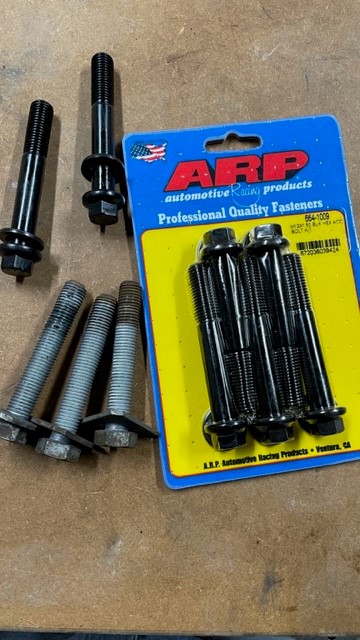
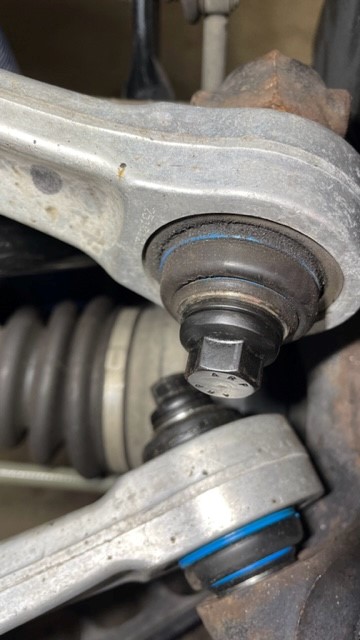
ARP 664-1009 is what you want. I installed with a little dab of medium Loctite just because. If your car has some miles on it you may want to run a M12x1.5 tap through the knuckle, the stock bolts don't go all the way through in two of the locations so it was a little crunchy to get the ARP bolt all the way in.
Torque spec is 98 ft-lbs for the ARP bolt. There are three locations on each side.
So far I've only done a couple hundred street miles on them, I'll be rechecking the condition after/during every track event, if I see any evidence of an issue I'll report back.
What tool did you guys use for the install in the rear inner camber arm bushing?
I have the bimmerworld bushing for the camber arm and trailing arm but don’t know what tool to use to get it in. Will this work?
https://www.turnermotorsport.com/p-580442-tool-trailing-arm-inner-bushing-tool-master-set-bavarian-autosport/
I have the bimmerworld bushing for the camber arm and trailing arm but don’t know what tool to use to get it in. Will this work?
https://www.turnermotorsport.com/p-580442-tool-trailing-arm-inner-bushing-tool-master-set-bavarian-autosport/
Matt Fojtik wroteYou taking about this bushing? I had to use #10, #8, #1, #12, and I believe #3. For installing the oem bushing though, but for bw spherical that kit should work, you won't need to use #10.What tool did you guys use for the install in the rear inner camber arm bushing?
I have the bimmerworld bushing for the camber arm and trailing arm but don’t know what tool to use to get it in. Will this work?
https://www.turnermotorsport.com/p-580442-tool-trailing-arm-inner-bushing-tool-master-set-bavarian-autosport/
Would anyone in here be willing to rent out their bushing press tool to me?
CPWINCH wroteThis is what I didI might have already asked this question. But since a majority of these failures are happening on the arms with washers/spacers, woould it be a good alternative to replace the upper arms with something like SPL offers and then replace the other arms that dont require spacers with lemforders ?
//steve\\ wroteI used the washers on the left, not the McGill. Had a failure that resulted in a destroyed rear axle when the bolt backed out, then sheared.I know some of the failures, if not most, happened with people that found some alternative tapered washer solution like pictured below. You can see with those it has that flat shoulder and with them the tapered face wasn't seating properly in the knuckle. With the proper tapered washers I really don't see how they would be more prone to failure than OE or any aftermarket arm like SPL that still has to replicate that tapered portion.
Granted I was on track with sticky tires, so maybe if you run street tires on the street they’ll last longer before they back out and snap. Ymmv
I was wondering if its a good idea to use this powerflex bushings https://www.powerflex.co.uk/product-details/Rear+Upper+Arm+Outer+Bush/10893.html
and to avoid altogether the monoball and the spacer/washer in that part of the arm. The problem is that i'm not sure that you can mix poly bushing on the outside and monoballs on the inside in the same arm....
and to avoid altogether the monoball and the spacer/washer in that part of the arm. The problem is that i'm not sure that you can mix poly bushing on the outside and monoballs on the inside in the same arm....
I am no expert. But the factory configuration is spherical inner rubber bushing outer. So I don’t see why poly outer wouldn’t work.
megamanu wrotePU bushes will work and will be stiffer than stock rubber. However, PU bushes will squeak over time. If you're going thru the hassle of pumping out the stock rubber bush, pumping in a spherical bearing is just one extra step.I was wondering if its a good idea to use this powerflex bushings https://www.powerflex.co.uk/product-details/Rear+Upper+Arm+Outer+Bush/10893.html
and to avoid altogether the monoball and the spacer/washer in that part of the arm. The problem is that i'm not sure that you can mix poly bushing on the outside and monoballs on the inside in the same arm....
Redd wroteMight be repeating myself in this very thread. I have vtl's run of washers since late 2019. Although I've only done about a dozen trackdays since then in total. I always spanner check and use paint marks. Torqued and installed by myself with new bolts.Below are replies from vtl.
Some friends had sent me some links to forum threads where people had not followed the original design and subsituted their own variations of washers. In some cases looked completely wrong where the face of the washer wouldn't have proper contact with the coned face of the knuckle. The washer design while looking simple was actually very specific to allow proper contact to the face.
Yes locally we did have an instance of a snapped bolt and a couple cases of the bolts backing out. In my experience the bolts to the knuckle with the washers are prone backing out if they were not torqued up correctly. The factory spec is actually 100Nm + 90. I have found anything less than 100Nm (with no angle) will result in loose bolts (once its loose theres movement and youll get a snapped bolt). I do not beleive it is related to the thread engagement of the bolt, as the engagement with the knuckle is well over 1x the diameter (12mm)
I really dont like doing torque angles as the bolts have to be replaced every time. I personally put on 100Nm with no angle on my car and have not had any issues. Ideally I would like to simply use a higher static torque, but I have found a lot of times the bolt to the knuckle will simply not allow you to torque it up to a higher torque like 120nm (the bolt just stretches). Have personally installed these monoballs on i think around 7-8 cars and have not had issues if everything was torqued up correctly with a digital torque wrench. These days I just do 100Nm with loctite.
My own car is running fine with the upgrade and have taken it on interstate drives on fast tight roads and multiple track days (on 200TW tyres though, not slicks).
When I originally did the mod, custom washers were a last resort. I had a quick look at the mcgill washers but the face was simply wrong being a high misalignment washer and would not give proper contact (and be quite dangerous if used).
I know of the local example above, happened while I was also there. They reused bolts afaik. Other than that, I know it was a non-M knuckle. Not sure if there's any other differences there but I doubt it around the face as well as installation procedure.
does anyone know if the existing bearing (opposite the rubber bushing) in these arms is serviceable with the same bearing, or is the bearing housing built into the arm?
statik wroteThe bearing end of the arm is not serviceable. The bearing is swaged into the arm and cannot be removed without damaging the arm. That said, that bearing is tough.does anyone know if the existing bearing (opposite the rubber bushing) in these arms is serviceable with the same bearing, or is the bearing housing built into the arm?
Redd wroteok that’s what i figured, for $400 i guess i’ll replace them if i’m going this far 😂The bearing end of the arm is not serviceable. The bearing is swaged into the arm and cannot be removed without damaging the arm. That said, that bearing is tough.
Yeah if they are high mileage replace them. If they're relatively new I would just reuse. When I did mine at 137k kms the bearing end of the arm were still good with no noise.
A great alternative to this is bimmerworld Spherical arms (which I did). They give you more adjustments and they were super easy to plop in. Made a huge difference on the car! Especially the toe arms with the excentric lockout. Toe almost never comes out of place- even on track