3.6KVIEWS
26REPLIES
36APPRECIATES
08-15-2023LAST POST
Good evening all. I recently experienced a loss of power and subsequent clattering noise slightly above idle. I shut the engine down almost immediately after I felt the loss of power.

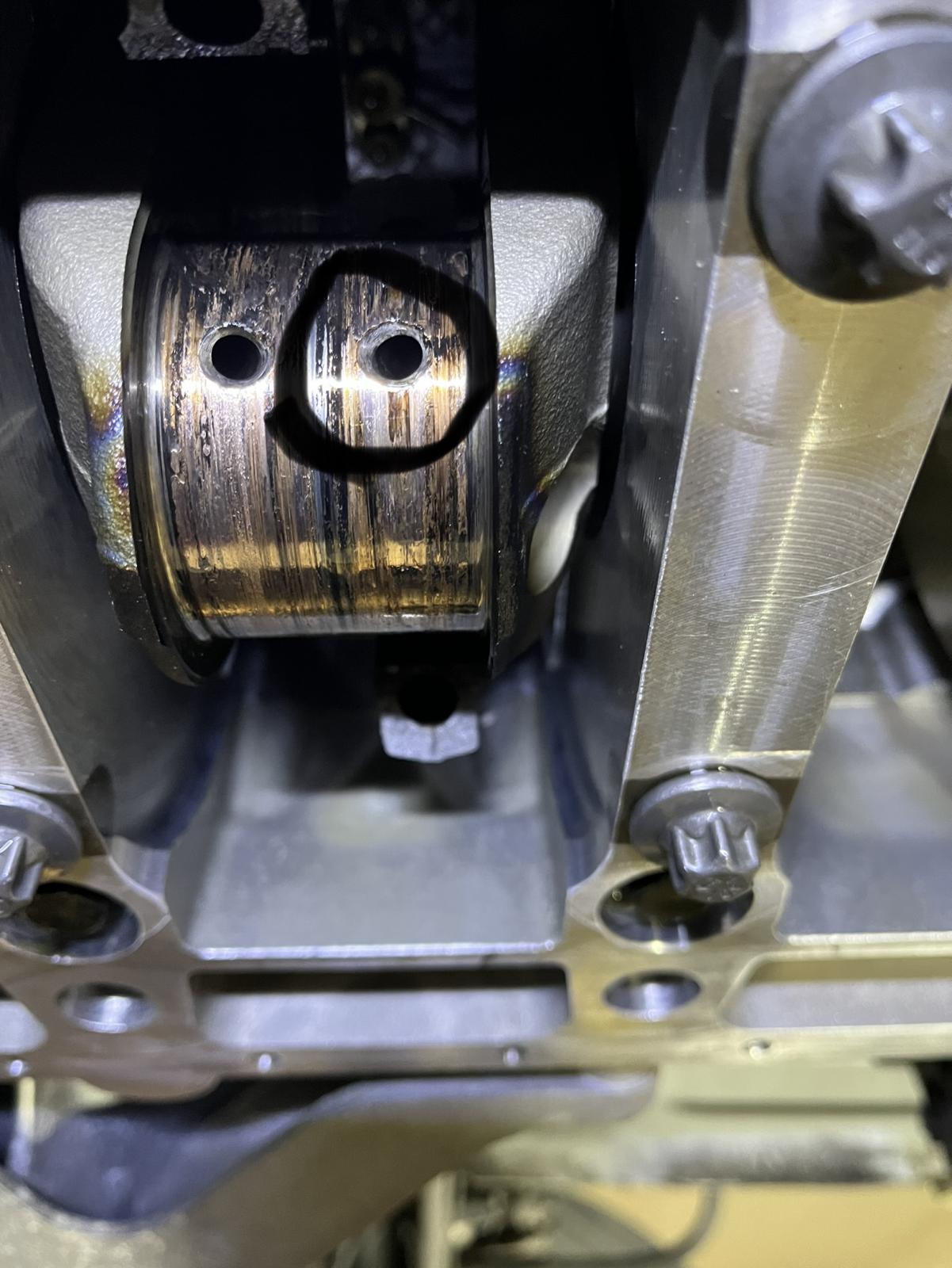
I tore into the bottom end as one would to replace the bearings and motor mounts. Hoping for the best but expecting the worst, I found this after removing the Rod Caps from 2/6 which share the same journal.

I'm curious about the width of the bearings opposed to the width of the rod cap/ connecting rod bearing surface. I've only removed the rod caps from this set but I've noticed one set is wider than the bearing surface and its next door neighbor is narrower than the bearing surface. The bearings side by side measure the total the sum of the two rod bearing surfaces plus a touch.

Does a new set of bearings fit the description of the set I've removed? Meaning is one set wider than another set, or are all of the bearings sets the same width?

2012 E92 M3
ESS Tune
Akra Axhaust
56,000 miles
Original Owner
Driving Style- Spirited
Cared for- Yes
Oil Changed every 12 months minimum

Thank you in advance for any input.
Attached imageAttached imageAttached imageAttached imageAttached image
Ruebsteak wrote
Good evening all. I recently experienced a loss of power and subsequent clattering noise slightly above idle. I shut the engine down almost immediately after I felt the loss of power.

I tore into the bottom end as one would to replace the bearings and motor mounts. Hoping for the best but expecting the worst, I found this after removing the Rod Caps from 2/6 which share the same journal.

I'm curious about the width of the bearings opposed to the width of the rod cap/ connecting rod bearing surface. I've only removed the rod caps from this set but I've noticed one set is wider than the bearing surface and its next door neighbor is narrower than the bearing surface. The bearings side by side measure the total the sum of the two rod bearing surfaces plus a touch.

Does a new set of bearings fit the description of the set I've removed? Meaning is one set wider than another set, or are all of the bearings sets the same width?

2012 E92 M3
ESS Tune
Akra Axhaust
56,000 miles
Original Owner
Driving Style- Spirited
Cared for- Yes
Oil Changed every 12 months minimum

Thank you in advance for any input.
.
Image hosted on: www.m3post.com
.
I'm sorry to see the crank journal and bearing damage on your engine. I believe the bearings are supposed to be the same width. Perhaps the edges of one have been worn down. I see some bluing on the crank web and substantial scoring on the crank journal(s). So perhaps the crank is ruined. Oversize bearings do not exist for the S65 that I'm aware of. Perhaps Green-Eggs's user avatarGreen-Eggs from B.E. bearings can chime in? The rod bearing thread at the link below has a lot of examples and information on the subject of failures and typical wear.

Official S65 Rod Bearing Condition Example Thread
https://www.m3post.com/forums/showthread.php?t=1253084
Post referenced by ///M Power-Belgium in Blown motors, Rod Bearing failure S65 Registry. 08-12-2023
Sorry for the damage. Glad you have a good block.

So the bearings were from factory?
No they’re all the same width.
DrFerry wrote
I'm sorry to see the crank journal and bearing damage on your engine. I believe the bearings are supposed to be the same width. Perhaps the edges of one have been worn down. I see some bluing on the crank web and substantial scoring on the crank journal(s). So perhaps the crank is ruined. Oversize bearings do not exist for the S65 that I'm aware of. Perhaps Green-Eggs's user avatarGreen-Eggs from B.E. bearings can chime in? The rod bearing thread at the link below has a lot of examples and information on the subject of failures and typical wear.

Official S65 Rod Bearing Condition Example Thread
https://www.m3post.com/forums/showthread.php?t=1253084
There is no doubt that crank is scrap. I haven’t seen a successfully reground crank in any of the searches I’ve done on this engine. There is probably a good chance the main journals are hurt too.
spammysammich wrote
There is no doubt that crank is scrap. I haven’t seen a successfully reground crank in any of the searches I’ve done on this engine. There is probably a good chance the main journals are hurt too.
My initial thought was perhaps the mains went first on this engine...
These are the original bearings.

Did everyone notice the round bit of metal in the first and second photo? This is bearing material found blocking the oil passage way on the journal for that bearing. It was sandwiched between the bearing and journal.

No check engine lights occurred during this event.

I'll be adding additional detailed photos soon.
Pls post pictures of the back side of the bearing markings to confirm they are OEM.

The width is bigger on the spun bearing because it is crushed down.

Also would like to see how bad the bearings are on the first pair of cylinders. (1/5)
Rods should be 0.725-inch width, bearings should be 0.0625-inch width.

Your bearings are different width because they spun and flattened them out.
Ruebsteak wrote
These are the original bearings. Did everyone notice the round bit of metal in the first and second photo? This is bearing material found blocking the oil passage way on the journal for that bearing. It was sandwiched between the bearing and journal. No check engine lights occurred during this event. I'll be adding additional detailed photos soon.
No, I didn't notice the round bit of metal in the first or second photos. The journal oil galleries look open and clear to me. Although I do see some smearing of bearing material around the oil gallery aperture. See zoom of your photo below. If the spun bearing(s) failure happened at high RPM - say ~8000+RPM, then the event was possibly too sudden for oil pressure to drop and a check engine light to trigger. I'm interested to know what your repair strategy might be. New stroker from Carbahn perhaps or something else? IF the main bearings also failed (or failed first) then the block saddle(s) might be cracked. Take a good look at the mains and the block saddles.
.
Attached image
I don’t understand why this happened, I changed mine at 50k and they showed very little wear. I wonder what the difference is? Mine is and 09.
e92dud wrote
I could buy a new engine if I worked the amount of time it would take to read the 131 pages of that forum.
Knowledge takes effort
e92dud wrote
I could buy a new engine if I worked the amount of time it would take to read the 131 pages of that forum.
:lol: couldn't help laughing. Think it was a good point.

Since theories come and go several times during a 131-page thread development, tending to expurge rejected theories as the time goes by, I guess it's safe to make a long-story-short:

BMW designed bearing clearance so tight that manufacturing variances could put them in an unsafe measurement. Sum that with bad habits of not warming up the engines, and you have a equation resulting in excessive bearing wear.

As in a sum equation one factor could be so high that the other become irrelevant, you can treat your engine very well and it still have a variance so bad that the bearings won't outlive many miles.
e92dud wrote
I don’t understand why this happened, I changed mine at 50k and they showed very little wear. I wonder what the difference is? Mine is and 09.
e92dud wrote
I could buy a new engine if I worked the amount of time it would take to read the 131 pages of that forum.
Okay. If you don’t like reading much, here’s a video on the subject to make it easier for you. Hope this helps answer your question why did this happen to the O.P.?
.
.
DrFerry wrote
Okay. If you don’t like reading much, here’s a video on the subject to make it easier for you. Hope this helps answer your question why did this happen to the O.P.?
.
.
So the engine wasn’t warmed up before redlining it according to this. I like the varying tolerances theory better. Doesn’t make sense some cars toast at 50k and others show no wear.
e92dud wrote
So the engine wasn’t warmed up before redlining it according to this. I like the varying tolerances theory better. Doesn’t make sense some cars toast at 50k and others show no wear.
You’re close. It’s actually a combination of both. Example: if a person’s car came from the factory on the tight end of the tolerance distribution, and said person regularly drives the piss out of the car when the engine is cold then there’s a high probability the engine will grenade. I thought the video covered both the tolerance and warm up issues. Apologies if it didn’t.
e92dud wrote
So the engine wasn’t warmed up before redlining it according to this. I like the varying tolerances theory better. Doesn’t make sense some cars toast at 50k and others show no wear.
The ECU has cold-start abuse protection built in. If it were a warm-up issue, then BMW could have updated the ECU software to fix it by making the abuse protection more conservative. This has been discussed for years, and not a single person has tried to explain that, or provide any real evidence to the contrary. In fact, not a single person has even had the guts to say the cold-start abuse protection is somehow broken.
Green-Eggs wrote
The ECU has cold-start abuse protection built in. If it were a warm-up issue, then BMW could have updated the ECU software to fix it by making the abuse protection more conservative. This has been discussed for years, and not a single person has tried to explain that, or provide any real evidence to the contrary. In fact, not a single person has even had the guts to say the cold-start abuse protection is somehow broken.
Thanks Green-Eggs's user avatarGreen-Eggs for bringing up the dynamic red line topic. I may have been lucky with tolerance stack up and didn’t replace mine with B.E. Bearings (the gold standard) until 117K miles. Over 55K of those miles were with a Harrop super charger. I always did respect the dynamic red line BUT I fear it’s possible to rev right into the red zone when cold and perhaps this is the software fix that’s still missing. In other words naive drivers can simply ignore the lowered red and yellow rpm warm up zones. I could be wrong because I never tested that aspect of it. I still admire the research you or B.E. did on the issue as well as wiki on the subject. Thanks for giving the community an engineering solution.
DrFerry wrote
Thanks Green-Eggs's user avatarGreen-Eggs for bringing up the dynamic red line topic. I may have been lucky with tolerance stack up and didn’t replace mine with B.E. Bearings (the gold standard) until 117K miles. Over 55K of those miles were with a Harrop super charger. I always did respect the dynamic red line BUT I fear it’s possible to rev right into the red zone when cold and perhaps this is the software fix that’s still missing. In other words naive drivers can simply ignore the lowered red and yellow rpm warm up zones. I could be wrong because I never tested that aspect of it. I still admire the research you or B.E. did on the issue as well as wiki on the subject. Thanks for giving the community an engineering solution.
The dynamic redline is real, and will cut cylinders to prevent going over the RPM. During testing, BE would regularly run all the way up to the lowered redline on purpose, just to give it as much abuse as possible. The engine stops accelerating at that lowered redline every time.

But then let's assume that it's too much load when cold, not too much RPM. The ECU could limit that as well. There is a torque calculation inside the ECU that knows how much power you're making, and with the drive-by-wire throttle, the ECU could have limited the load by limiting the throttle input if it needed to.
Green-Eggs wrote
Rods should be 0.725-inch width, bearings should be 0.0625-inch width.

Your bearings are different width because they spun and flattened them out.
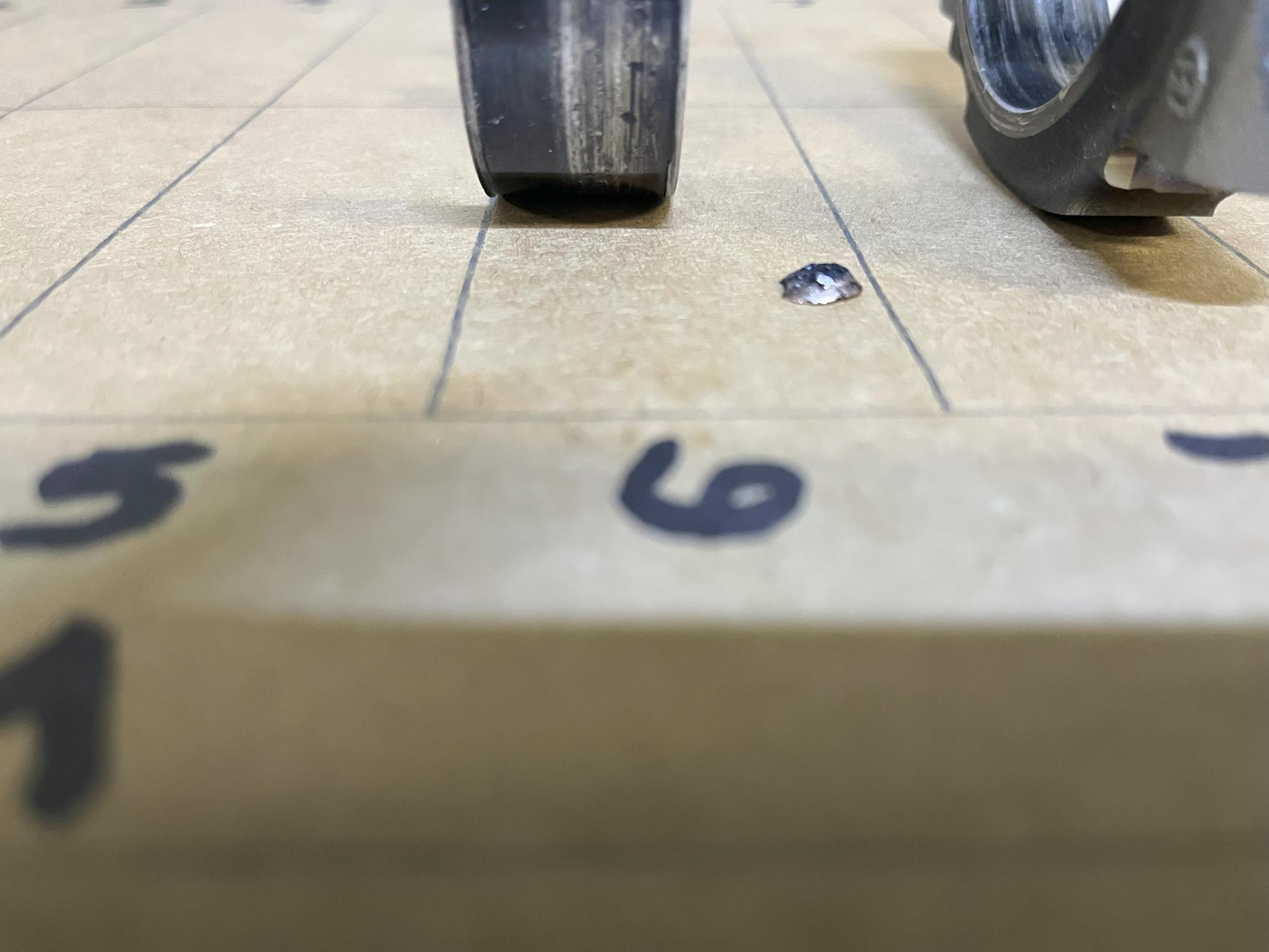
Thanks for the reply. I've converted the measurements you provided to metric for ease of reading the attached photos.

Rod width- per Green Eggs
=0.725-inch
=18.415 mm

Rod Bearing width- Per Green Eggs
=0.625-inch
=15.875 mm

1- Rod #2- Upper Bearing= 17.38 mm
2- Rod #6- Upper Bearing= 19.62 mm
3- Rod #2/#6 Lower Rod Bearings Outer Shell View= 36.80 mm
Attached imageAttached imageAttached image