Obioban wroteHmm, can't see why a couple of percent decreased overall oil pressure would result in dangerously low feed to the main bearings. Care to explain mate?I dropped it because we don't have any data at all on what's happening to oil pressure/flow at the main bearings, and without that we can't have a meaningful conversation.
1.2MVIEWS
3.2KREPLIES
3.1KAPPRECIATES
06-01-2026LAST POST
Obioban wroteWere there class action lawsuits on any of those?The high pressure oil line is a good example BECAUSE how easy/cheap it would be for BMW to recall/fix. Green Egg's point was that they won't "fix" the rod bearings because if they did so it would be admitting fault and they'd have to recall/replace all engines.
Obioban wroteI think that is a pretty anecdotal point, more s65s now will have bearings done. They are also getting older with more mileage put on them.I don't agree with this statement-- if you look at threads with main bearing failure, a shockingly large proportion of them have increased clearance rod bearings. IMO disproportionately many to the quantity of cars running increased clearance rod bearings.
Main bearings failures happened long before increased bearings were available. (Granted not nearly as often as rod bearing failures).
You reduce the risk of rod bearing failure, then the potential for main bearing failure is still there granted a much lower rates and due to the cost of preventatively changing the main bearings, many choose to accept that risk.
tdott wroteI think generally speaking, a manufacturer's decision to upgrade a part later doesn't carry much evidential weight in a lawsuit against them. The policy rationale for excluding such evidence is that no manufacturer would upgrade a part with safety in mind if doing so was seen as an admission of any guilt/wrongdoing. You can still sue them on whatever grounds exist, just that a superseding part isn't going to be the legal admission one would would otherwise expect. So I think BMW's decision to upgrade any parts mentioned in this conversation are neither here nor there in that respect.Were there class action lawsuits on any of those?
Helmsman wroteA) we don't know what the oil pressure decrease is at the main bearings. We know what the system decrease is. Adjacent items to the increase flow (e.g. main bearings) will see a larger decrease.Hmm, can't see why a couple of percent decreased overall oil pressure would result in dangerously low feed to the main bearings. Care to explain mate?
B) We don't know what the inflection point is, where the decrease is meaningful.
tdott wroteI guess it ultimately comes down to-- do you think there are more main bearing failures now than before.I think that is a pretty anecdotal point, more s65s now will have bearings done. They are also getting older with more mileage put on them.
Main bearings failures happened long before increased bearings were available. (Granted not nearly as often as rod bearing failures).
You reduce the risk of rod bearing failure, then the potential for main bearing failure is still there granted a much lower rates and due to the cost of preventatively changing the main bearings, many choose to accept that risk.
Generally, I don't think main bearings are a wear item, on any sort of reasonable (say, 500,000+ mile) timeline. So, a main bearing failure I would classify as either a design issue (which includes aftermarket parts, once added) or a manufacturing issue. Any manufacturing issues should be well sorted (kaboom) by 10,000 miles, so these days I'm looking for causes. Main bearing failures on higher mileage (anything over 10,000 miles), totally stock cars are pretty rare.
Obioban wroteJust a minor correction, the EGR cooler recall is nothing to do with emissions, it's to do with a small number of them leaking coolant into the exhaust, and a very small risk of the engines catching fire as a result of the coolant mixing with the soot (somehow making it flammable I guess??) along with a plastic inlet manifold.EGR must be recalled because it's emissions related. They have no choice. Not related to them updating the part or not-- is the emissions systems aren't hitting targets, they will be fixed. Cars have had to reduce horsepower (significantly) after sale if they can't do it, or entire lines of cars purchased back (VW's dieselgate).
AFAIK BMW's weren't found for busting NoX emissions like VW was?
Obioban wroteI see what you're saying, but if the bearing oil pressure loss was too great then we'd be seeing more issues with rod bearing failures rather than main bearing failures I think, as the rod bearing receives it's feed after the main bearings.A) we don't know what the oil pressure decrease is at the main bearings. We know what the system decrease is. Adjacent items to the increase flow (e.g. main bearings) will see a larger decrease.
B) We don't know what the inflection point is, where the decrease is meaningful.
e92dud wroteThat's how they should be, although many people don't seem to believe that. I don't suppose you have photos of your old LS2 shells do you?It’s wild to me how much wear these cars have at 40k miles, my ls2s bearings had zero wear at 120k miles with 8 owners and I didn’t baby it.
Assimilator1 wroteNo, I threw them away, I was mad I wasted the time to pull them off because my engine was knocking. Turned out to be a piece of metal that got in the combustion chamber and lodged in the head. They literally had zero wear, maybe 2 hairline scratches on them. They were the original gm ones from 05. Made me believe that the S65 does have something wrong with it, S65s with 20k miles have more wear.That's how they should be, although many people don't seem to believe that. I don't suppose you have photos of your old LS2 shells do you?
79k miles on my 2011 e93 m3. Had the work done at Boosted Bimmers in Melbourne Fl, who I highly recommend for anyone in the Orlando/ Space Coast area. The owner, Omar mentioned that bearings had wear through about the first three layers (out of eight) and looked good. Car never tracked, always warmed up, oil changes at 8k miles w/ Liqui Moly. He also mentioned one of his customers has a supercharged M3 with BE bearings with 300k miles..
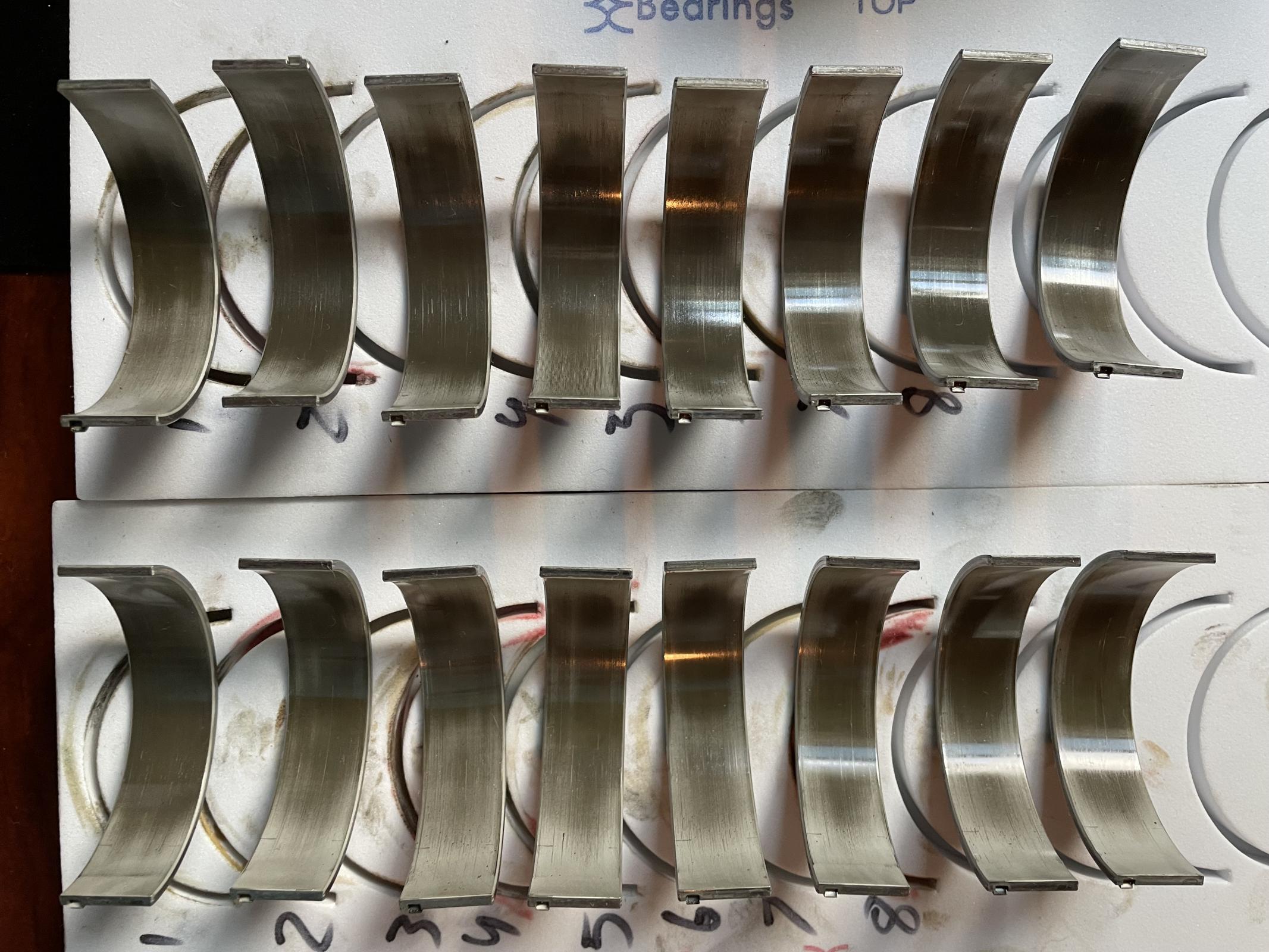
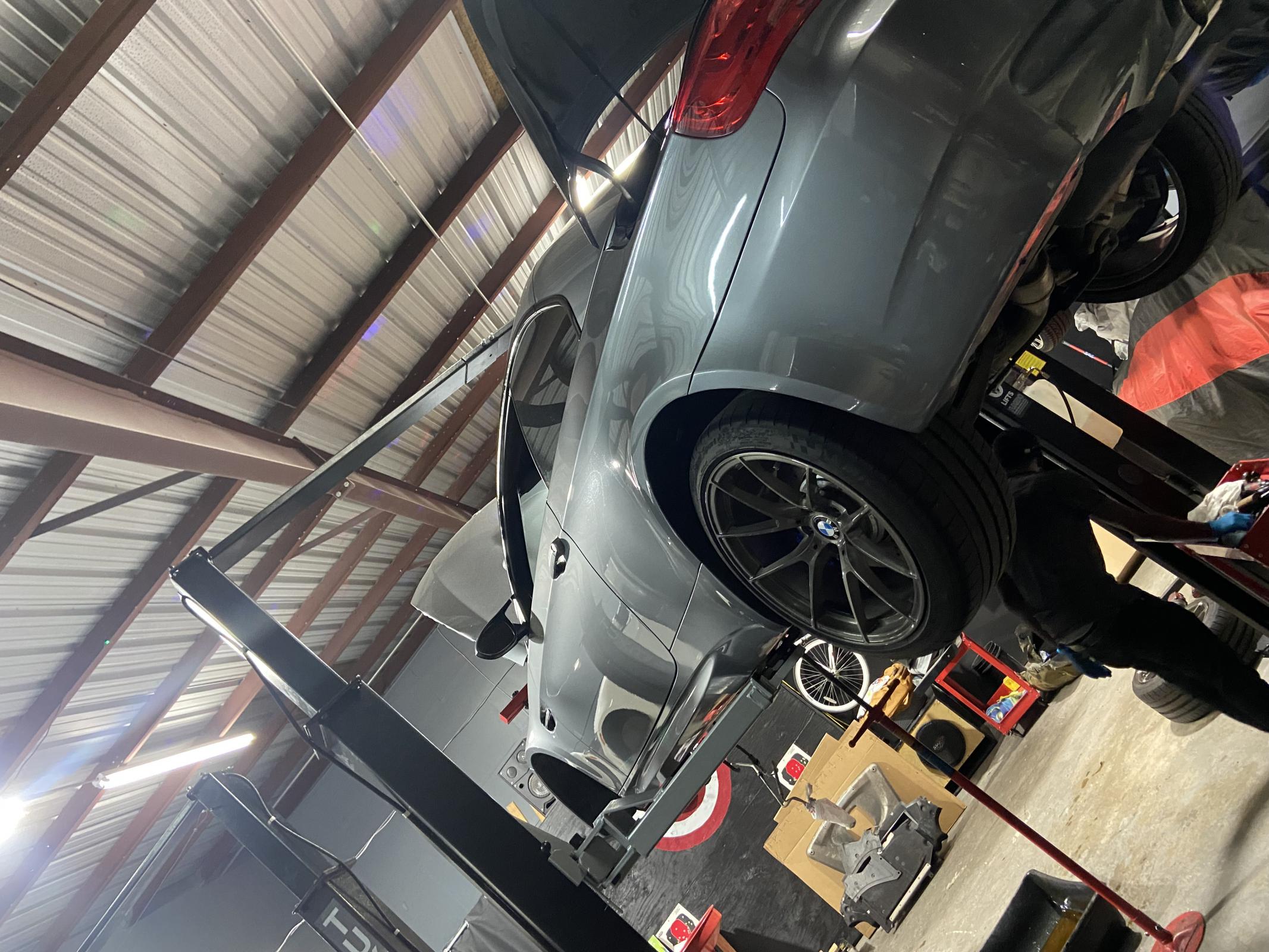
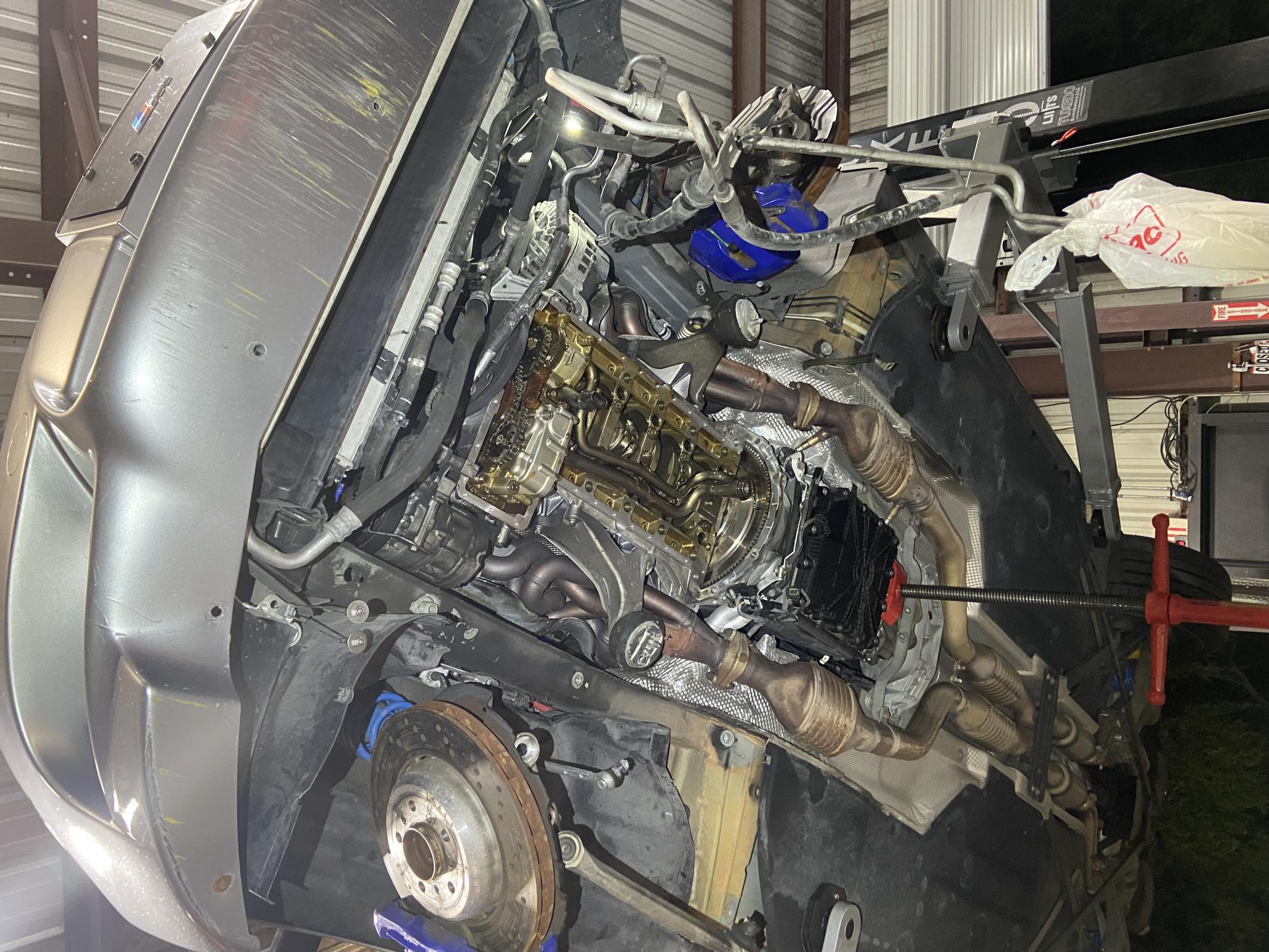
nschmdbrg wroteCan't tell from the picture, is that pre or post LCI shells mate?79k miles on my 2011 e93 m3. Had the work done at Boosted Bimmers in Melbourne Fl, who I highly recommend for anyone in the Orlando/ Space Coast area. The owner, Omar mentioned that bearings had wear through about the first three layers (out of eight) and looked good. Car never tracked, always warmed up, oil changes at 8k miles w/ Liqui Moly. He also mentioned one of his customers has a supercharged M3 with BE bearings with 300k miles..
Ps. Woah, is mentioned 300k miles correct or typo??
nschmdbrg wroteYea don't look too terrible, they look like the later tin/alu/copper shells to me, so typical wear for them.79k miles on my 2011 e93 m3. Had the work done at Boosted Bimmers in Melbourne Fl, who I highly recommend for anyone in the Orlando/ Space Coast area. The owner, Omar mentioned that bearings had wear through about the first three layers (out of eight) and looked good. Car never tracked, always warmed up, oil changes at 8k miles w/ Liqui Moly. He also mentioned one of his customers has a supercharged M3 with BE bearings with 300k miles..
I'd like to know though how Omar knows there are 8 layers in them? Personally I thought their was much fewer, but I don't have anything solid on that on these particular bearings.
35k miles, car was well taken care of previously. Definitely did not need to do them this early, but opted to do so for peace of mind and since I was gonna have to do them at some point anyway. Replaced with BE Engineering bearings and ARP rod bolts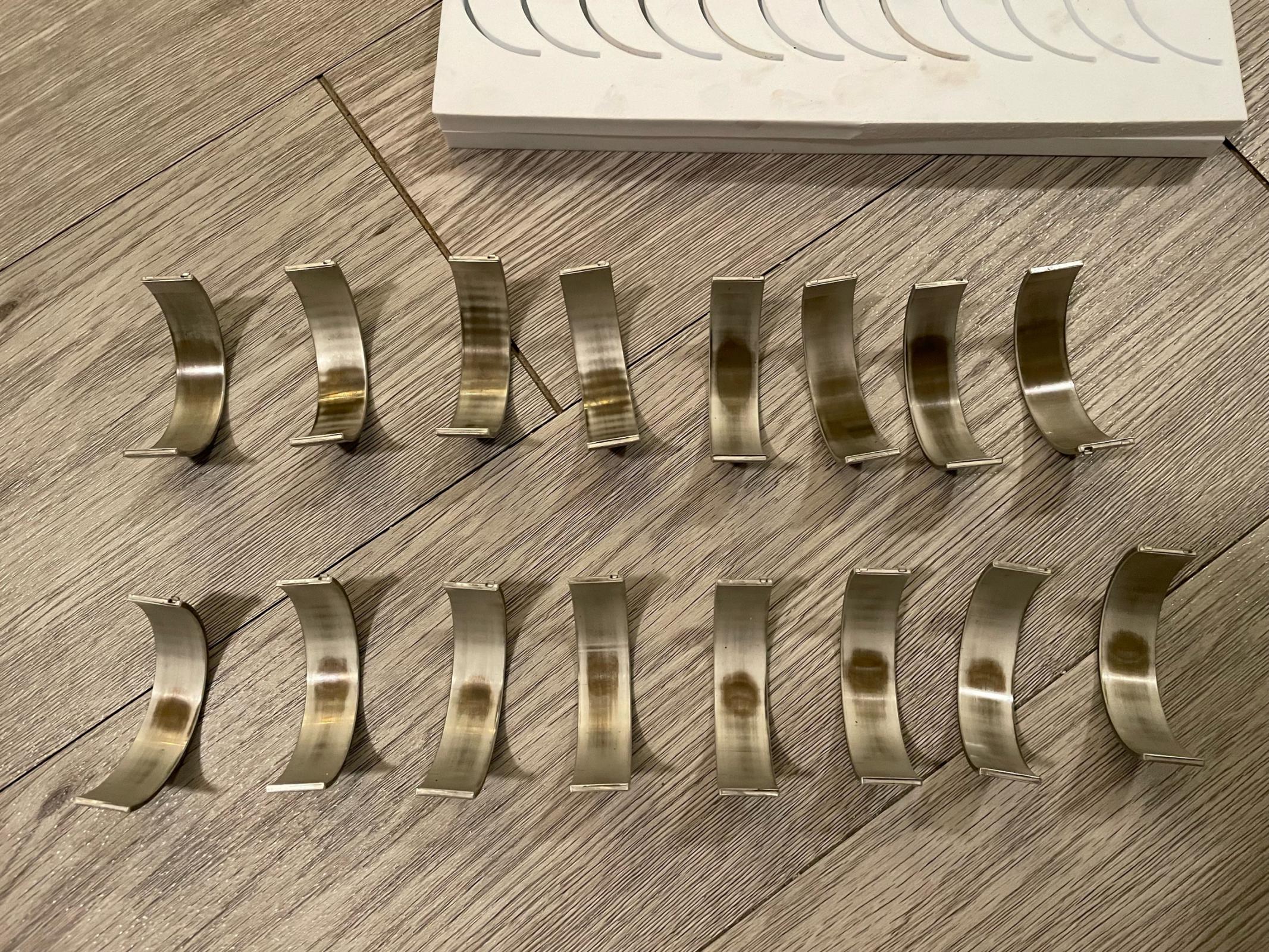
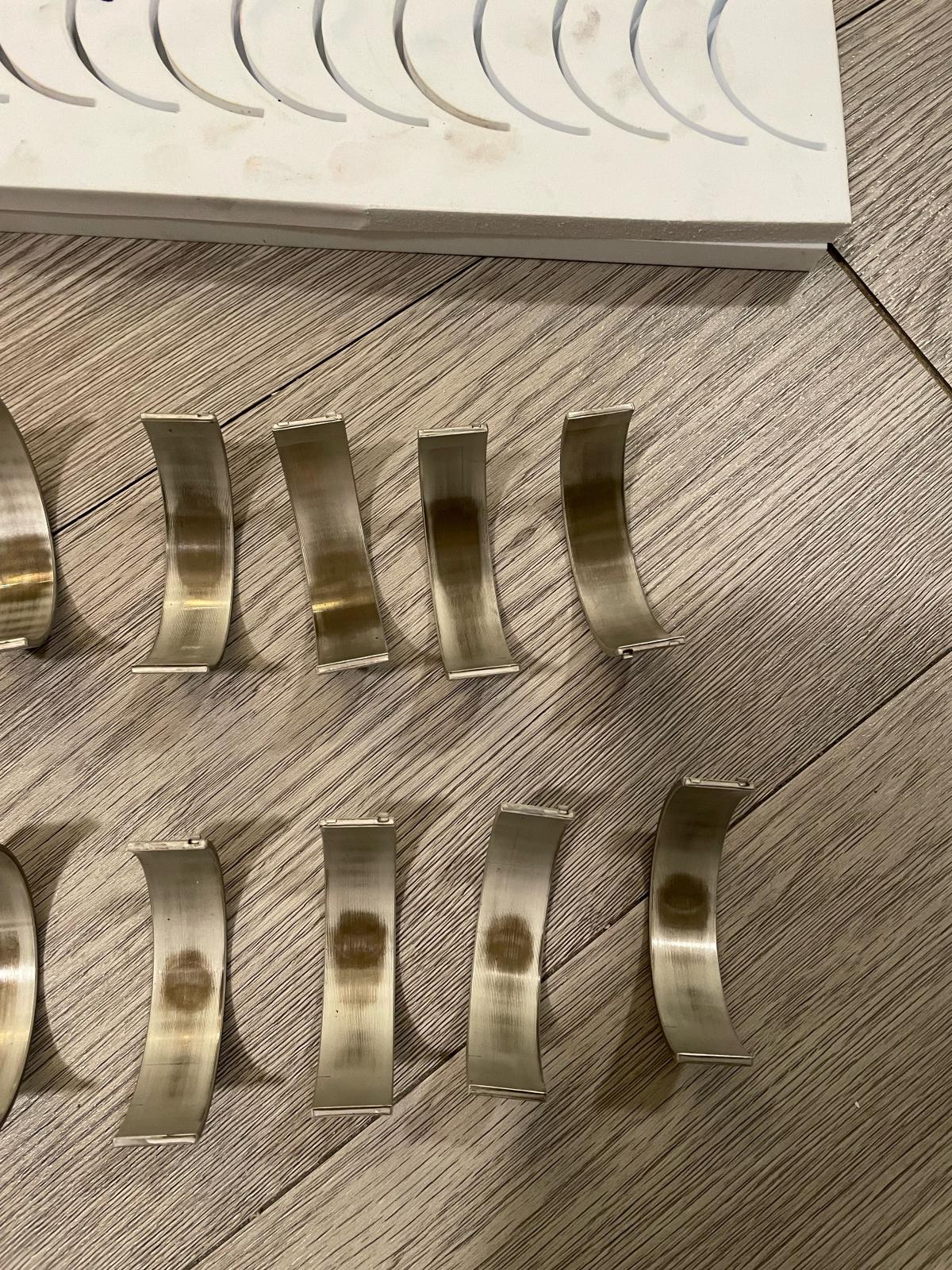
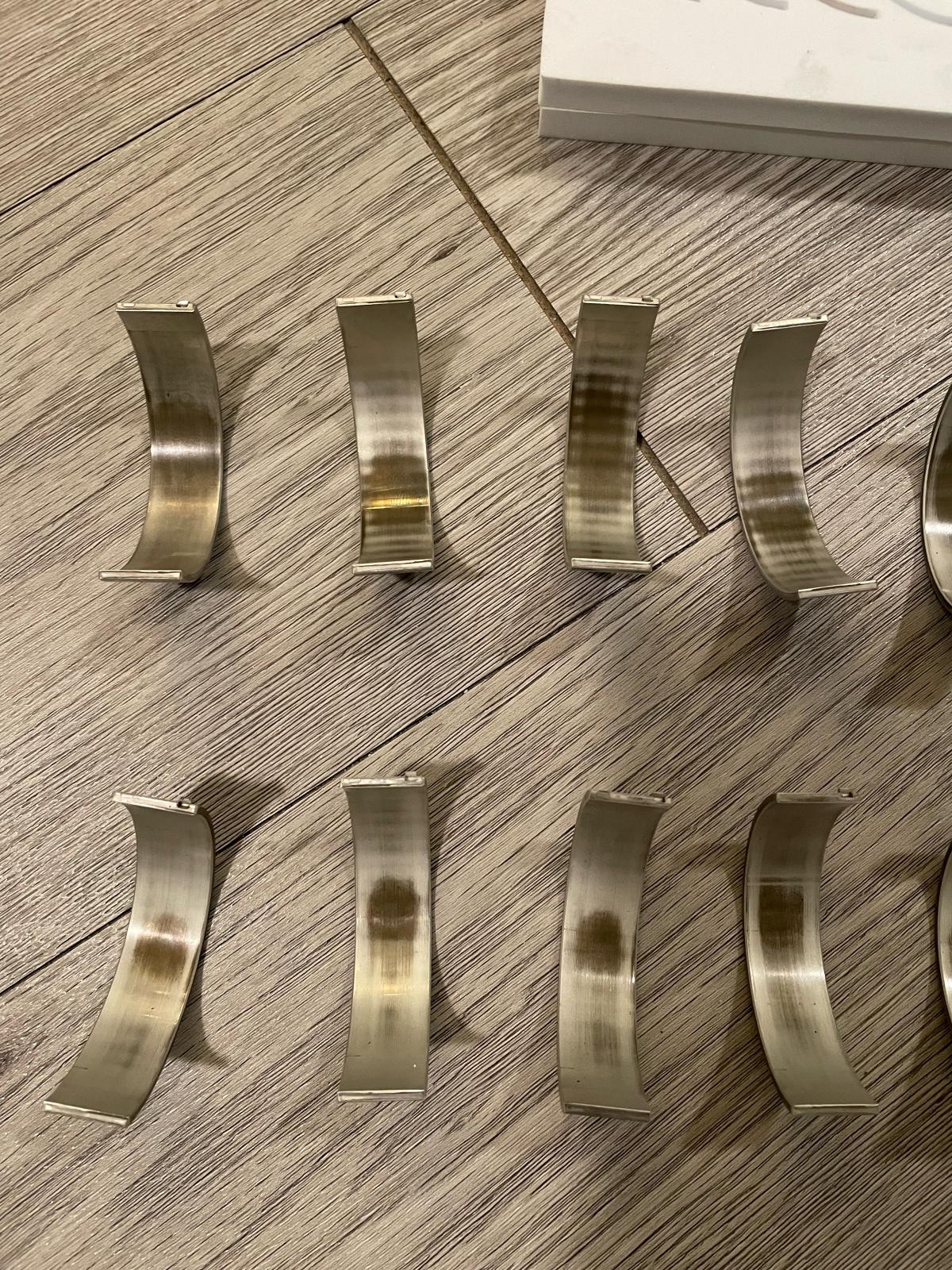
2011 E90 30k miles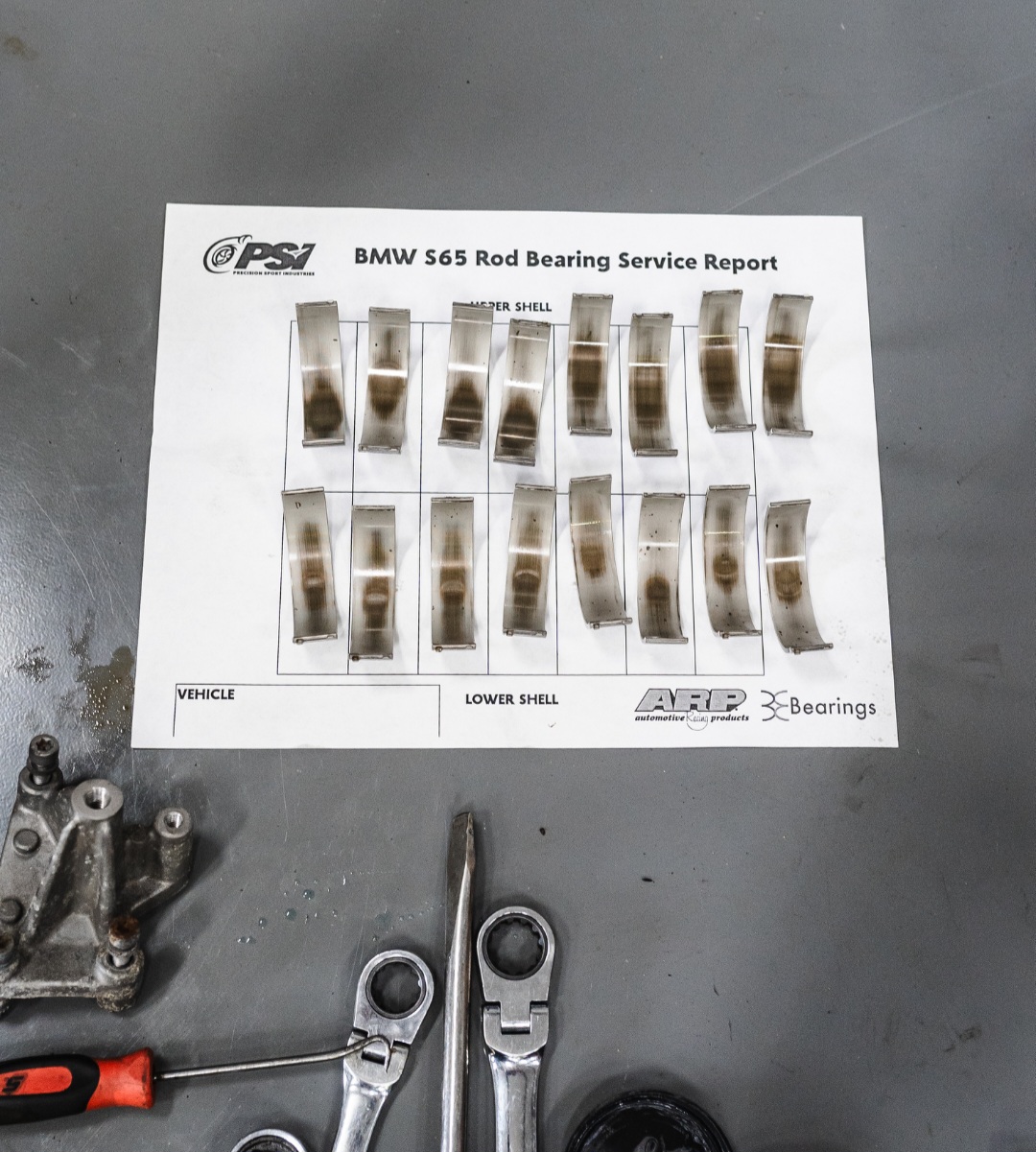
2008 6MT at 81k miles.
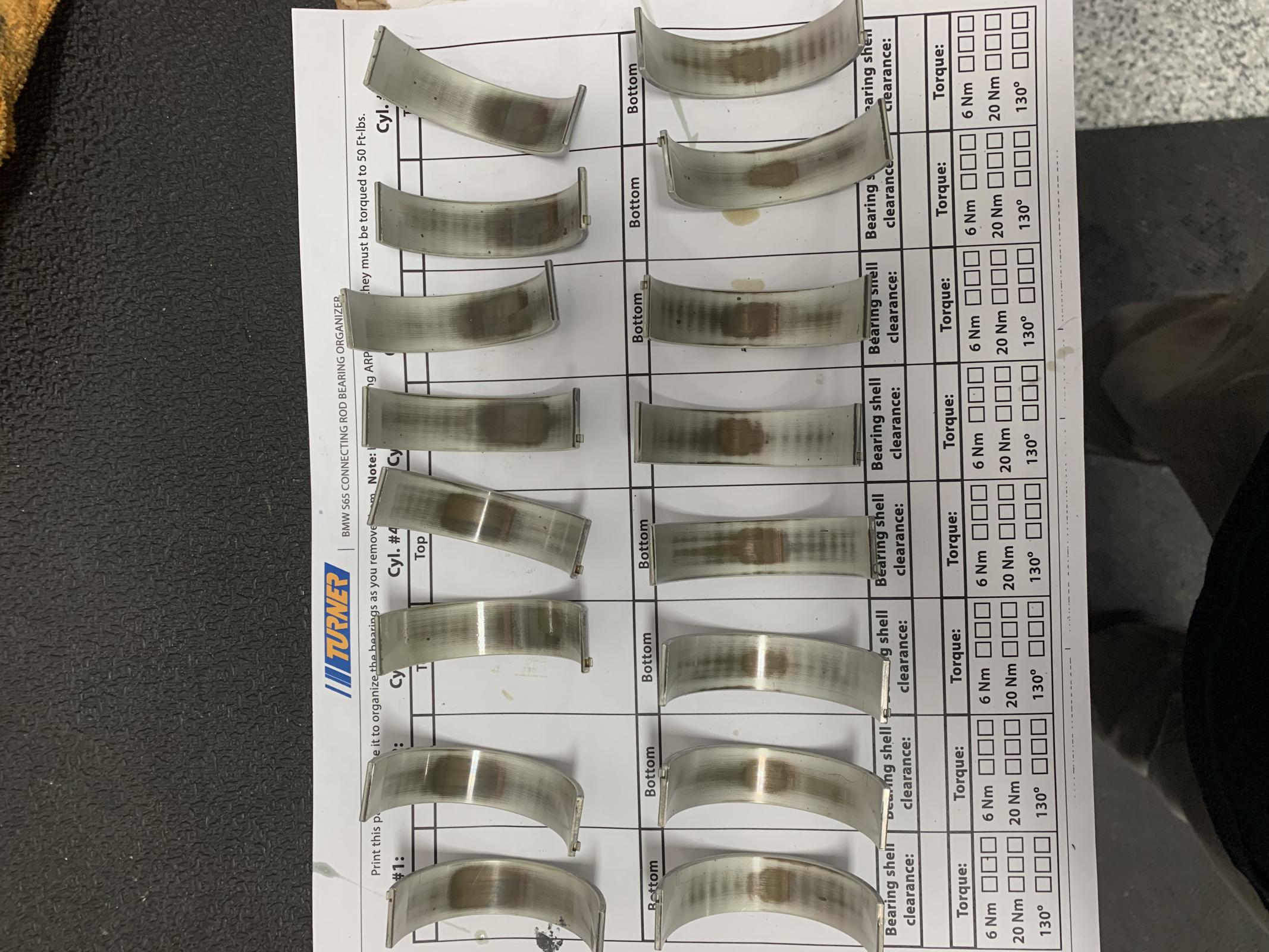
They're not in any cylinder order, I received them as a bunch from the PO. Close ups of the worst ones and interesting edge wear.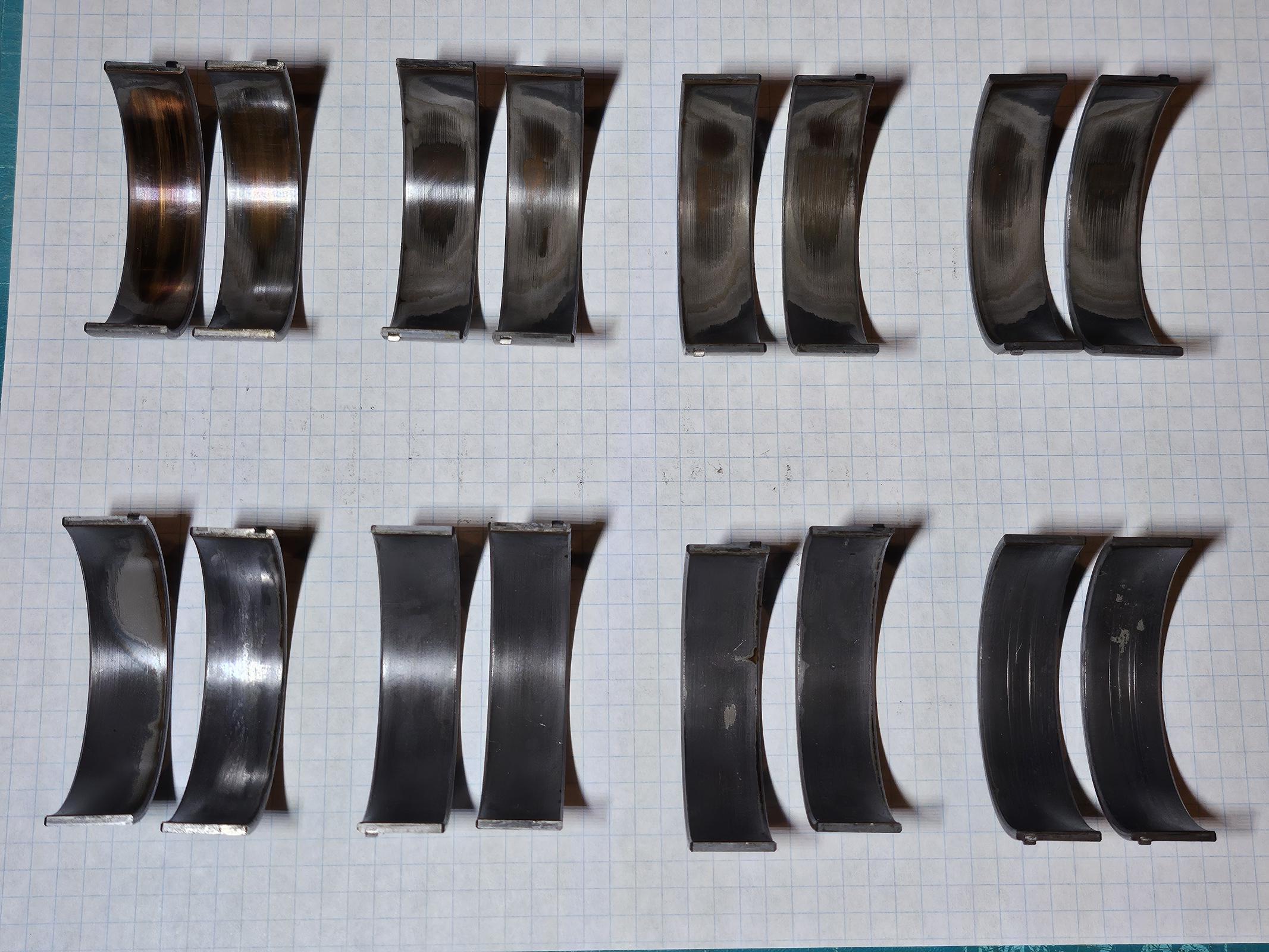
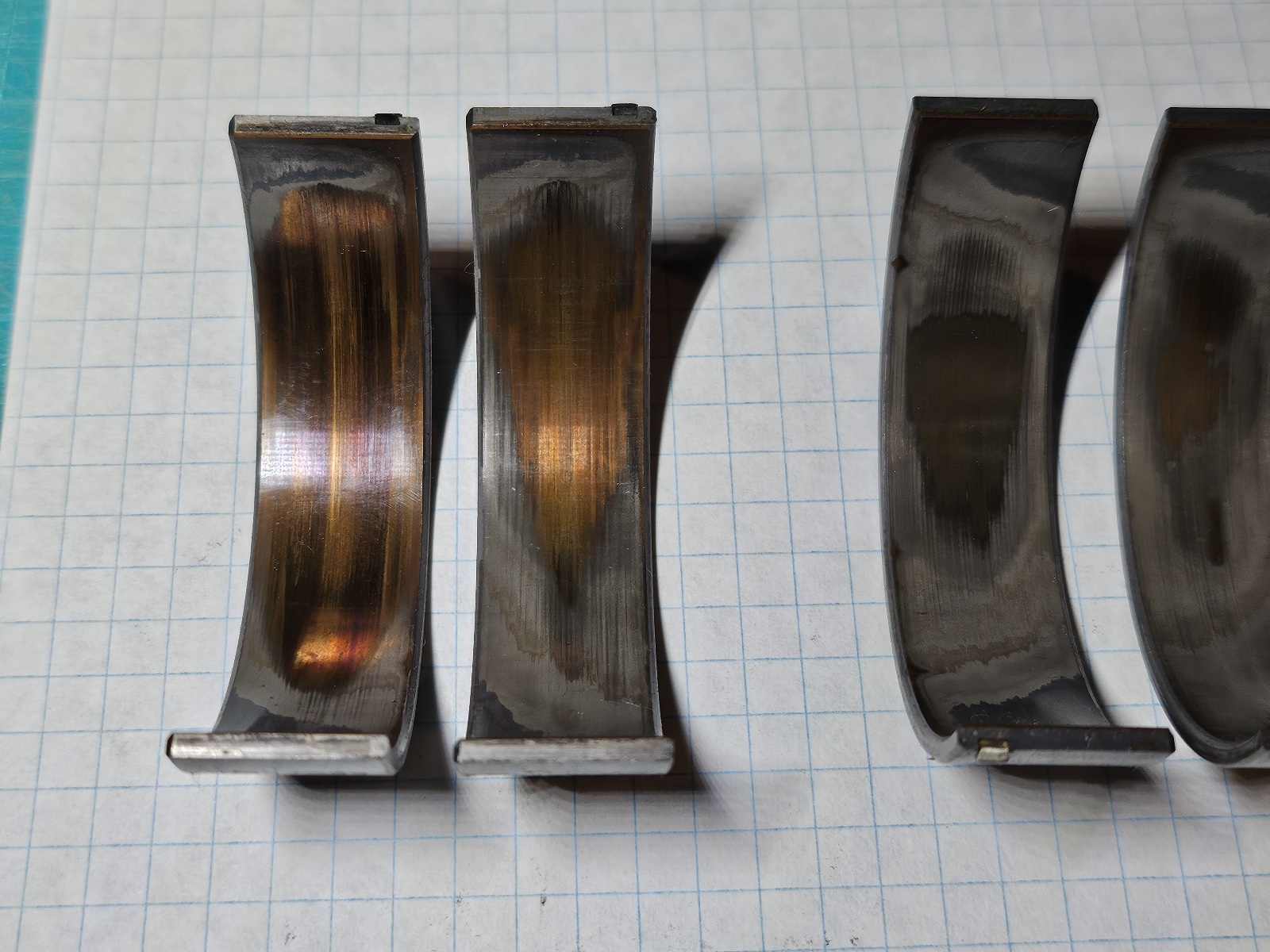
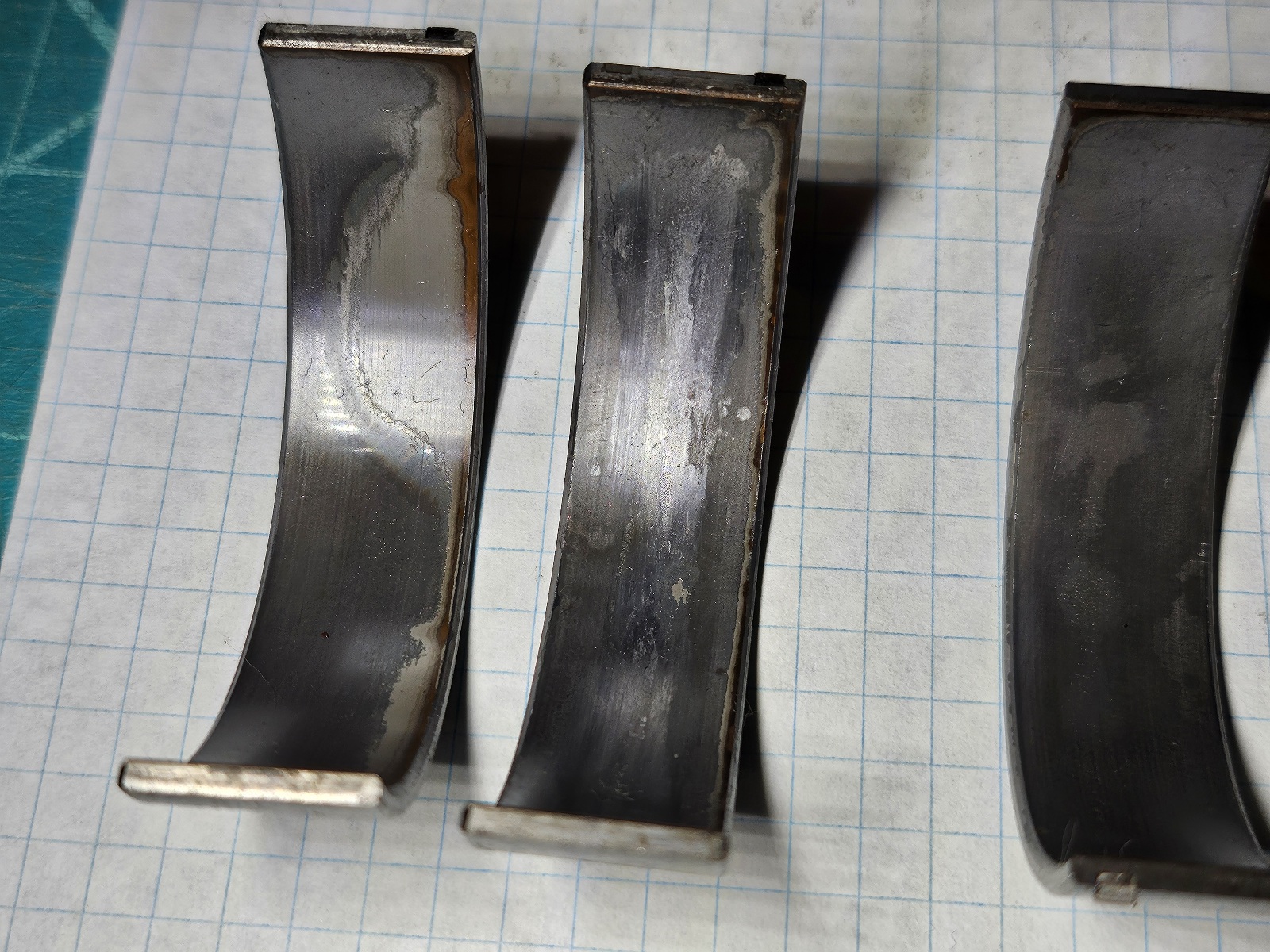
They're not in any cylinder order, I received them as a bunch from the PO. Close ups of the worst ones and interesting edge wear.
HairTooLongToo wroteIt was definitely time. What brands of new bearings and bolts were they replaced with?2008 6MT at 81k miles. They're not in any cylinder order, I received them as a bunch from the PO. Close ups of the worst ones and interesting edge wear.
DrFerry wroteThey were replaced with VAC bearings and ARP bolts.It was definitely time. What brands of new bearings and bolts were they replaced with?
HairTooLongToo wroteYikes! Yea they badly needed doing, typical wear for the earlier style bearings! lol2008 6MT at 81k miles.
They're not in any cylinder order, I received them as a bunch from the PO. Close ups of the worst ones and interesting edge wear.
And the odd edge wear is quite typical of those too.
***************************************************
340_Buckeye wrote35k miles, car was well taken care of previously. Definitely did not need to do them this early, but opted to do so for peace of mind and since I was gonna have to do them at some point anyway. Replaced with BE Engineering bearings and ARP rod bolts
PetrolFumes wroteDo either of you guys fancy doing a little experiment on 1 or 2 of your worst worn old shells?2011 E90 30k miles
Mine at 50k miles, 2009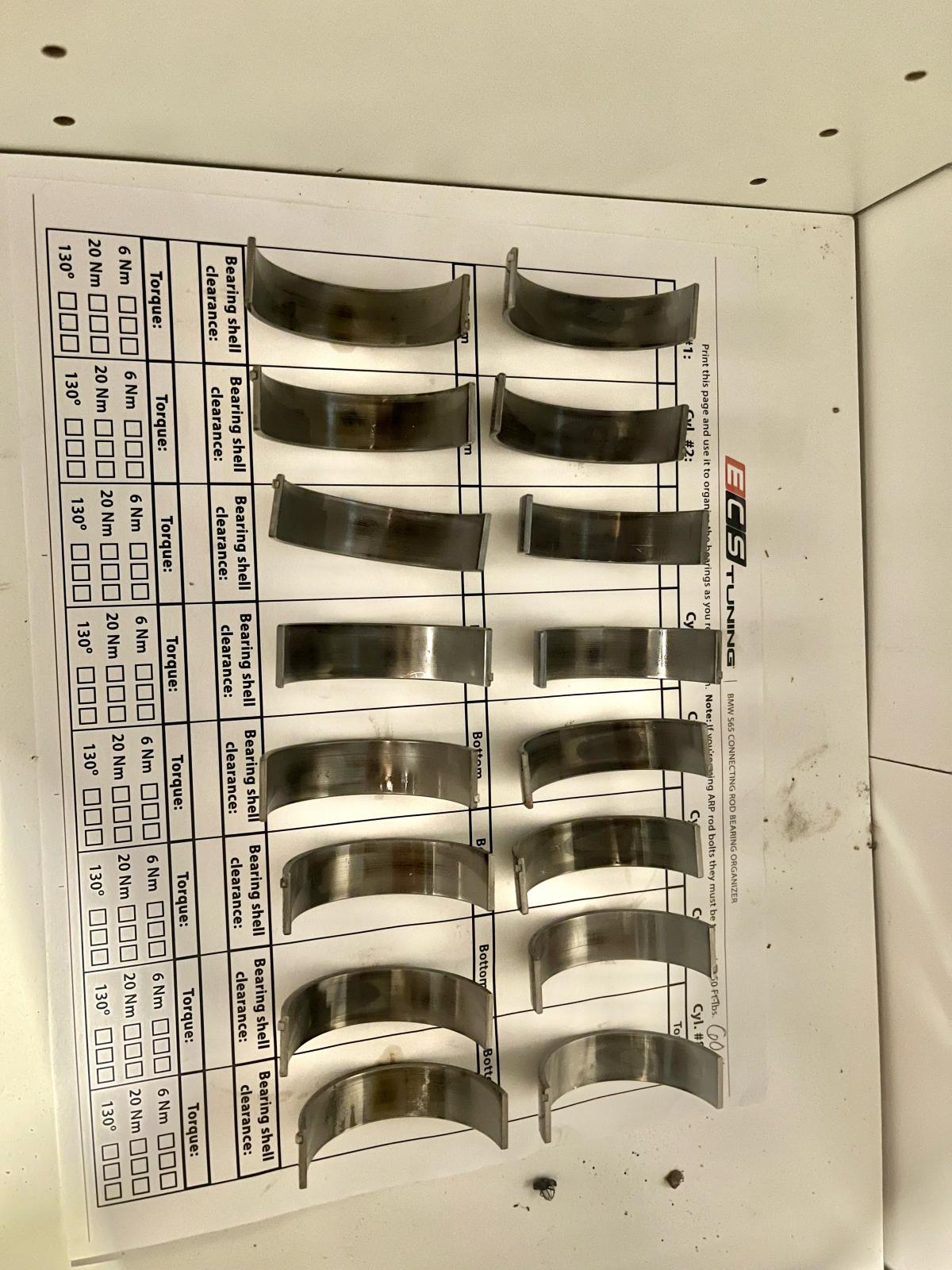
2007 M3 - 150000 km .
Replaced with Mahle
From left to right is 1 to 8 .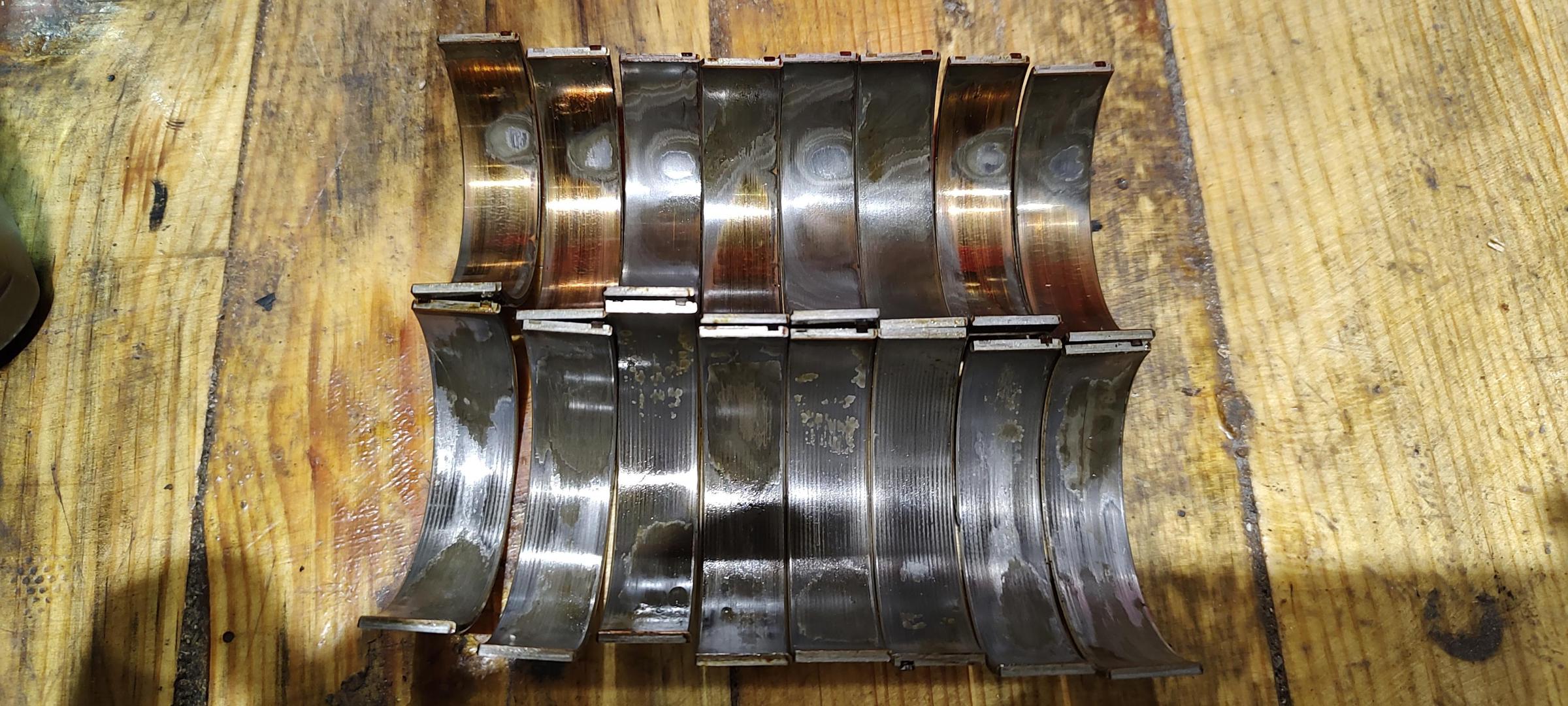
Replaced with Mahle
From left to right is 1 to 8 .
RSV Atelier wroteThanks for posting. Looks like the shells were "way overdue" for replacement. Saved in the nick-of-time at 93K miles. With all that copper showing, and de-lamination wear beyond the copper, what did the crank journals look like?2007 M3 - 150000 km .
Replaced with Mahle
From left to right is 1 to 8 .
All are ok , and all measured 0.51 with the new bearings.
I just want to say , i am not a "professional garage " . It is sоmething that i do in my spare time .
2013 with 45600 miles. Replaced with ACL and ARP2000’s.