5.7KVIEWS
15REPLIES
12APPRECIATES
06-18-2025LAST POST
My question relates to the charging strategy used by the alternator, as I wonder whether mine is not now charging correctly.

Excuse the long post.

Background: My E92 was at my dealers for nearly a month whilst they tried to track down a weird "mechanical/wirring" noise on right hand bends.

Their investigations ultimately involved disconnecting all the ancillaries in turn to try to find the source of the noise. So power steering, water pump, and alternator all got disconnected from their respective drives.

They tracked the noise down to something completely unrelated, fixed everything back together and all good....

But....

Ever since I got the car back the engine response on closing (but not fully closed) throttle seems different, and I wonder if the alternator is now doing a full charging process all of the time, rather than - from memory - only doing full effort charging once the throttle is completely closed.

Now, it feels like I am getting much more engine braking before getting to fully closed throttle.

I have checked battery voltage whilst running (using the Drive Analyser dongle and app) and this is pretty much constant, regardless of circumstances at 14.5 to 14.7 volts, accelerating, constant speed, decelerating part throttle and fully closed throttle.

If Efficient Dynamics charging works the way I think it should, the full fat charge on a fully charged battery, should only be delivered on a closed throttle. And charging voltage should be restricted when accelerating hard, to improve performance.

Another symptom is that fuel consumption has increased by 5-10%.

Whilst I can reluctantly live with the extra consumption, I am concerned that continuously fully charging the AGM battery might not be good for its health, and possibly the alternator, too.

Anyone got any thoughts on this?

Could the re-assembly process following the ancillary disconnection have missed a battery IBS recoding step?

TIA!
After about the first couple months of a new battery registration, the alt pretty much charges all the time. I have a voltage reading on my HUD and I watch it closely. I pretty much suspect the new batt registration is nothing more than a fuel efficiency cheat in disguise, but anyway...

I don't think an alt alone can cause a 5-10% difference in fuel efficiency. Did u scan for codes?
Redd wrote
After about the first couple months of a new battery registration, the alt pretty much charges all the time. I have a voltage reading on my HUD and I watch it closely. I pretty much suspect the new batt registration is nothing more than a fuel efficiency cheat in disguise, but anyway...

I don't think an alt alone can cause a 5-10% difference in fuel efficiency. Did u scan for codes?
Thanks for responding.

I was sure that I remembered something from the mists of time, so used Grok for assistance!

Here is what he/she/it/they said:

"Dynamic Charging Output:
The alternator does not provide constant full charging current. Its output is dynamically regulated by the DME and IBS based on:
Battery SoC

Battery temperature

Electrical demand (e.g., lights, climate control)

Driving conditions (e.g., acceleration, coasting)

During acceleration or wide-open throttle (WOT), common in manual transmission driving due to the M3’s performance focus, the alternator is often disengaged or operates at minimal output to reduce engine load on the S65 V8. The battery powers electrical systems during these periods.

During overrun or braking, the alternator increases output to 13.7V–14.5V, leveraging regenerative energy to charge the battery. Owners report voltages around 13.8V at idle or light driving, spiking to 14.5V during coasting or braking when measured with a multimeter.

At idle, the alternator may reduce or stop charging if the battery’s SoC is sufficient (e.g., >80%), saving fuel. If the SoC drops or electrical demand rises (e.g., headlights on), the alternator resumes charging, sometimes increasing idle RPM slightly."


I have not scanned for codes as my ELM327/TorquePro combination is not working at the moment.

Anyway, given the statement about voltages during idle and light driving above, either I need to put mine on a Ctek for a good recondition cycle, to see if it makes a difference, or there is something else causing this continuous charge voltage at the top end of the scale.

I can definitely feel stronger than normal "engine" braking.

And every trip into the dealers always seems to result in new problems!

(My aircon has not worked recently....)

BMW claimed a 4% improvement in fuel consumption (in optimum conditions)
Scan for codes using a bmw specific scanner. It will tell you if there is lost communication with the alternator, which might cause the constant charging.
Tony B wrote
My question relates to the charging strategy used by the alternator, as I wonder whether mine is not now charging correctly. Excuse the long post. Background: My E92 was at my dealers for nearly a month whilst they tried to track down a weird "mechanical/wirring" noise on right hand bends. Their investigations ultimately involved disconnecting all the ancillaries in turn to try to find the source of the noise. So power steering, water pump, and alternator all got disconnected from their respective drives. They tracked the noise down to something completely unrelated, fixed everything back together and all good.... But.... Ever since I got the car back the engine response on closing (but not fully closed) throttle seems different, and I wonder if the alternator is now doing a full charging process all of the time, rather than - from memory - only doing full effort charging once the throttle is completely closed. Now, it feels like I am getting much more engine braking before getting to fully closed throttle. I have checked battery voltage whilst running (using the Drive Analyser dongle and app) and this is pretty much constant, regardless of circumstances at 14.5 to 14.7 volts, accelerating, constant speed, decelerating part throttle and fully closed throttle. If Efficient Dynamics charging works the way I think it should, the full fat charge on a fully charged battery, should only be delivered on a closed throttle. And charging voltage should be restricted when accelerating hard, to improve performance. Another symptom is that fuel consumption has increased by 5-10%. Whilst I can reluctantly live with the extra consumption, I am concerned that continuously fully charging the AGM battery might not be good for its health, and possibly the alternator, too. Anyone got any thoughts on this? Could the re-assembly process following the ancillary disconnection have missed a battery IBS recoding step? TIA!
Something definitely sounds wrong. Did the dealer lower the tire pressures? Because 5-10% reduction in gas mileage is significant and probably not just caused by the alternator. The S65 alternator also has a centrifugal clutch inside the belt driven pulley which can drag. You mentioned a noise from under the hood prior to going to the dealer? Please see the attached documentation on E9X M3 Power Management and Efficient Dynamics .pdfs.
.
.
Thank you for the very interesting videos and documents, most helpful!

I will start off by looking at the alternator pulley - this would definitely have been disturbed when the dealer was attempting to diagnose the strange noise.

Regarding tyre pressures - no reduction evident, I always check the pressures when I collect my car from them, as they have a tendency to increase them to the very high pressures (full load/autobahn speed levels) which makes the ride intolerable on our crappy UK roads.

I need to get a reliable code reader, as all the cheap/not so cheap Chinese ones seem to be absolute rubbish.
Tony B wrote
Thank you for the very interesting videos and documents, most helpful! I will start off by looking at the alternator pulley - this would definitely have been disturbed when the dealer was attempting to diagnose the strange noise. Regarding tyre pressures - no reduction evident, I always check the pressures when I collect my car from them, as they have a tendency to increase them to the very high pressures (full load/autobahn speed levels) which makes the ride intolerable on our crappy UK roads. I need to get a reliable code reader, as all the cheap/not so cheap Chinese ones seem to be absolute rubbish.
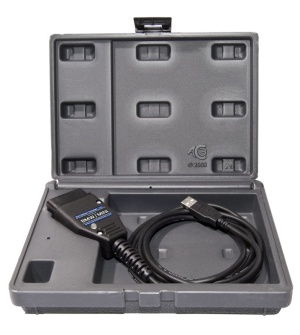
Glad I could help. Yes try to find a code reader not made in Chyna. This forum has some good threads about code readers and alternatives such as laptop software (ISTA) and an OBD2 dongle which seems to be the best route. See Bavarian Technic link below:
.
https://www.bavariantechnic.com/buyUC.aspx
.
Image hosted on: www.bavariantechnic.com
Tony B wrote
I can definitely feel stronger than normal "engine" braking.
The S65 is a high compression engine so there will be quite a bit of engine braking compared to a lower compression turbo engine.
Tony B wrote
My question relates to the charging strategy used by the alternator, as I wonder whether mine is not now charging correctly.

Excuse the long post.

Background: My E92 was at my dealers for nearly a month whilst they tried to track down a weird "mechanical/wirring" noise on right hand bends.

Their investigations ultimately involved disconnecting all the ancillaries in turn to try to find the source of the noise. So power steering, water pump, and alternator all got disconnected from their respective drives.

They tracked the noise down to something completely unrelated, fixed everything back together and all good....

But....

Ever since I got the car back the engine response on closing (but not fully closed) throttle seems different, and I wonder if the alternator is now doing a full charging process all of the time, rather than - from memory - only doing full effort charging once the throttle is completely closed.

Now, it feels like I am getting much more engine braking before getting to fully closed throttle.

I have checked battery voltage whilst running (using the Drive Analyser dongle and app) and this is pretty much constant, regardless of circumstances at 14.5 to 14.7 volts, accelerating, constant speed, decelerating part throttle and fully closed throttle.

If Efficient Dynamics charging works the way I think it should, the full fat charge on a fully charged battery, should only be delivered on a closed throttle. And charging voltage should be restricted when accelerating hard, to improve performance.

Another symptom is that fuel consumption has increased by 5-10%.

Whilst I can reluctantly live with the extra consumption, I am concerned that continuously fully charging the AGM battery might not be good for its health, and possibly the alternator, too.

Anyone got any thoughts on this?

Could the re-assembly process following the ancillary disconnection have missed a battery IBS recoding step?

TIA!
The Carly app incl alternator live data. I'm using that quite a bit to follow output current when replacing batteries and trying to understand what is happening. (complementing with Protool as no one seems to read all sensors...).
Doing this I have confirmed the IGR charge strategy described in the document posted further down. Fully charged (with trickle overnight) = the alternator puts out close to nothing (12 or just over volt) resulting in tiny current and everything is fed by the battery, till it goes down to whatever 70-80% and the alternator kicks in again.
This was at least true with a new battery, after driving a year I noticed even after trickle charge the charge voltage was up at 14v and more again. For the fun of it I reset (with Protool, I don't trust Carly on that) again the other day and the charge voltage went immediately down.

Regarding the increased engine braking I find it hard to see that being the alternator. I have never felt a difference when measuring high current coming off the pedal. Also playing with the numbers, say you output 100 amps (which I never seen, 50-60A has been max in my case with full fan etc), would equal 2 hourses or so (100x14 = 1.4kW => 1.9HP + loss). Not sure how to translate that into brake power but 2HP wouldn't add much to accelerate 1.7ton car so can't see it doing plenty when deceleration.

14.5-14.7v constantly is high. AGM has a max charge voltage of 14.7. I've seen these levels during Winter when the temp sensor clearly does its job and force the DME/alternator to increase voltage.

Ps. As for the increased fuel consumption, find it hard to believe the alternator can make that much difference again based on the max "power" it can drain. As Redd says, the "saving" is more marketing than facts in my book.

Ps. Ps. And believe our alternator is speced around 2kW (for start when it delivers towards 200A for a second). Which would equal to around 3HP inkl losses.
Helmsman wrote
This was at least true with a new battery, after driving a year I noticed even after trickle charge the charge voltage was up at 14v and more again. For the fun of it I reset (with Protool, I don't trust Carly on that) again the other day and the charge voltage went immediately down.
Thank you. This proves my suspicions that new batt registration is nothing more than an emissions cheat code.
Redd wrote
After about the first couple months of a new battery registration, the alt pretty much charges all the time. I have a voltage reading on my HUD and I watch it closely. I pretty much suspect the new batt registration is nothing more than a fuel efficiency cheat in disguise, but anyway...

I don't think an alt alone can cause a 5-10% difference in fuel efficiency. Did u scan for codes?
Thanks in return Eric for confirmation on that bit.
Tad confused over the "full" charge after a few k miles only, battery should be in good shape still (i.e. no need really to "over compensate" charging). Maybe it is a trick to claim "efficience" according to spec when leaving fab, just to let algo change to proper charge shortly after...:D. System seems weird though.
DrFerry wrote
Something definitely sounds wrong. Did the dealer lower the tire pressures? Because 5-10% reduction in gas mileage is significant and probably not just caused by the alternator. The S65 alternator also has a centrifugal clutch inside the belt driven pulley which can drag. You mentioned a noise from under the hood prior to going to the dealer? Please see the attached documentation on E9X M3 Power Management and Efficient Dynamics .pdfs.
.
.
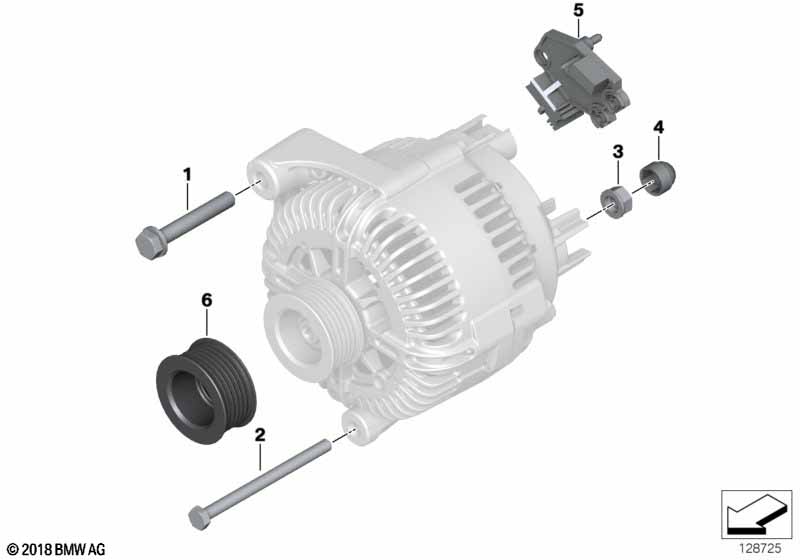
No. The S65 does not have this.


Normal pulley.
Image hosted on: www.fcpeuro.com

https://www.fcpeuro.com/products/bmw-alternator-180a-12317838656

https://www.fcpeuro.com/products/bmw-180-amp-alternator-valeo-12317837981
RocketyMan wrote
Seems like we've discussed this exact subject before here:
https://www.m3post.com/forums/showpost.php?p=30944584&postcount=5
.
The S65 used more than one OEM alternator parts supplier. Perhaps the Valeo part is different to the Bosch part.
.
The clutch is also mentioned in anom3's user avataranom3's M3Post DIY Alternator thread where the alternator clutch is mentioned (screen shot below):
https://www.m3post.com/forums/showthread.php?t=1180343
.
Here's the Bosch article with their YT link:
https://www.boschautoparts.com/en/w/how-it-works-looking-inside-of-an-alternator-clutch-pulley
.
Sorry for the confusion, but there seems to be opposing sources of information - especially the DIY thread.
Attached image
DrFerry wrote
Seems like we've discussed this exact subject before here:
https://www.m3post.com/forums/showpost.php?p=30942577&postcount=5
.
The S65 used more than one OME alternator parts supplier. Perhaps the Valeo part is different to the Bosch part.
.
The clutch is also mentioned in anom3's user avataranom3's M3Post DIY Alternator thread where the alternator clutch is mentioned (screen shot below):
https://www.m3post.com/forums/showthread.php?t=1180343
.
Here's the Bosch article with their YT link:
https://www.boschautoparts.com/en/w/how-it-works-looking-inside-of-an-alternator-clutch-pulley
.
Sorry for the confusion, but there seems to be opposing sources of information - especially the DIY thread.
Yes...this does ring a bell.

Even when searching the EURO spec S65, it still only has the solid pulley. Not saying that the pulley can't be switched. But from what OE alternators look like for the S65, they appear to be all solid pulleys.

It is possible to change out just the pulley with the P/N below.

https://www.ecstuning.com/b-genuine-bmw-parts/euro-pulley-no-longer-available/12317552352/
Image hosted on: assets.ecstuning.com


But this would be normally accompanied by e9x configurations for fuel economy, say a 325i...denoted by item #6.

https://www.realoem.com/bmw/enUS/showparts?id=KE51-EUR-08-2010-E92N-BMW-325i&diagId=12_1245

Image hosted on: www.realoem.com
DrFerry's user avatarDrFerry

Also, from the thread you quoted, it looks like that OP modified his alternator from stock. Which could very well be one that was equipped with suspect clutch-pulley.

Oh...and also, I can see this happening if someone were to change their alternator to a "reman" unit that got mixed in from another car, say for example.
Helmsman wrote
The Carly app incl alternator live data. I'm using that quite a bit to follow output current when replacing batteries and trying to understand what is happening. (complementing with Protool as no one seems to read all sensors...).
Doing this I have confirmed the IGR charge strategy described in the document posted further down. Fully charged (with trickle overnight) = the alternator puts out close to nothing (12 or just over volt) resulting in tiny current and everything is fed by the battery, till it goes down to whatever 70-80% and the alternator kicks in again.
This was at least true with a new battery, after driving a year I noticed even after trickle charge the charge voltage was up at 14v and more again. For the fun of it I reset (with Protool, I don't trust Carly on that) again the other day and the charge voltage went immediately down.

Regarding the increased engine braking I find it hard to see that being the alternator. I have never felt a difference when measuring high current coming off the pedal. Also playing with the numbers, say you output 100 amps (which I never seen, 50-60A has been max in my case with full fan etc), would equal 2 hourses or so (100x14 = 1.4kW => 1.9HP + loss). Not sure how to translate that into brake power but 2HP wouldn't add much to accelerate 1.7ton car so can't see it doing plenty when deceleration.

14.5-14.7v constantly is high. AGM has a max charge voltage of 14.7. I've seen these levels during Winter when the temp sensor clearly does its job and force the DME/alternator to increase voltage.

Ps. As for the increased fuel consumption, find it hard to believe the alternator can make that much difference again based on the max "power" it can drain. As Redd says, the "saving" is more marketing than facts in my book.

Ps. Ps. And believe our alternator is speced around 2kW (for start when it delivers towards 200A for a second). Which would equal to around 3HP inkl losses.
I have not got much further with my investigation, but have ordered the Carista OBD reader and app now. I was going to get the Carly one but there are so many negative reviews on Amazon and elsewhere I decided to swerve this.

Regarding actual hp drain by the alternator, yes 3hp does seem trivial but according to my BMW Drive analyser app the engine is developing less than 20hp when on a marginally closed throttle at 2 or 3k rpm, so that 3hp does become much more significant.

Having checked the alternator pulley I can see that this has been replaced, along with the belt, but the other pulleys look to be original.