Assimilator1 wroteAre you asking about the car's 1200 mile break-in service, or do you mean the first oil change after a bearing job? For either one, you will see high particulate counts and contaminants from assembly. The one I had done on my Corvette as part of the 500-mile break-in service had high levels of iron, copper, and silicon, for example. The numbers fell sharply on the next oil change, and then stabilized on the third one.e92zero, leo95se, MTROIS or anyone whose done regular oil analysis, have you got oil reports from the 1st service? (including running in service would be ideal).
Old post I know, but are the oil reports you mention shown in this thread? (or somewhere?)
497.3KVIEWS
1.2KREPLIES
181APPRECIATES
08-12-2026LAST POST
Yea all oil changes ideally, appreciate that the 1st one will show high metals etc.
Would like to see trends from the start (from new engine &/or new bearings).
One theory (for some S65s at least), is that the wear occurs early on in the engine's life (mainly thinking for OEM bearings). Hence I would like to see the whole history, but I appreciate that very few people will .
.
Would like to see trends from the start (from new engine &/or new bearings).
One theory (for some S65s at least), is that the wear occurs early on in the engine's life (mainly thinking for OEM bearings). Hence I would like to see the whole history, but I appreciate that very few people will
.
Assimilator1 wroteThis is certainly in line with Glyco's statement about bearings with tight clearances, and with what we see from low-mileage rod bearings.One theory (for some S65s at least), is that the wear occurs early on in the engine's life (mainly thinking for OEM bearings). Hence I would like to see the whole history, but I appreciate that very few people will
I've also been wondering if this explains the slight Al bump in my second UOA that went away in subsequent analyses (i.e. that was from the new 702/703 bearings getting that initial smear).
Assimilator1 wroteThe first analysis after internal engine work (or a new engine) is basically a throw-away. Even the second one is only of marginal use to simply validate that most of those break-in contaminants have been removed by changing the oil & filter.Yea all oil changes ideally, appreciate that the 1st one will show high metals etc.
Would like to see trends from the start (from new engine &/or new bearings).
One theory (for some S65s at least), is that the wear occurs early on in the engine's life (mainly thinking for OEM bearings). Hence I would like to see the whole history, but I appreciate that very few people will
The whole point of a UOA is to establish a baseline and then monitor deviations from that.
Here's just an example. It's not an S65, it's a Chevy LT1 (Corvette/Camaro/truck motor). Same concepts apply though.
Yea, but if the very 1st & 2nd oil change shows very high lead levels that would show a little support to the early wear idea (your Chevy's 1st oil report doesn't, it's surprisingly low!  ).
).
).
Assimilator1 wroteMaybe, but my interest would be more around what level it stabilizes to by the 3rd or even 4th oil change...or even how long it takes to stabilize.Yea, but if the very 1st & 2nd oil change shows very high lead levels that would show a little support to the early wear idea (your Chevy's 1st oil report doesn't, it's surprisingly low!
UOA isn't the end-all, be-all of engine health. Even Blackstone and Terry Dyson will tell you that.
Yea I know that, I take it you didn't notice the link in my sig then?
I'm more interested in the 1st couple of oil changes
I'm more interested in the 1st couple of oil changes
Just got the oil report back for my 160,000km (100,000 miles) '08. The oil had 10,000 miles on it. Very high Lead and Copper. I use regular 94 octane gas.

It looks like I'm overdue for new bearings.....
It looks like I'm overdue for new bearings.....
ekfc63 wroteYeah better change them soon...Just got the oil report back for my 160,000km (100,000 miles) '08. The oil had 10,000 miles on it. Very high Lead and Copper. I use regular 94 octane gas.
It looks like I'm overdue for new bearings.....
Just got oil analysis back for my new-to-me 2008 M3. AFAIK, these are original bearings. Given the engine has 120k miles on it, an oil analysis is the first thing I did. Lead looks especially high and Silicon reads high as well. Only put ~600 miles on the car before oil analysis, only 93 octane and PO did not track car so no leaded fuel likely on this oil. Looks like I may start looking for a reputable shop to replace bearings... Thoughts?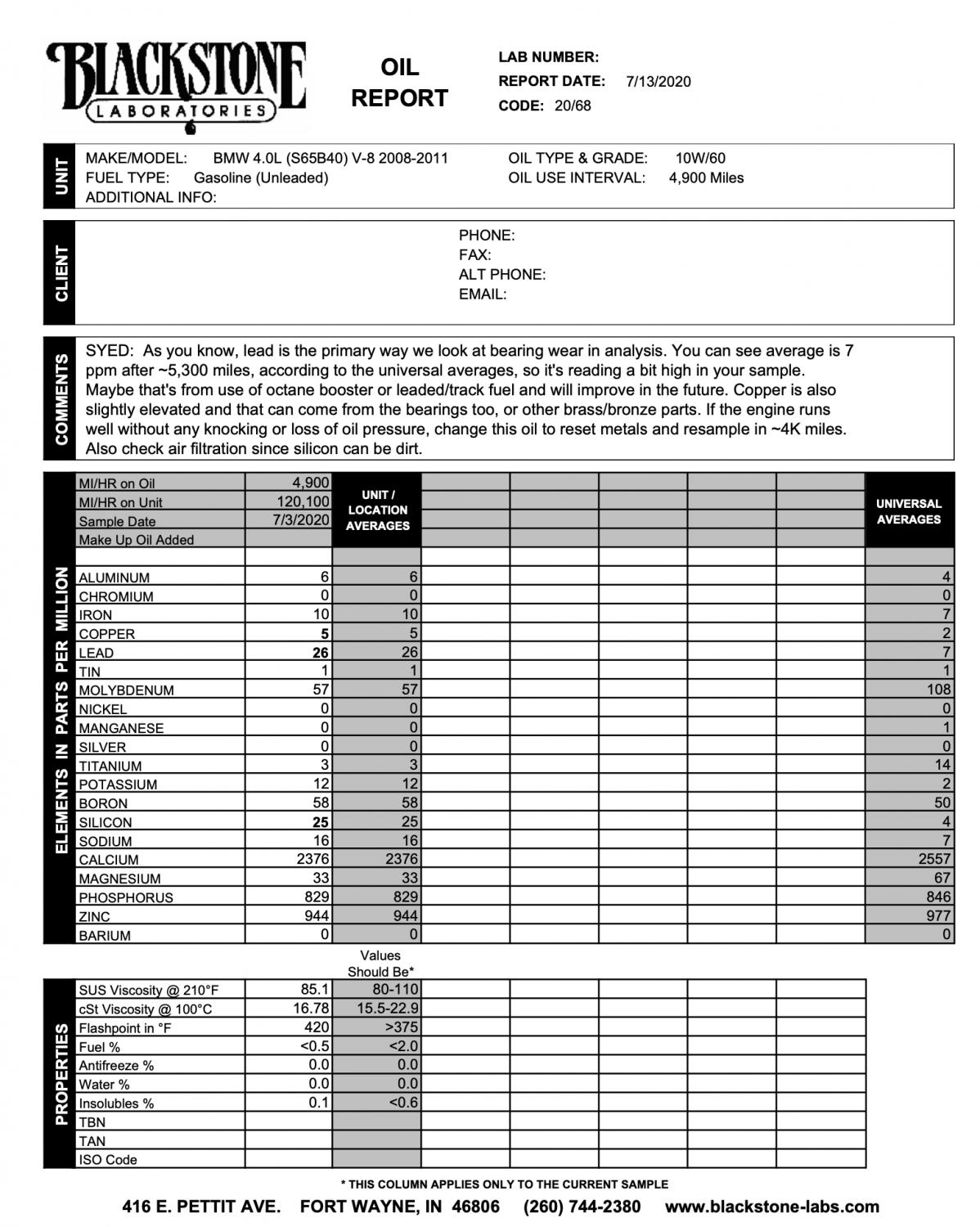
scherlock wroteYep, get it done ASAP. That’d be a good call even if the report came back clean.Just got oil analysis back for my new-to-me 2008 M3. AFAIK, these are original bearings. Given the engine has 120k miles on it, an oil analysis is the first thing I did. Lead looks especially high and Silicon reads high as well. Only put ~600 miles on the car before oil analysis, only 93 octane and PO did not track car so no leaded fuel likely on this oil. Looks like I may start looking for a reputable shop to replace bearings... Thoughts?
Also, have the intake and vacuum system checked for leaks, and make sure there’s a decent air filter in there.
Yea, I hope both you guys have done your bearings by now?
That pb level is likely trouble!
That pb level is likely trouble!
Previous report here. Now at 110107 miles on the engine. 4931 miles on the oil in this sample.
Consumption has jumped to ~1 L / 1500 mi, which is roughly where it was when I bought the car with leaking valve cover gaskets. I fixed those (which cut consumption in half) and haven't noticed other leaks, though I have noticed what look like traces of oil on some of my spark plugs (pic attached). Wouldn't mind some feedback on that.
I replaced the oil separators preventatively when I changed the oil. Was going to do the PCV valve as well but chickened out. Had a BMW crankcase pressure test done recently and was right in the middle of the normal range, though that was only at idle.
Fuel dilution was originally reported at 2.1%. Seemed high, so I asked them to re-run that test to verify. New number is 1.6%. Hoping that's the real one.
Wear Metals
Iron -7
Chromium - 0
Nickel - 0
Aluminum - 3
Copper - 2
Lead - 0
Tin - 1
Cadmium - 0
Silver - 0
Vanadium - 0
Particle Quantifier (PQ) Index - 12
Contaminant Metals
Silicon - 7
Sodium - 4
Potassium - 1
Multi-Source Metals
Titanium - 0
Molybdenum - 52
Antimony - 1
Manganese - 0
Lithium - 0
Boron - 53
Additive Metals
Magnesium - 23
Calcium - 2458
Barium - 0
Phosphorus - 824
Zinc - 935
Other Contaminants
Fuel Dilution - 1.6% (GC)
Soot - <0.1% by vol.
Water - <0.1% by vol. (FTIR)
Fluid Properties
Viscosity @ 100º C - 18.3 cSt
TBN - 4.44
Oxidation - 12
Nitration - 11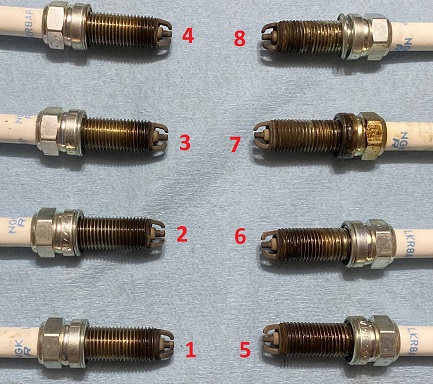
Consumption has jumped to ~1 L / 1500 mi, which is roughly where it was when I bought the car with leaking valve cover gaskets. I fixed those (which cut consumption in half) and haven't noticed other leaks, though I have noticed what look like traces of oil on some of my spark plugs (pic attached). Wouldn't mind some feedback on that.
I replaced the oil separators preventatively when I changed the oil. Was going to do the PCV valve as well but chickened out. Had a BMW crankcase pressure test done recently and was right in the middle of the normal range, though that was only at idle.
Fuel dilution was originally reported at 2.1%. Seemed high, so I asked them to re-run that test to verify. New number is 1.6%. Hoping that's the real one.
Wear Metals
Iron -7
Chromium - 0
Nickel - 0
Aluminum - 3
Copper - 2
Lead - 0
Tin - 1
Cadmium - 0
Silver - 0
Vanadium - 0
Particle Quantifier (PQ) Index - 12
Contaminant Metals
Silicon - 7
Sodium - 4
Potassium - 1
Multi-Source Metals
Titanium - 0
Molybdenum - 52
Antimony - 1
Manganese - 0
Lithium - 0
Boron - 53
Additive Metals
Magnesium - 23
Calcium - 2458
Barium - 0
Phosphorus - 824
Zinc - 935
Other Contaminants
Fuel Dilution - 1.6% (GC)
Soot - <0.1% by vol.
Water - <0.1% by vol. (FTIR)
Fluid Properties
Viscosity @ 100º C - 18.3 cSt
TBN - 4.44
Oxidation - 12
Nitration - 11
kcdedric wroteFollow-up report after 937 miles.Oil change after 650 miles on new BE bearings. Oil is Castrol 10W-60.
kcdedric wroteinteresting. Mine report is similar to yours.. some copper but no lead. I am very curious as wellFollow-up report after 937 miles.
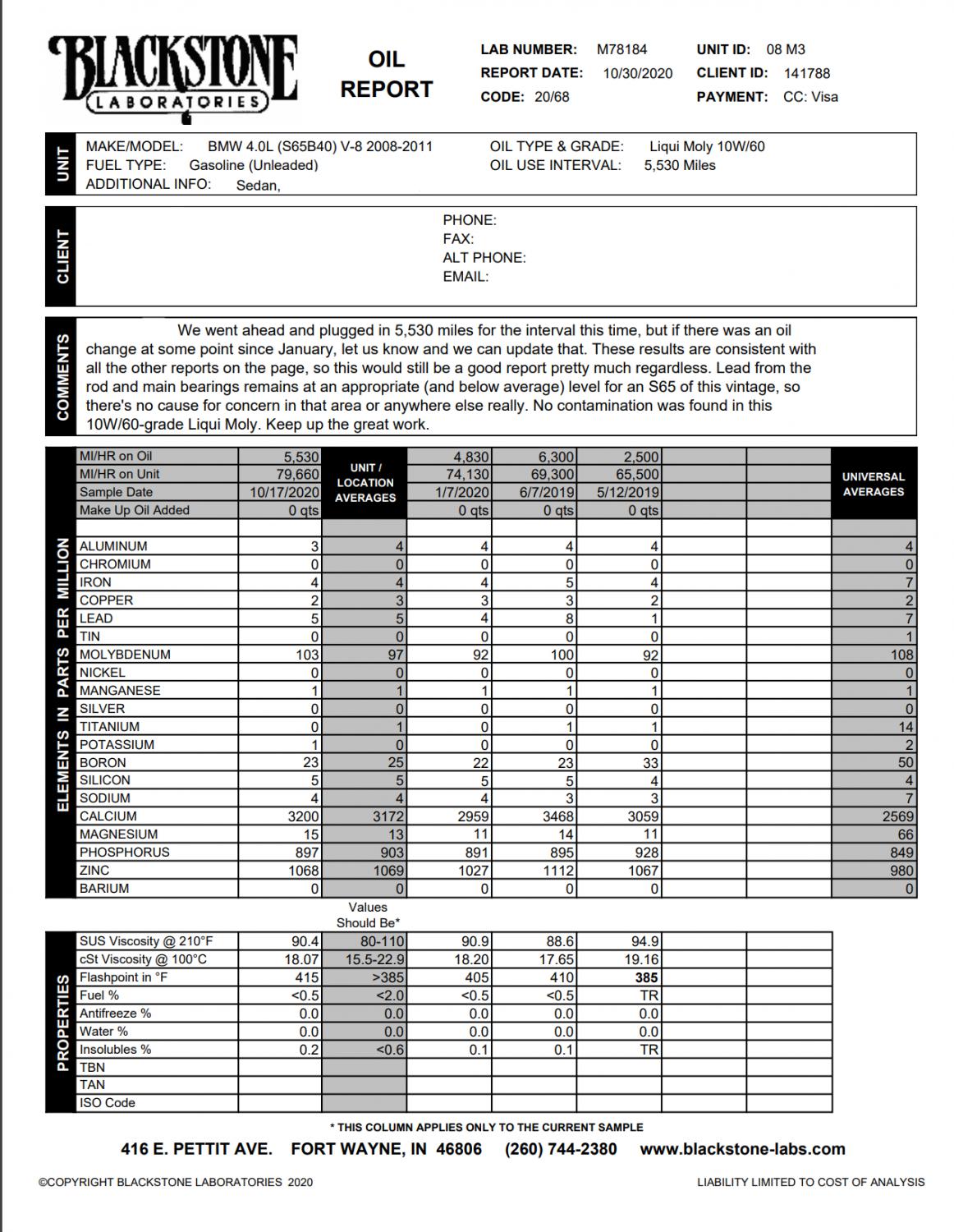
Here's my first Blackstone Report.
2008 with just over 60,000 miles now.
Original rod bearings.
The car was parked for 4 years before I bought it in August of 2018, but didn't get it drivable until the following November.
Bought it from a friend who is the original owner.
It had just over 42,000 miles when I bought it.
Original owner never tracked, always warmed up, but not babied.
Has had a G-Power blower since the 6000 mile mark, so that's 54,000 miles with the blower.
The car was well maintained and was on a yearly oil change schedule at the local BMW dealership.
When I bought it, I switched it from the oil (TWS 10w60) that the dealership was using, to LiquiMoly 10w60 on a recommendation from a local BMW specialty shop.
I change the oil myself at 5000ish miles, but more often if there are track days involved.
I always let the idle calm down after starting it, usually sit in the driveway for a few minutes, never over 3000rpm until fully warm, always drive in M mode (Power/EDC comfort/DSC off).
California car, so 91 octane Chevron, sometimes Shell.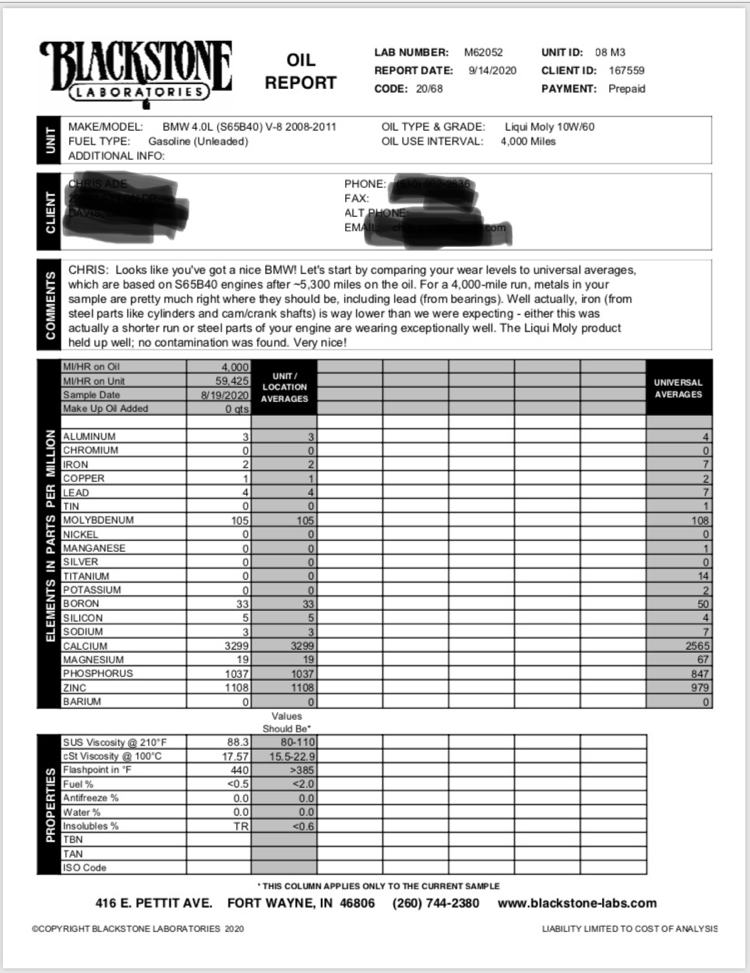
2008 with just over 60,000 miles now.
Original rod bearings.
The car was parked for 4 years before I bought it in August of 2018, but didn't get it drivable until the following November.
Bought it from a friend who is the original owner.
It had just over 42,000 miles when I bought it.
Original owner never tracked, always warmed up, but not babied.
Has had a G-Power blower since the 6000 mile mark, so that's 54,000 miles with the blower.
The car was well maintained and was on a yearly oil change schedule at the local BMW dealership.
When I bought it, I switched it from the oil (TWS 10w60) that the dealership was using, to LiquiMoly 10w60 on a recommendation from a local BMW specialty shop.
I change the oil myself at 5000ish miles, but more often if there are track days involved.
I always let the idle calm down after starting it, usually sit in the driveway for a few minutes, never over 3000rpm until fully warm, always drive in M mode (Power/EDC comfort/DSC off).
California car, so 91 octane Chevron, sometimes Shell.
For a non turbo engine, and unless it's just been tracked, or hard road driven, I've never seen the point of a cool down period. Seems unnecessary, please enlighten me.
IamFODI wrotePlug tips look good to me, brownish colour, although the photo is a little distant.Previous report here. Now at 110107 miles on the engine. 4931 miles on the oil in this sample.
Consumption has jumped to ~1 L / 1500 mi, which is roughly where it was when I bought the car with leaking valve cover gaskets. I fixed those (which cut consumption in half) and haven't noticed other leaks, though I have noticed what look like traces of oil on some of my spark plugs (pic attached). Wouldn't mind some feedback on that.
I replaced the oil separators preventatively when I changed the oil. Was going to do the PCV valve as well but chickened out. Had a BMW crankcase pressure test done recently and was right in the middle of the normal range, though that was only at idle.
Fuel dilution was originally reported at 2.1%. Seemed high, so I asked them to re-run that test to verify. New number is 1.6%. Hoping that's the real one.
Wear Metals
Iron -7
Chromium - 0
Nickel - 0
Aluminum - 3
Copper - 2
Lead - 0
Tin - 1
Cadmium - 0
Silver - 0
Vanadium - 0
Particle Quantifier (PQ) Index - 12
Contaminant Metals
Silicon - 7
Sodium - 4
Potassium - 1
Multi-Source Metals
Titanium - 0
Molybdenum - 52
Antimony - 1
Manganese - 0
Lithium - 0
Boron - 53
Additive Metals
Magnesium - 23
Calcium - 2458
Barium - 0
Phosphorus - 824
Zinc - 935
Other Contaminants
Fuel Dilution - 1.6% (GC)
Soot - <0.1% by vol.
Water - <0.1% by vol. (FTIR)
Fluid Properties
Viscosity @ 100º C - 18.3 cSt
TBN - 4.44
Oxidation - 12
Nitration - 11
Hi, I got my oil report showing increasing copper in ppm every test. Rod bearings was replaced with BE bearings and OEM bolts at 70,000 mileage on motor and now is 106,000. Just only 35,000 on BE Bearings. I hope to get some thoughts from expert here. To my understanding, that BE Bearings are made by multiple layers, Clevite TriArmor Coating (outer), Babbitt Alloy (center) and the last layer Lead-Copper Alloy. Is it showing the rod bearings already worn to copper layer and should I worry about it? What other parts in the motor would cause this increasing copper? Any inputs and advice will be much appreciated. Thanks in advance.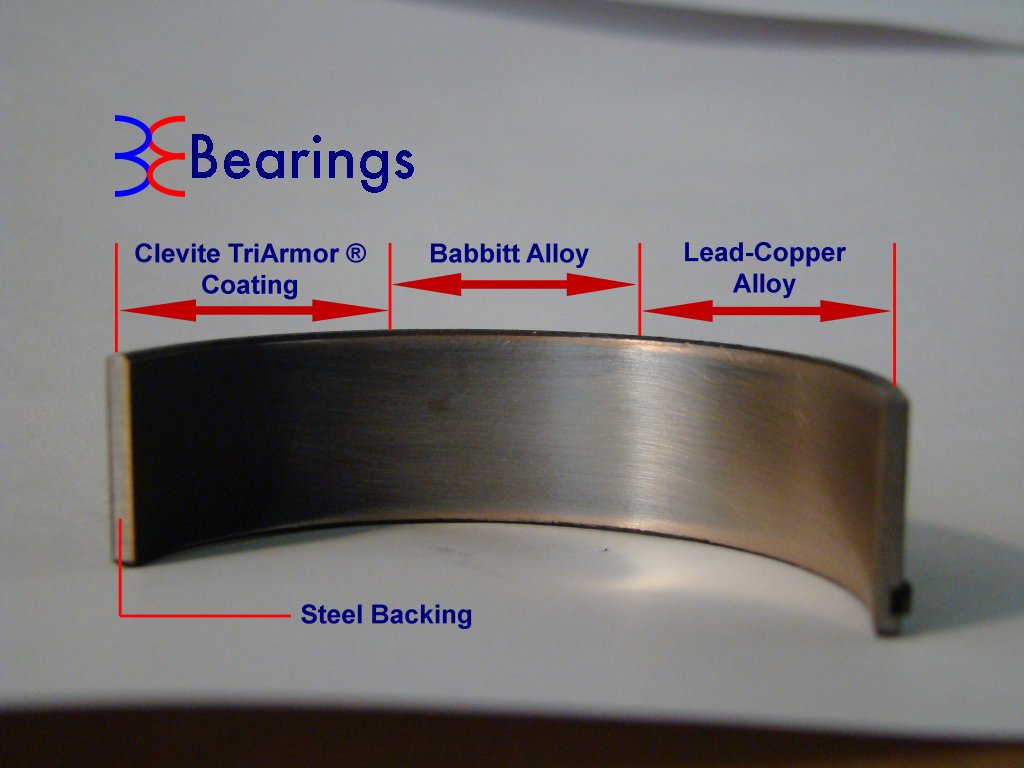
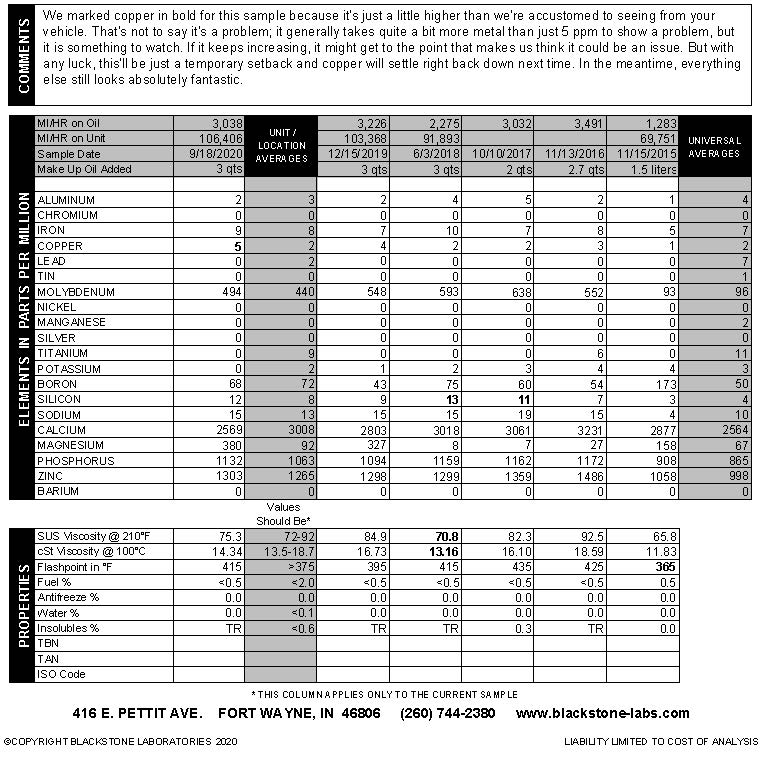
It would have to wear through the lead layer 1st to get to the copper in the rod bearings. [edit] Unless the lead had been worn through prior to the oil reports.
Your lead readings are zero so it can't be from them. Not sure where the copper is coming from really, maybe a bronze bush(es) wearing somewhere? Can't think off hand what would have them....
Ask them where they think it could come from.
Your lead readings are zero so it can't be from them. Not sure where the copper is coming from really, maybe a bronze bush(es) wearing somewhere? Can't think off hand what would have them....
Ask them where they think it could come from.
ASW338 wroteLikely your main bearings which were already worn outHi, I got my oil report showing increasing copper in ppm every test. Rod bearings was replaced with BE bearings and OEM bolts at 70,000 mileage on motor and now is 106,000. Just only 35,000 on BE Bearings. I hope to get some thoughts from expert here. To my understanding, that BE Bearings are made by multiple layers, Clevite TriArmor Coating (outer), Babbitt Alloy (center) and the last layer Lead-Copper Alloy. Is it showing the rod bearings already worn to copper layer and should I worry about it? What other parts in the motor would cause this increasing copper? Any inputs and advice will be much appreciated. Thanks in advance.

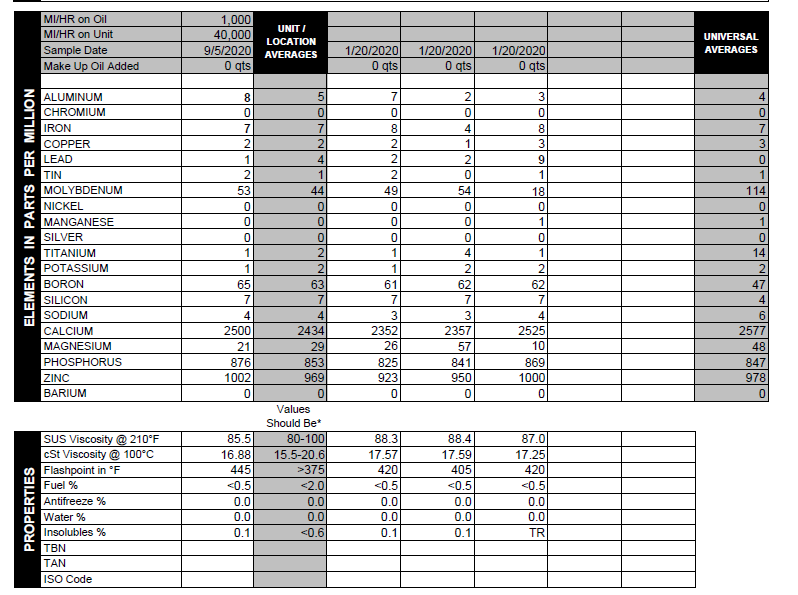
Thoughts? Aluminum/Tin bearings. 1000km, all track usage, from the latest sample. Car is only track driven. ~45k KM on the motor.
Blackstone suggested to continue oil sample intervals of 1000km to track potential bearing wear. As it stands now I think the bearings are holding up good based on the report and how the samples have been trending.
Opinions??
Blackstone suggested to continue oil sample intervals of 1000km to track potential bearing wear. As it stands now I think the bearings are holding up good based on the report and how the samples have been trending.
Opinions??
4th sample 2008