

Assimilator1 wroteMy condolences if you ever ran into Maximum Bob on that forum.Yep, the 1 time I posted anything major to the UK M3 FB page about rod bearings, I had some dumb idiots say that showing copper is normal! Lmao, funny how they didn't reply when I posted a load of links to the bearing manufacturers talking about bearing construction.
Green-eggs
Great pics, thanks, I'll add that to my aftermarket good bearings list.
Btw, 1000hp!!??wow! Is that twin turbo'd?
(PS, I don't know why that smilie is called confused, it isn't that).
1.2MVIEWS
3.2KREPLIES
3.1KAPPRECIATES
06-01-2026LAST POST
Ah I was referring to Face Book, but yes I have run into him on the m3cutters forum, I've already argued with him, lol.
So how did that M3 make 1000hp?
So how did that M3 make 1000hp?
Assimilator1 wroteCat back and under drive pullySo how did that M3 make 1000hp?
2011 E92 M3 6MT, 30.6k miles, 2nd owner, bought the car with 23.4k, religiously warmed up in my ownership properly and never revved past 3000 RPM until proper warm up.
Replaced with BE Bearings and BE ARP Bolts. Replaced them for peace of mind and budgeted the bearing cost prior to buying the car. Had shop do spark plugs, oil pan gasket, new motor mounts and rear differential fluid change while getting bearings replaced.
If shop put bearings in correct spots back in the cushion, the left should be the Top and right side is the Lower.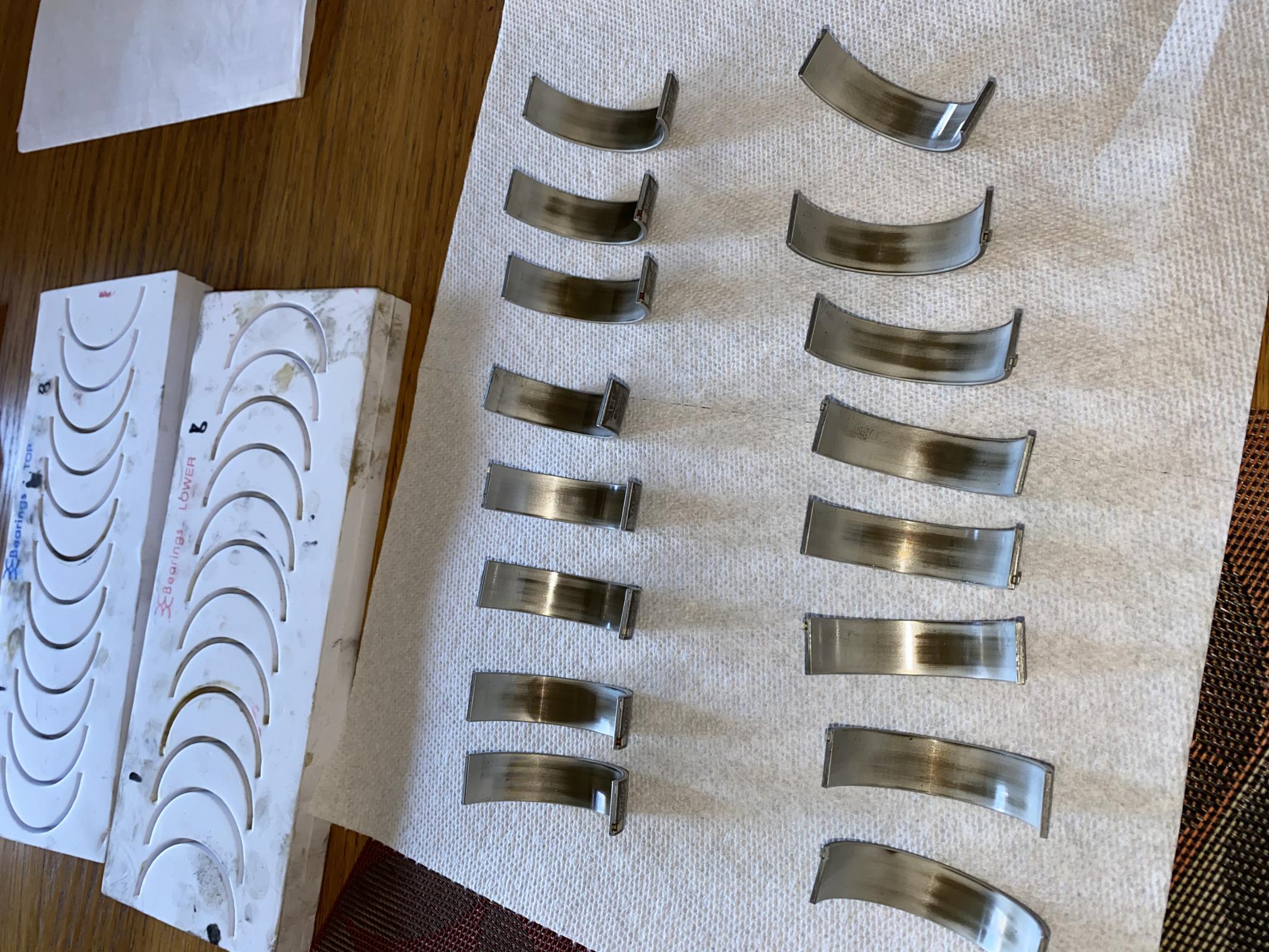
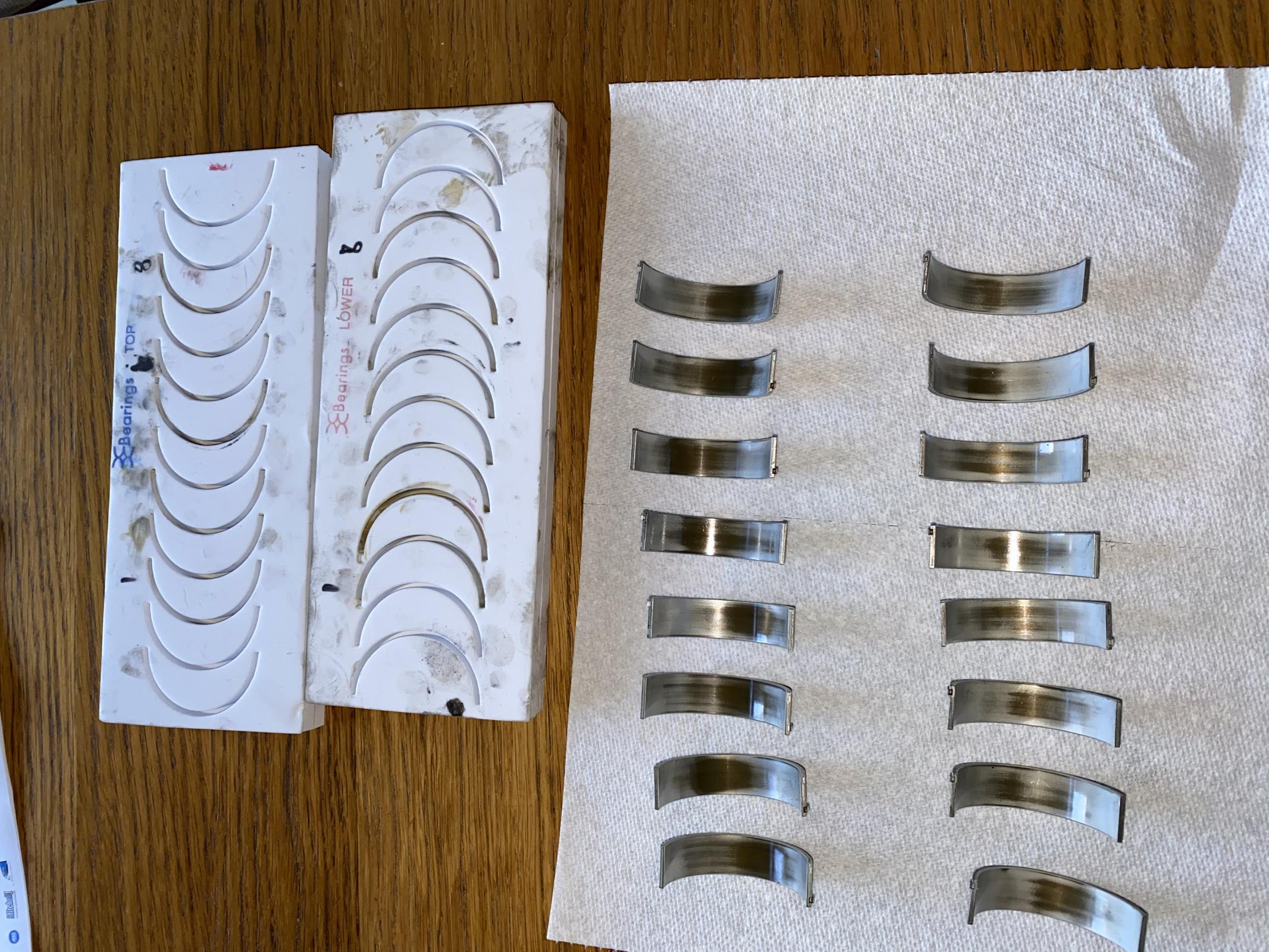
Replaced with BE Bearings and BE ARP Bolts. Replaced them for peace of mind and budgeted the bearing cost prior to buying the car. Had shop do spark plugs, oil pan gasket, new motor mounts and rear differential fluid change while getting bearings replaced.
If shop put bearings in correct spots back in the cushion, the left should be the Top and right side is the Lower.
About typical wear for S65 LCI bearings (neither great nor terrible), I take it none show copper?

Denny347 wroteCat back and under drive pulley
Here's mine. Taken out at 54k. Two owner car I've been religious about warmup but bought the car with 52k.
PO did a few track days with it.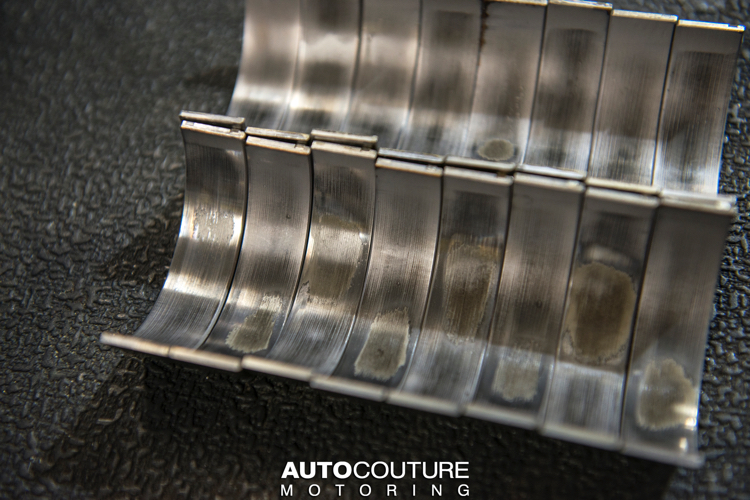
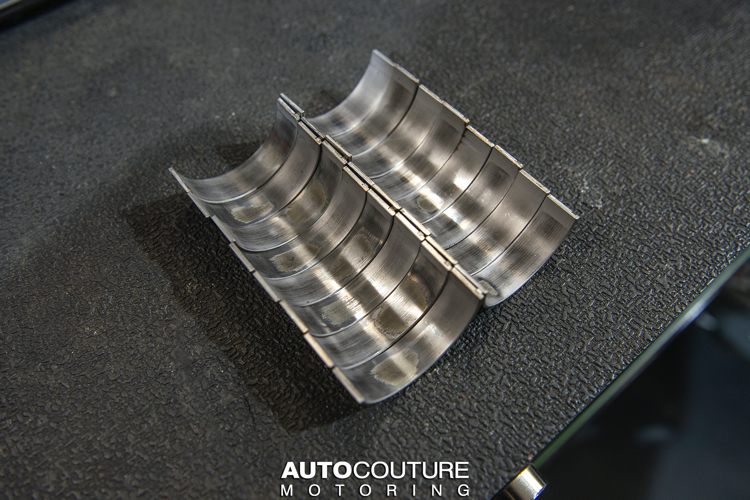
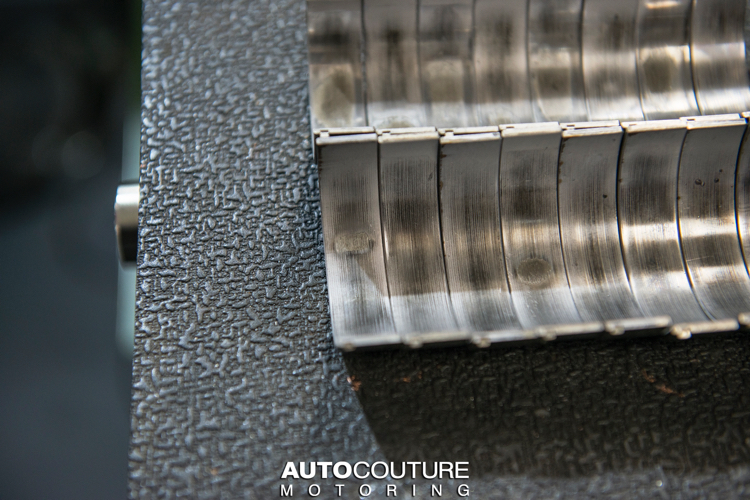
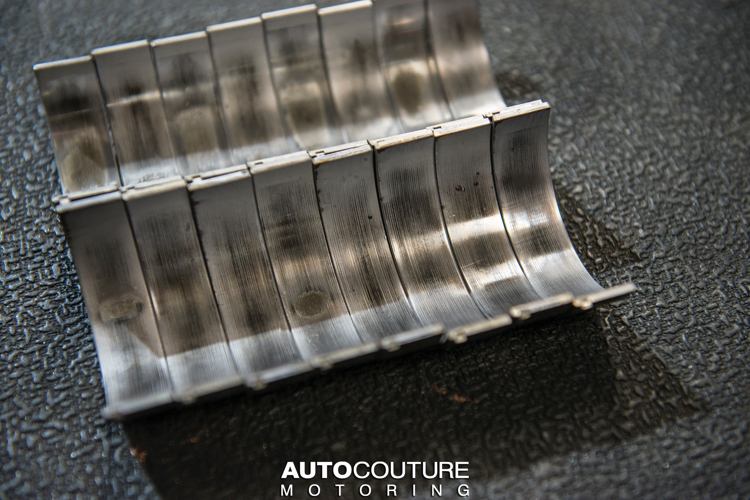
PO did a few track days with it.
2008 E92 6 Speed
65,000 miles
Replaced with BE bearings
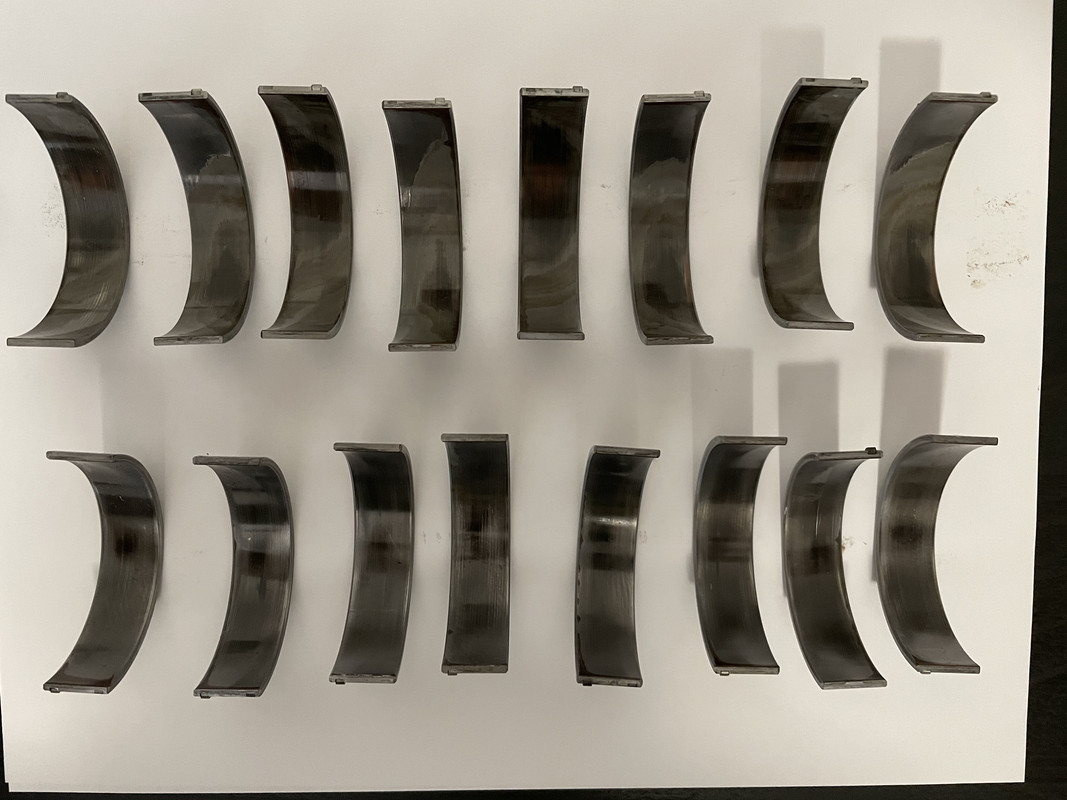
65,000 miles
Replaced with BE bearings
Brap///M wroteI know this happened once before, but were they replaced already? They seem much darker similar to the WPC/VAC coated bearings and you'd expect to see copper galore on an early car?2008 E92 6 Speed
65,000 miles
Replaced with BE bearings
Or is the white balance just playing mind tricks like it's a dress?
Cyberdemon wroteI'm the second owner of the car and always warmed up the engine properly. This is not my daily driver and it usually only comes out for mountain drives in NC or 1-2 HPDE days a year.I know this happened once before, but were they replaced already? They seem much darker similar to the WPC/VAC coated bearings and you'd expect to see copper galore on an early car?
Or is the white balance just playing mind tricks like it's a dress?
I bought the car with 40k miles and was told the bearings had not been replaced.
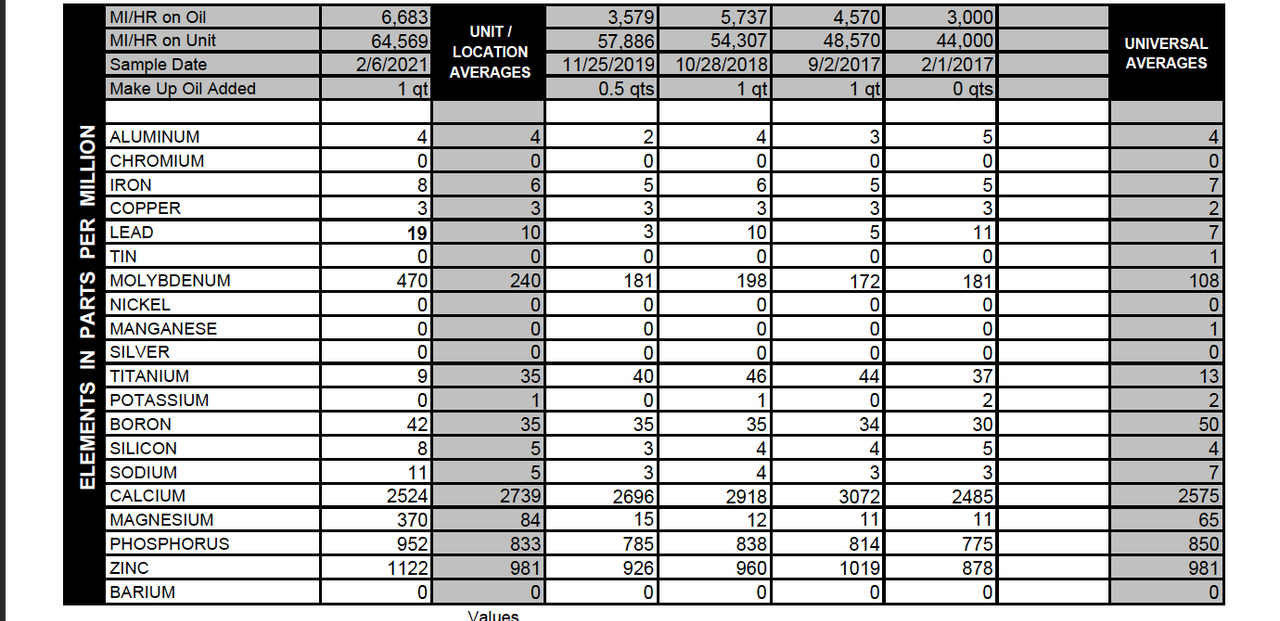
Oil has been Castrol 10w60, except the last 6,000 miles I tried out Redline 5w50. Lead in the Blackstone report shot from it's average to 19 ppm, so I had the bearings changed.
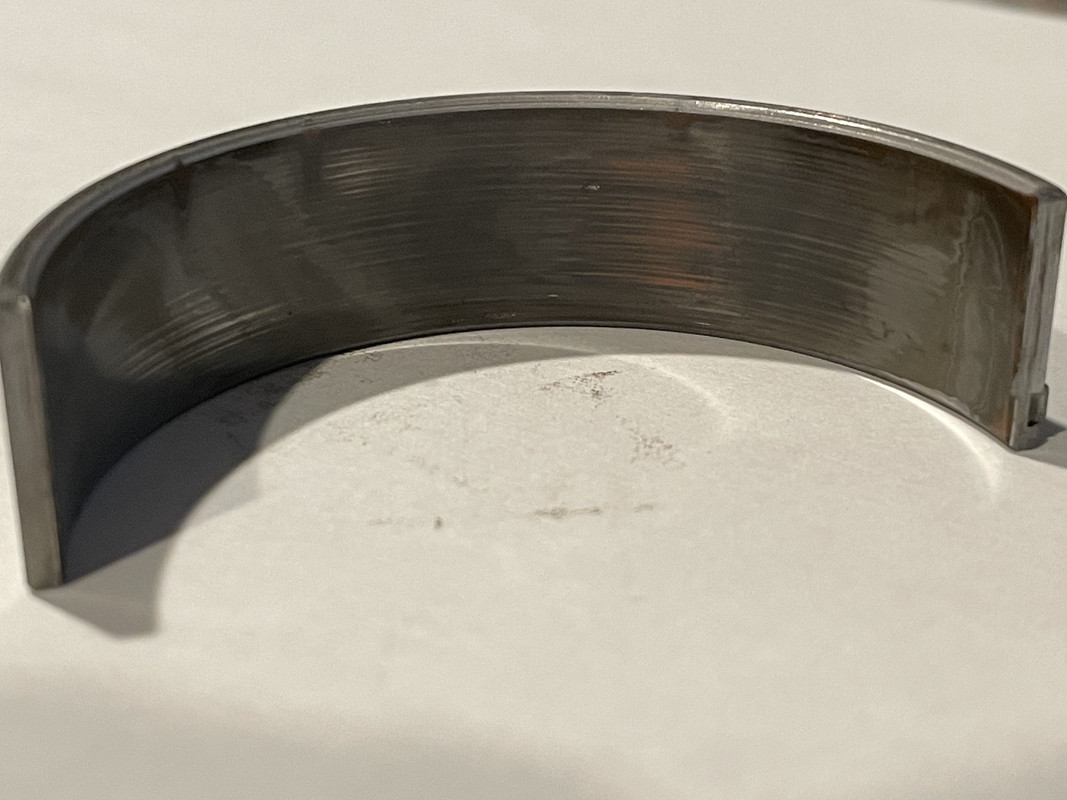
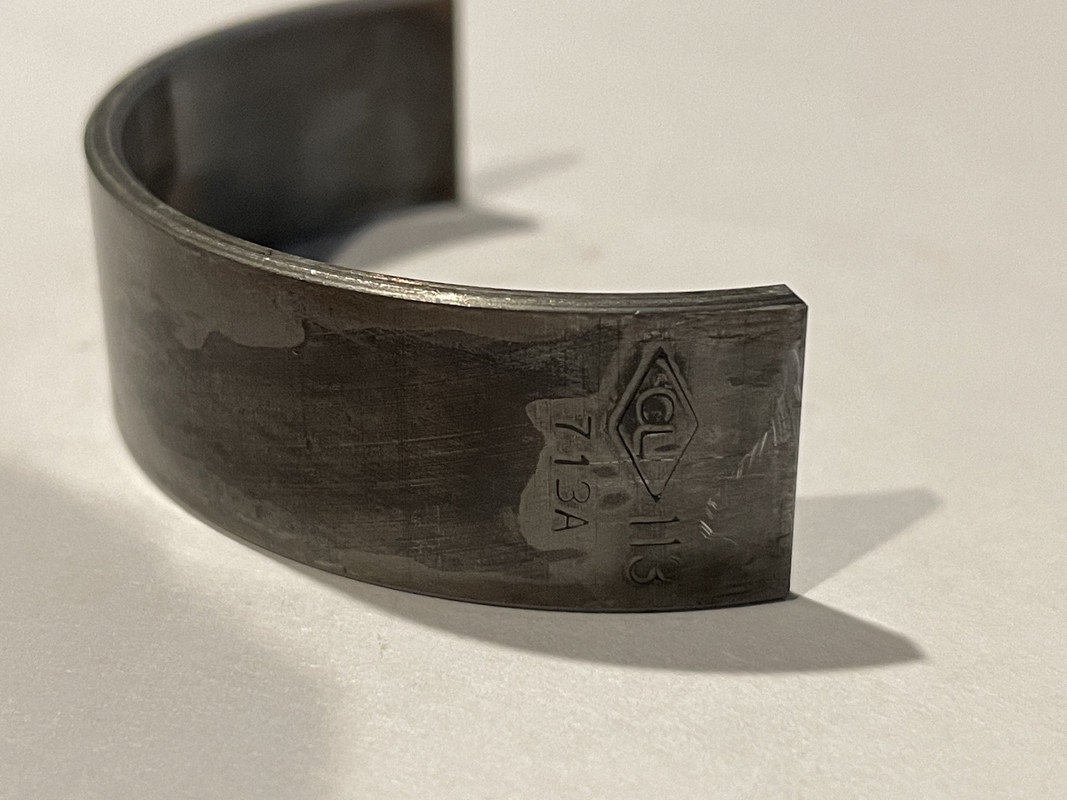
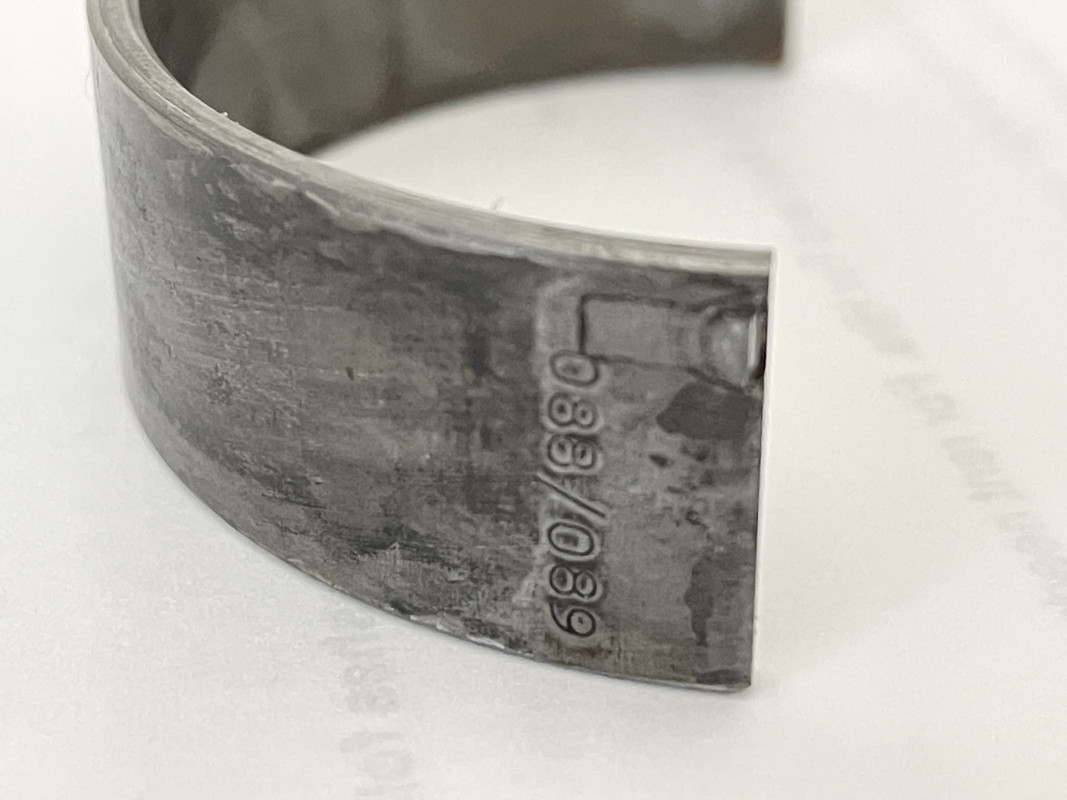
Heres a closeup of the top bearing in cylinder 1. You can see copper just starting to come through.
Bearings did not show as much wear as others and I could have gone longer before replacing in my opinion. But at least I can sleep better knowing they have been replaced.
Post referenced by Assimilator1 in S65 Oil reports collation - does oil analysis work for tracking bearing wear? 02-26-2020
Bearings did not show as much wear as others and I could have gone longer before replacing in my opinion.
Nah they were shot, not as bad as mine were, but showing copper is never right, the lead is meant to be their to protect the crank at starts and stops, and any debris that enters.
Good call on changing them anyway. OA worked for you (added your case to my sig thread).
Cyberdemon
It's the white sheet they were on which has made the photo (or shells at least) darker.
Btw, do you fancy doing a couple of little experiments on a couple of your old shells for us? (if you still have them?).
81000 '08 with oil report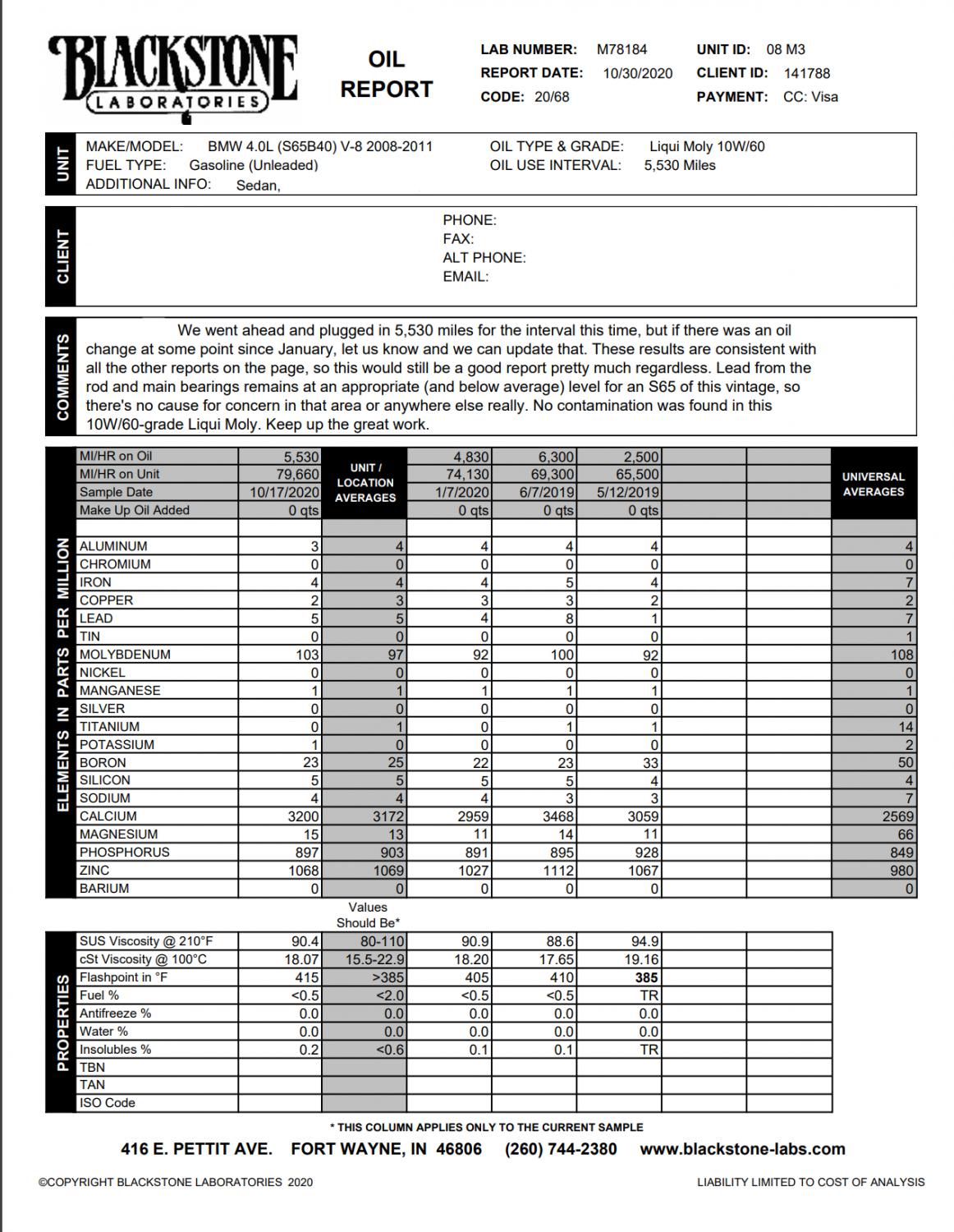
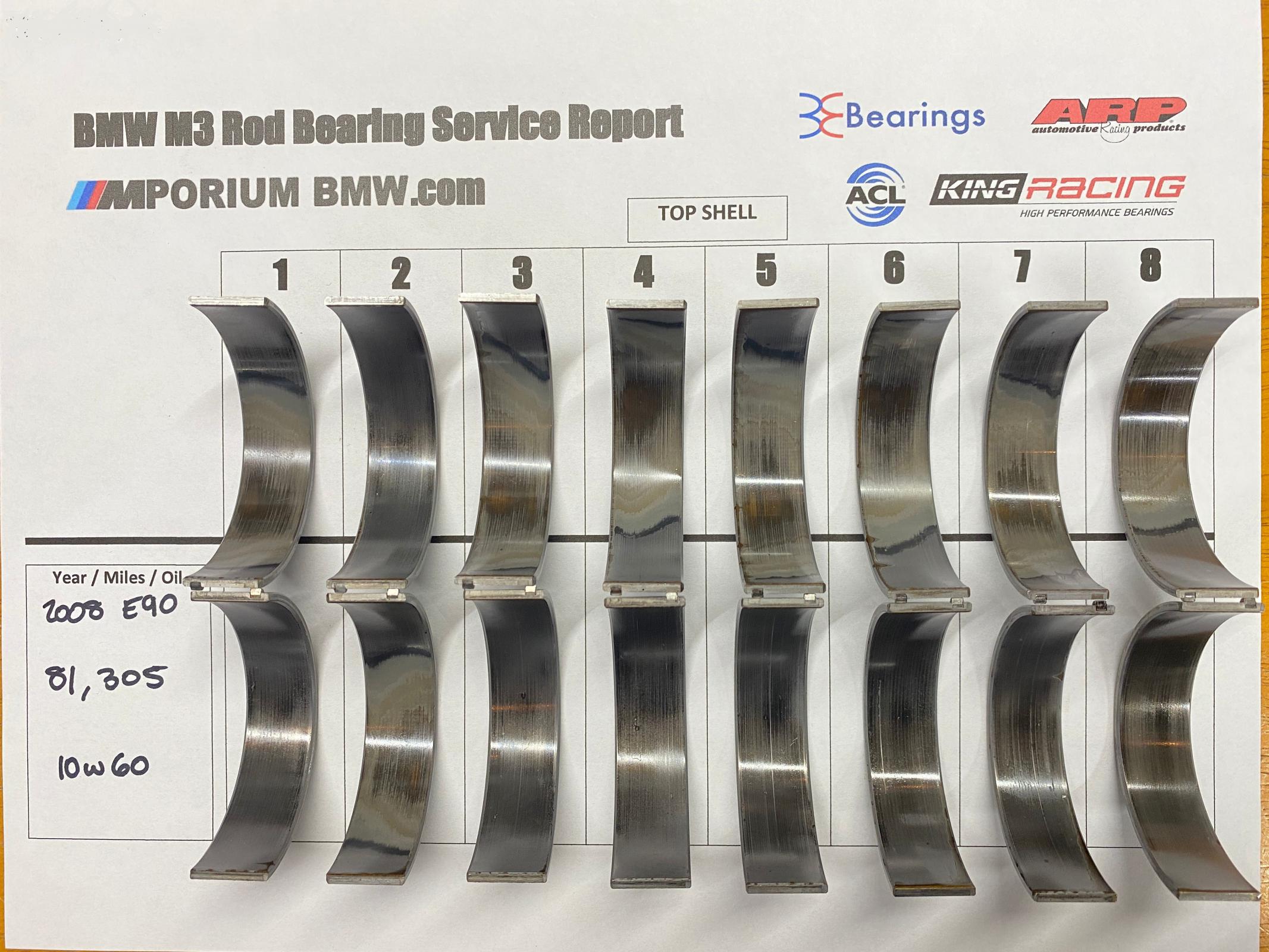
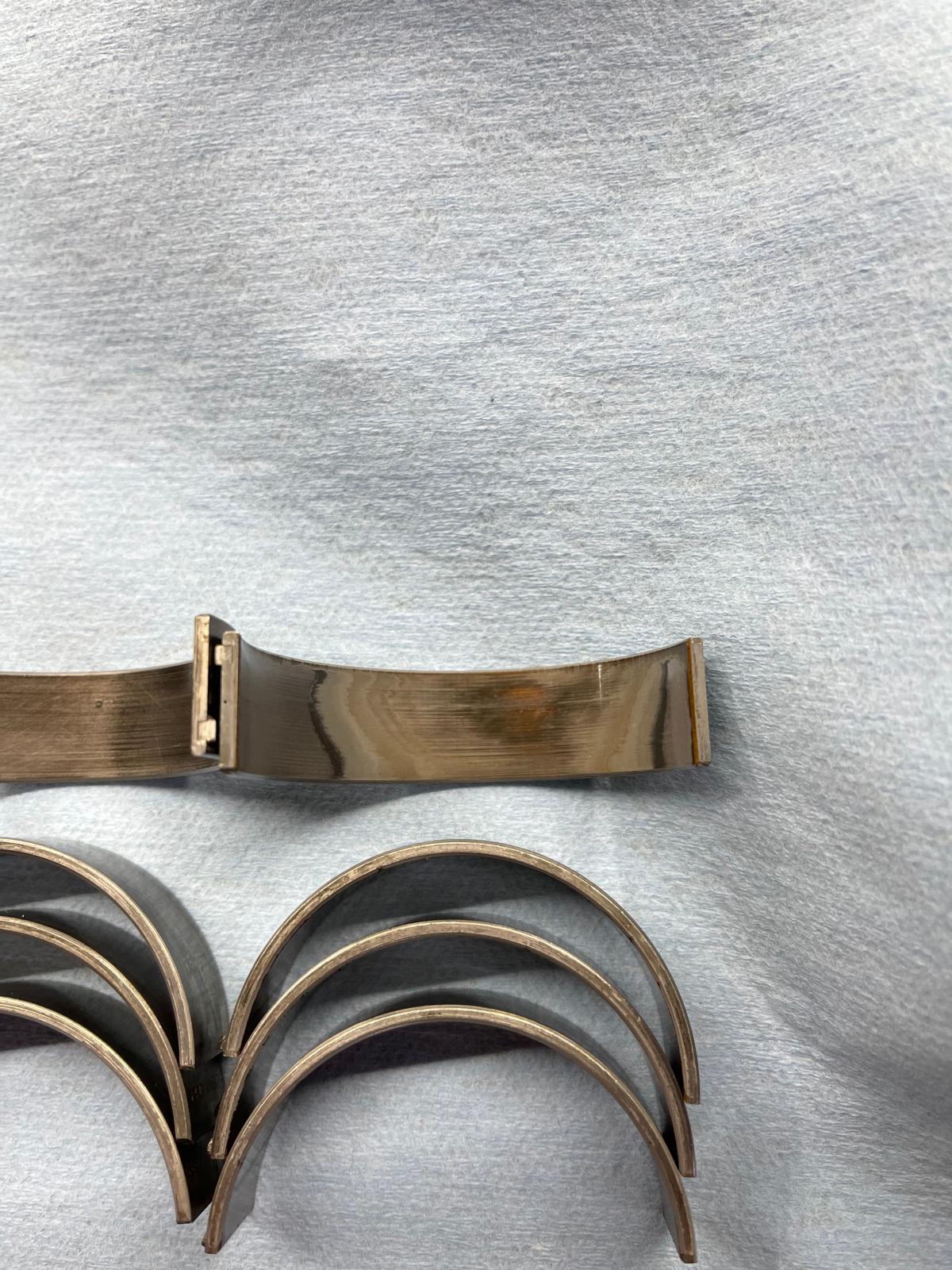
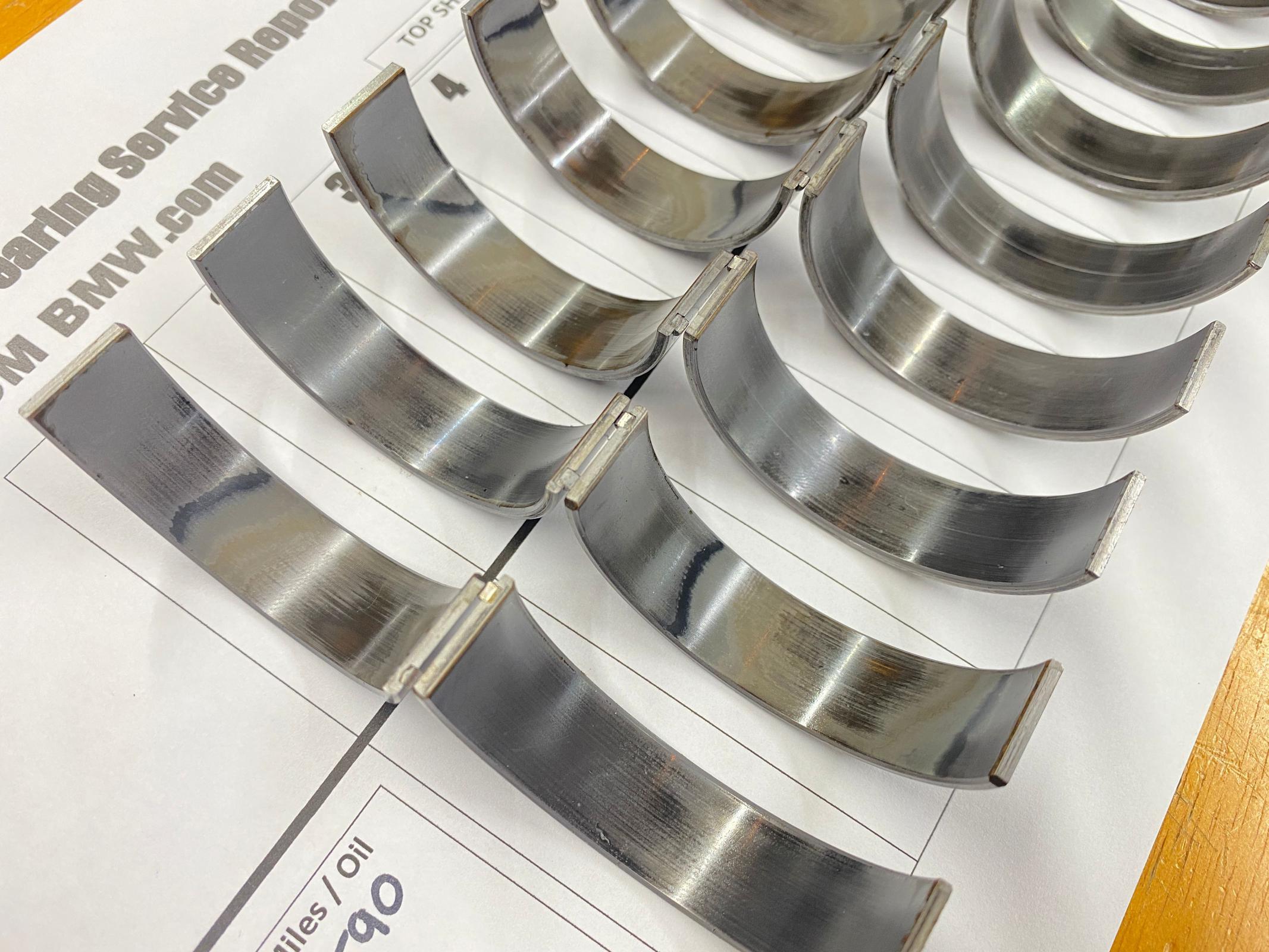
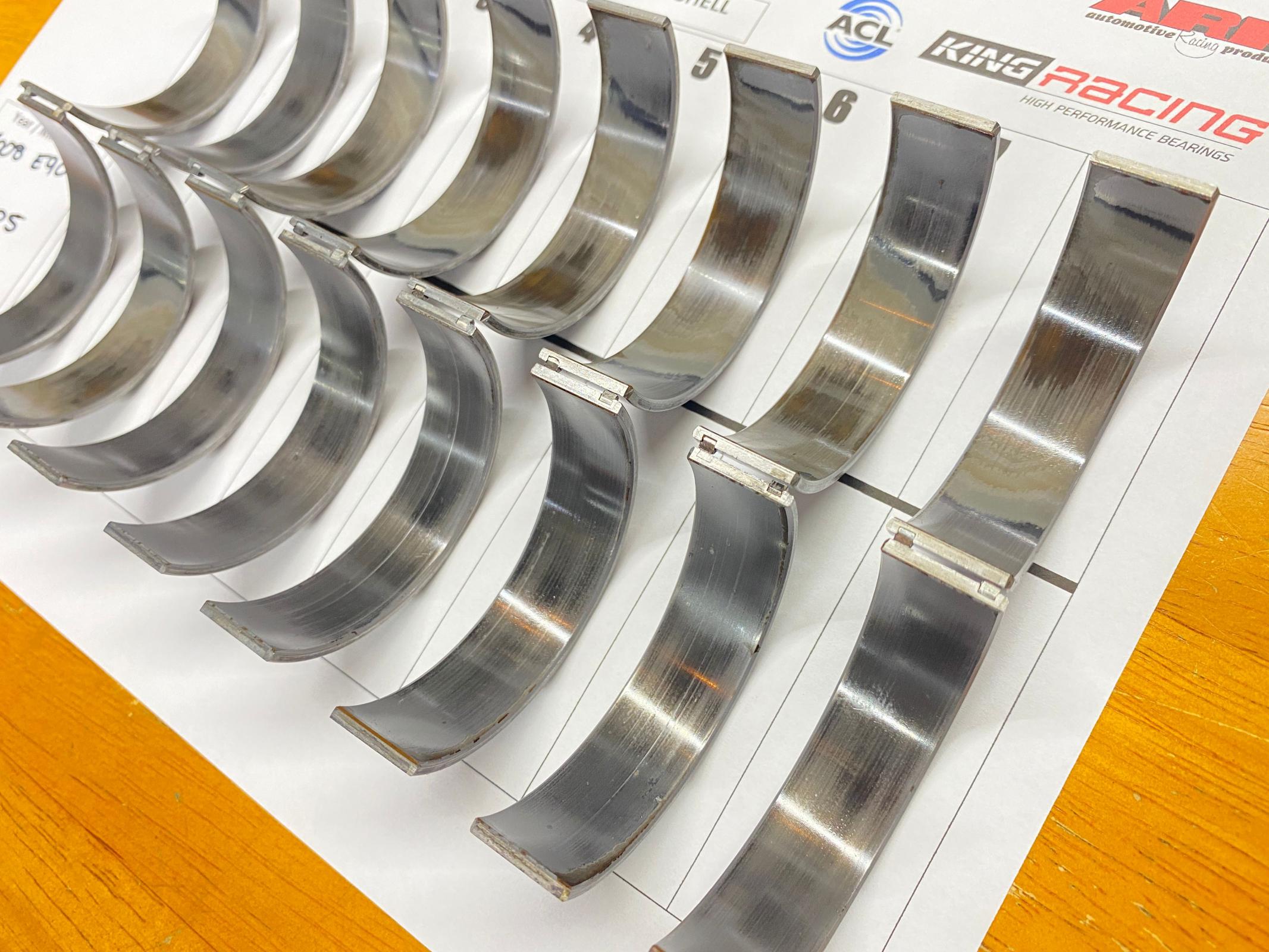
Post referenced by Assimilator1 in S65 Oil reports collation - does oil analysis work for tracking bearing wear? 02-26-2020
Assimilator1 wroteI still have them.
Btw, do you fancy doing a couple of little experiments on a couple of your old shells for us? (if you still have them?).
Ok, so the experiments I have in mind involve polishing one 1/2 of one shell, and rubbing down one 1/2 of another shell of your worst 2 shells.
And by one 1/2 I mean 1/2 of the length (not the width), like this.
For polishing I was thinking of using T-cut, or equivalent. For rubbing down I used emery paper, which was quite coarse (unfortunately I don't remember the grade, but I believe it was a medium grade), sandpaper should be fine to use too. No need to rub it down all the way to the end of the shell, just need to wear through the babbitt (silver layer) to the copper, across the shell.
The polishing is to see if the dark coloured spots in the middle of the bearing is wear &/or just some kind of oxidisation or ingrained carbon etc (so just trying to clean the shell).
The rubbing down is to see if the babbitt layer has been worn through.
As for which 2 shells, I was thinking 3rd one from the left and 2nd one from the right in the top left photo of yours. Do they look like the worst worn ones in person to you?
InnerBlueSkies
Thanks for posting good quality photos and the oil analysis, and good/lucky timing on the bearing change.
Oil analysis didn't work this time. Added your case to my list (link in sig).
And by one 1/2 I mean 1/2 of the length (not the width), like this.
For polishing I was thinking of using T-cut, or equivalent. For rubbing down I used emery paper, which was quite coarse (unfortunately I don't remember the grade, but I believe it was a medium grade), sandpaper should be fine to use too. No need to rub it down all the way to the end of the shell, just need to wear through the babbitt (silver layer) to the copper, across the shell.
The polishing is to see if the dark coloured spots in the middle of the bearing is wear &/or just some kind of oxidisation or ingrained carbon etc (so just trying to clean the shell).
The rubbing down is to see if the babbitt layer has been worn through.
As for which 2 shells, I was thinking 3rd one from the left and 2nd one from the right in the top left photo of yours. Do they look like the worst worn ones in person to you?
InnerBlueSkies
Thanks for posting good quality photos and the oil analysis, and good/lucky timing on the bearing change.
Oil analysis didn't work this time. Added your case to my list (link in sig).
Assimilator1 wroteBecause they have no copper!About typical wear for S65 LCI bearings (neither great nor terrible), I take it none show copper?
Assimilator1 wroteNot sure when I'll have free time but I could try and donate some time for science.Ok, so the experiments I have in mind involve polishing one 1/2 of one shell, and rubbing down one 1/2 of another shell of your worst 2 shells.
And by one 1/2 I mean 1/2 of the length (not the width), like this.
For polishing I was thinking of using T-cut, or equivalent. For rubbing down I used emery paper, which was quite coarse (unfortunately I don't remember the grade, but I believe it was a medium grade), sandpaper should be fine to use too. No need to rub it down all the way to the end of the shell, just need to wear through the babbitt (silver layer) to the copper, across the shell.
The polishing is to see if the dark coloured spots in the middle of the bearing is wear &/or just some kind of oxidisation or ingrained carbon etc (so just trying to clean the shell).
The rubbing down is to see if the babbitt layer has been worn through.
As for which 2 shells, I was thinking 3rd one from the left and 2nd one from the right in the top left photo of yours. Do they look like the worst worn ones in person to you?
InnerBlueSkies
Thanks for posting good quality photos and the oil analysis, and good/lucky timing on the bearing change.
Oil analysis didn't work this time. Added your case to my list (link in sig).
I'll don't have any thing finer than like 240 grit sandpaper right now so it might require a trip to home depot.
UPSROD wrotehttps://www.m3post.com/forums/showpost.php?p=27039052&postcount=1937Because they have no copper!
UPSROD wroteBecause they have no copper!
IamFODI wroteCopper traditionally contains lead. As required by EU mandate, all lead was to be removed from production bearings. As 702/703 bearings are mfg by Glyco, I believe these bearings utilize their CS-4 alloy substrate, although I've not seen it confirmed anywhere publicly. It's more like a bronze so will appear as a copper when cut/polished.
deansbimmer wroteBronze is a copper alloy.Copper traditionally contains lead. As required by EU mandate, all lead was to be removed from production bearings. As 702/703 bearings are mfg by Glyco, I believe these bearings utilize their CS-4 alloy substrate, although I've not seen it confirmed anywhere publicly. It's more like a bronze so will appear as a copper when cut/polished.
IamFODI wroteBronze is a copper alloy.
 It comes in many forms as a component of many alloys, most of which containing lead. Glyco specifically developed their own CS-4 alloy for the purpose. This is one of the several reasons why you'll still see copper in oil analyses of 702/703 bearing engines. You just can't tell how severe the wear is since the bearing's wear layer is the same makeup as the rest of the engine.
UPSROD wroteYes it does! As I linked in my post directly before yours!Because they have no copper!
See here ----> https://www.m3post.com/forums/showpost.php?p=27039052&postcount=1937 . Can't miss it this time 
Cyberdemon wroteThe emery paper I used was quite coarse, what you have might be just fine.Not sure when I'll have free time but I could try and donate some time for science.
I'll don't have any thing finer than like 240 grit sandpaper right now so it might require a trip to home depot.
Assimilator1 wroteDuring tuning, the car dyno'd 830whp on the low boost pulley. At 17% drive train loss, that should be right about 1000 hp at the crank. Most common DCT drive train loss quoted on this forum has been about 21%, with some saying as much as 25%. So 17% shouldn't have been too controversial. I'm not aware of any dyno numbers for the higher boost pulleys, and now the car owner is running the ESS G3 with even higher boost.Ah I was referring to Face Book, but yes I have run into him on the m3cutters forum, I've already argued with him, lol.
So how did that M3 make 1000hp?
Err, I think you misunderstood my question  , I wasn't calling into doubt the numbers, I just wondered what hardware was used to achieve that power.
You mention boost pulleys, so it's supercharged then. I've not looked into supercharging for M3s, though often seen people quote about 600hp for a supercharged one. I guess that 1000hp is running much higher boost! Or is it stroked and running wilder cams etc too?
Re drivetrain losses, I've always understood it to be about 20% for a 2WD, not read anything solid about that though.
, I wasn't calling into doubt the numbers, I just wondered what hardware was used to achieve that power.You mention boost pulleys, so it's supercharged then. I've not looked into supercharging for M3s, though often seen people quote about 600hp for a supercharged one. I guess that 1000hp is running much higher boost!
Or is it stroked and running wilder cams etc too?Re drivetrain losses, I've always understood it to be about 20% for a 2WD, not read anything solid about that though.
